9 Ways Personality Types Shape Communication
How personality traits affect directness, emotion, pace, body language, listening and feedback—nine practical insights to improve workplace communication and reduce conflict.
Christian Thomas

9 Ways Personality Types Shape Communication
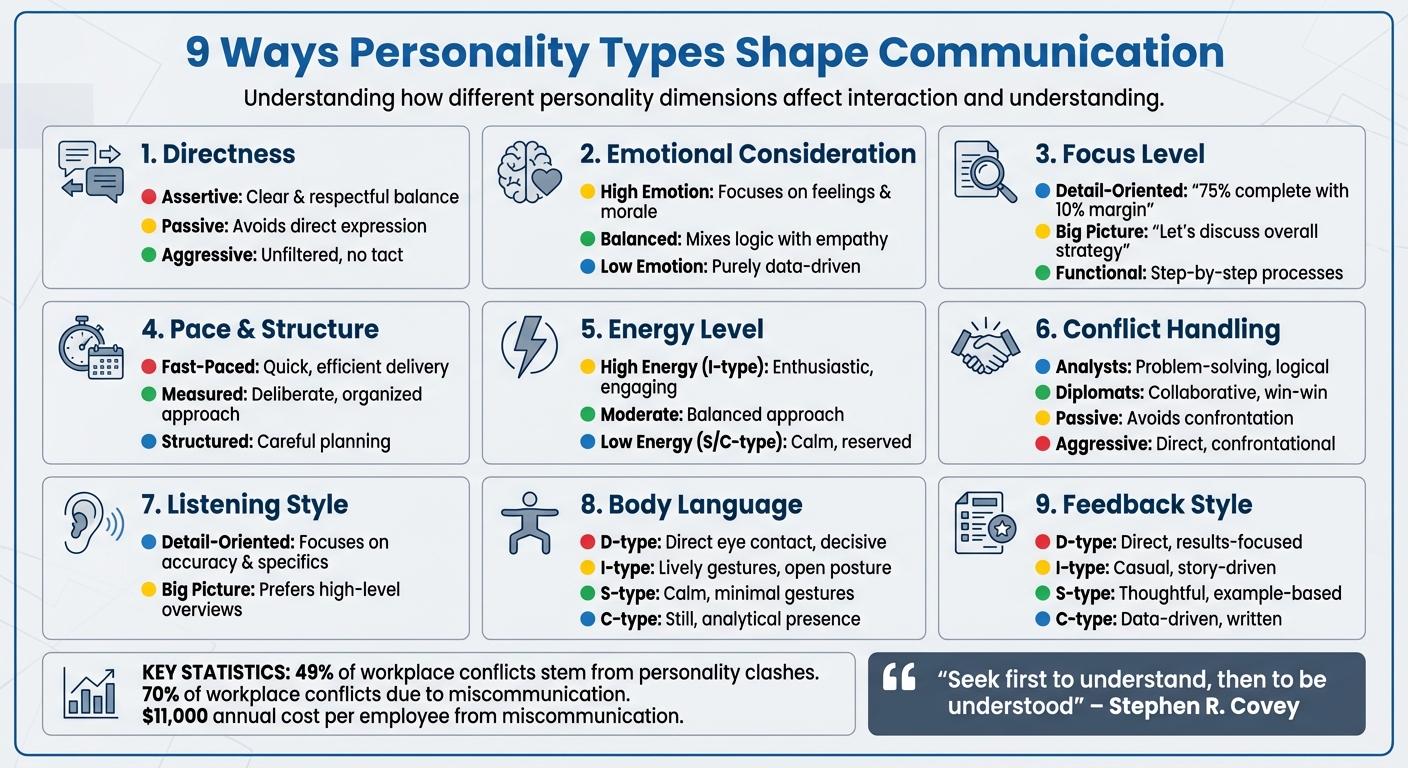
Why do people communicate so differently? Personality types play a huge role in shaping how we interact, from directness to emotional tone. Frameworks like MBTI, DiSC, and the Big Five help explain these differences. Here's a quick breakdown of how personality influences communication:
- Directness: Some are blunt; others prefer subtlety.
- Emotions: Balancing logic and feelings varies by individual.
- Detail vs. Big Picture: Analytical minds focus on specifics, while intuitive types prefer overviews.
- Pace and Structure: Fast talkers vs. measured communicators.
- Energy Levels: High-energy vs. calm styles affect engagement.
- Conflict Handling: Logical problem-solvers vs. harmony-seekers.
- Listening Styles: Detail-oriented vs. big-picture listeners.
- Body Language: Expressive gestures vs. reserved movements.
- Feedback Styles: Direct, people-focused, or data-driven approaches.
Understanding these traits can improve workplace dynamics, reduce conflicts, and boost collaboration. Tools like Personos provide personality insights for $9/month, helping teams communicate effectively.
9 Ways Personality Types Shape Communication Styles
How do the 16 Personalities Communicate Differently?
1. How Direct People Are When They Speak
People vary in how directly they express themselves - some are straightforward, while others lean toward subtlety. These differences shape how we share our thoughts and interact with others.
Assertive communicators are known for sharing their ideas clearly and respectfully, striking a balance between honesty and tact [1][2][3]. On the other hand, passive communicators tend to avoid direct expression, often in an effort to sidestep conflict. Then there are aggressive communicators, who speak their minds without much filtering, which can sometimes create an intimidating or uncomfortable environment [1][2][3].
Cultural background also plays a big role in shaping communication styles. In places like the U.S. and Western Europe - where individualistic, low-context cultures dominate - directness is often seen as a way to boost productivity and efficiency [4][5][6]. In contrast, collectivist cultures in East Asia tend to favor indirect communication, which helps preserve group harmony [4]. These cultural differences deeply influence how people interact day to day.
Understanding someone's level of directness can make a huge difference in workplace dynamics. For example, if a colleague's blunt feedback feels harsh, it might reflect their analytical, task-focused personality rather than intentional rudeness. Adapting your approach can help: offer big-picture ideas to intuitive thinkers and detailed, step-by-step plans to those who prefer a more structured style [5].
In digital communication, where nonverbal cues are absent, word choice becomes even more critical. Take a moment to review your messages to ensure they’re clear but not overly harsh. Striking the right balance between clarity and respect can help you convey your message effectively without alienating the recipient [1].
2. How Much They Consider Emotions
When it comes to communication, some people lean heavily on emotions, while others stick to facts and logic. This difference in how emotions are considered can greatly influence how we connect with others and manage workplace relationships.
Tying into the concept of directness, emotional consideration further highlights variations in communication styles. Assertive communicators tend to balance honesty with respect for others' feelings and needs. As Dr. Daria S. LaFave, a Communication Instructor at SNHU, puts it:
"Assertive communication creates space for honest conversations and promotes healthy connections between individuals." [1]
On the other hand, passive communicators often shy away from expressing their feelings or needs to avoid conflict. Meanwhile, aggressive communicators push their views without regard for others' emotions, which can harm trust and lead to tension [1][2][3].
These differences become especially apparent in workplace settings. For instance, during meetings, Personal communicators might ask, "How will this affect our team's morale?" to gauge emotional impact. In contrast, Analytical communicators might focus strictly on data and statistics. If an Analytical communicator needs to resolve a conflict with a Personal communicator, starting the discussion by acknowledging the emotional aspects before diving into facts can help ease tensions and create mutual understanding [5].
This underscores the importance of emotional intelligence - a skillset that includes empathy, self-awareness, and self-regulation. Dr. Jim Owston, another Communication Instructor at SNHU, explains:
"Recognizing one's emotional intelligence clarifies why they communicate as they do. But understanding your own emotional quotient will also aid in communicating with others." [1]
Leaders who inspire their teams by focusing on emotional connections and shared goals - rather than just performance metrics - tend to build stronger relationships and boost engagement [5]. Organizations that embrace diverse communication styles, especially those that value emotional expression, often report higher employee satisfaction because team members feel truly heard and understood [5].
3. Whether They Focus on Details or the Big Picture
Some people naturally zero in on the finer details, while others are drawn to the bigger picture. This difference plays a huge role in how messages are shared, interpreted, and understood during conversations. Just as directness and emotional cues shape communication, focusing on specifics or the broader vision also influences how ideas are conveyed.
Take Analytical communicators, for example. They might say something like, "The project is 75% complete with a 10% margin of error", instead of the more general, "The project is almost done." Their preference lies in data, logic, and precise language, steering clear of vague or ambiguous phrasing [5].
Functional communicators, on the other hand, take a step-by-step, process-oriented approach to ensure no detail slips through the cracks. Meanwhile, Intuitive communicators are all about the big picture. As Meagan Pollock explains, they "prefer to skip the step-by-step explanations and get straight to the point", often saying things like, "Let's discuss the overall strategy", rather than diving into every single step [5].
These differing approaches can significantly impact how teams operate and communicate. For instance, when working with a mix of communication styles, it can help to start with a broad overview to engage big-picture thinkers, then drill down into the details for those who thrive on structure and clarity.
Of course, communication styles aren’t rigid - they can shift depending on the context. A lawyer might lean toward an analytical style to ensure precision, while a social worker may focus more on empathy. As Dr. Meagan Pollock wisely points out:
"Adapting your communication style isn't about changing who you are - it's about ensuring your message is heard, understood, and acted upon." [5]
4. Their Preferred Pace and Structure
How we pace and structure communication can significantly influence how messages are received and understood. Some people naturally speak quickly, while others take a more deliberate, measured approach. These personal styles shape how teams collaborate and how clearly ideas are shared.
Studies suggest that assertive communicators tend to be direct, clear, and efficient. They organize their thoughts carefully and deliver them with confidence, which often facilitates understanding and productivity [1][2][3]. On the other hand, aggressive communicators may speak rapidly and without much filtering, which can sometimes lead to tension or misunderstandings [1][2][3].
Understanding these differences is critical for avoiding miscommunication. For example, when someone with a measured communication style interacts with someone who prefers a faster pace, the mismatch can create friction and hinder teamwork [1][3][5]. Just as aligning levels of directness and emotional expression can improve communication, matching pace and structure can also enhance collaboration and clarity.
Adjusting your communication style to suit your audience is crucial. If you're speaking to a group, aim to present your ideas in a clear, structured way and maintain a steady pace so everyone can follow along [8]. For written communication, leading with the most important point and keeping your message concise helps ensure clarity [8]. When communicating with diverse or cross-cultural groups, remember that some audiences favor direct, straightforward messages, while others rely more on context and subtle cues [1][4][5].
The goal is always to make your message as clear as possible. By tailoring your approach to fit the preferences of your audience, you build trust, minimize misunderstandings, and create a stronger foundation for effective collaboration [9].
5. Their Level of Enthusiasm and Energy
The energy someone brings to a conversation can significantly impact how their message is received. While some people communicate with vibrant enthusiasm, others prefer a calm and measured approach. These differences often reflect individual personality traits and play a key role in how effectively people connect and collaborate.
For instance, those with Influence (I) and extraverted tendencies often exude high energy and a naturally engaging style. Chris Schutte from Interact Global explains:
"Influence (I) personality types tend to be enthusiastic and energetic communicators, often speaking with excitement and positivity."
These individuals thrive in social settings, using their expressive energy to inspire and motivate others.
On the other hand, Steadiness (S) and Compliance (C) personalities lean toward a more reserved communication style. S-types prefer calm, steady conversations, valuing patience over spontaneity. Meanwhile, C-types are analytical and tend to observe before contributing. Introverted individuals, who process information internally, may find extended social interactions draining. Recognizing these differences in energy can help you navigate team dynamics more effectively.
Why does this matter? In professional settings, high-energy communication often signals confidence and assertiveness, which can earn respect and influence. However, quieter communicators might sometimes be overlooked, even though their contributions can be equally valuable.
When working with high-energy communicators like I-types, it’s helpful to match their enthusiasm by staying upbeat and showing genuine interest in their ideas. Techniques like storytelling or incorporating visuals can further enhance engagement. For those with a calmer style, giving them time to process information and creating space for thoughtful input can lead to more inclusive and productive conversations.
sbb-itb-f8fc6bf
6. How They Handle Conflict
Conflict is a natural part of any relationship or workplace dynamic, but how people handle disagreements often depends on their personality. Interestingly, nearly 49% of workplace conflicts are rooted in personality clashes and ego friction[12]. This highlights why understanding personality can be so valuable for resolving disputes.
Different personality types approach conflict in their own ways. Analysts, who rely on intuition and logic, often take a problem-solving stance, focusing on solutions but sometimes neglecting the emotional side of disagreements. On the other hand, Diplomats, who are intuitive and driven by feelings, tend to favor collaboration, aiming for outcomes that benefit everyone involved[11]. Passive communicators might avoid conflict altogether to maintain peace, though this can lead to unspoken resentment over time[1][2][7]. Meanwhile, aggressive communicators tackle issues directly, though their confrontational style can sometimes veer into intimidation or manipulation.
To navigate conflict effectively, it’s important to first understand your own conflict style. Pay attention to whether others prioritize facts or emotions, and adjust your approach to meet them where they are[11][13][14].
Some practical tips include pausing before you respond to avoid reacting impulsively and using neutral language to address the issue directly with the other person[12]. Building trust is also essential, as it helps prevent disagreements from turning into personal attacks[14]. And when conflicts become too heated to resolve internally, bringing in a mediator can offer a fresh, unbiased perspective to help move things forward[12].
7. Their Listening Style
The way we listen says a lot about who we are - just like how we handle conflict. Some people hang onto every tiny detail, while others zoom out and focus on the big picture. Understanding these differences can make a huge impact, whether you're pitching an idea at work or chatting with a friend.
Detail-oriented listeners approach conversations like detectives. They value accuracy, structure, and logic, carefully breaking down every detail before responding. If you're communicating with someone like this, it's best to present your information in an organized way and give them time to process it all [9].
On the other hand, big-picture listeners are all about the main ideas. They prefer high-level overviews and tend to lose interest when discussions get bogged down in too much detail. If you're talking to someone with this style, keep it concise and focus on how your points lead to clear and actionable outcomes [9].
Recognizing these listening preferences can do wonders for team dynamics and communication. As Gretchen Macht, a Postdoctoral Scholar in Architectural Engineering at Penn State, puts it:
"The performance of a team can be determined by the communication, or lack thereof, between team members." [10]
8. Their Use of Body Language
Body language can often say more than words. Different personality types express themselves through unique physical behaviors, from gestures to posture.
Those with Dominance (D) and Influence (I) traits tend to have dynamic and energetic body language. Dominance types often make direct eye contact and move decisively, which can sometimes come across as assertive or even intense. Influence types, on the other hand, are all about enthusiasm - they use lively gestures and maintain open, inviting postures that match their outgoing nature.
On the flip side, individuals with Steadiness (S) and Compliance (C) traits are more reserved in their nonverbal communication. Steadiness types keep their movements calm and avoid overly dramatic gestures, preferring a relaxed demeanor. Compliance types take this a step further with their stillness, reflecting their analytical and detail-oriented mindset.
To connect effectively, pay attention to these nonverbal cues and adjust your approach accordingly. For example, match the energy and eye contact of expressive types to build rapport, or adopt a calm and composed presence when interacting with more reserved individuals. This subtle mirroring can strengthen your communication and foster better understanding [9].
9. How They Give Feedback
The way people give feedback is another clear reflection of their personality traits. This aspect can significantly shape professional interactions, as feedback styles often vary widely depending on personality types. Knowing these differences can help improve workplace communication.
Dominance (D) types are all about efficiency and results. Their feedback is direct and to the point, with no frills. They state their opinions as facts and don’t shy away from interrupting if they feel the discussion is dragging. For them, it’s purely about what needs to change, not the emotional context behind it [16][17].
Influence (I) types, on the other hand, take a more casual and people-focused approach. They like to give feedback in informal settings and often use animated communication. Their suggestions are framed in a way that highlights personal benefits and are often accompanied by stories or anecdotes. However, they tend to steer clear of anything that might lead to conflict [16][17].
Steadiness (S) types are thoughtful and measured in their feedback. They prefer to use examples and focus on long-term outcomes. These patient listeners take time to process what they hear and may consult others before responding. They rarely voice strong opinions outright and often seek detailed information before making decisions [16][17].
Compliance (C) types rely on precision and data. Their feedback is fact-driven and often comes in written form. They focus on aligning with expected results and ask plenty of questions to ensure accuracy. These individuals like to take their time analyzing information before committing to changes [16][17].
To make feedback more effective, it’s crucial to adapt your approach to the recipient’s personality. For example, detail-oriented individuals appreciate structured, fact-based feedback, while big-picture thinkers prefer concise summaries that tie into overarching goals. Adjusting your feedback style to suit the recipient can lead to more productive and meaningful conversations [9][15].
Conclusion
Grasping how personality types influence communication is a skill that can strengthen relationships and ease interactions. Understanding why some conversations feel effortless while others are challenging often comes down to differences in directness and feedback styles. Miscommunication accounts for nearly 70% of workplace conflicts, costing businesses around $11,000 per employee each year [18].
These insights offer practical ways to improve how you connect with others. By recognizing and appreciating these differences, you create opportunities for smoother interactions. Instead of viewing diverse communication styles as obstacles, consider them as strengths that enrich collaboration. As Stephen R. Covey wisely said:
"Seek first to understand, then to be understood" [18].
Adopting this mindset can help reduce misunderstandings and lead to more meaningful conversations in all aspects of life.
To put this into practice, start by reflecting on your own communication habits and how they affect others. Tools like Personos make this easier, offering dynamic personality reports and AI-powered insights. With Personos, you can fine-tune your communication approach for every personality type on your team. Whether you're addressing a tough conversation with a coworker or enhancing team dynamics, Personos provides AI-driven communication prompts - all for just $9 per seat per month.
FAQs
How does understanding personality types enhance communication at work?
Understanding personality types can make a big difference in how we communicate at work. When you’re aware of different communication styles, you’re better equipped to connect with your colleagues. It helps you figure out what drives them, spot potential miscommunications before they happen, and tweak your approach to keep things clear and respectful.
When you align your interactions with someone’s preferences, it strengthens teamwork, minimizes disagreements, and creates a more unified group dynamic. This kind of awareness doesn’t just make conversations easier - it also boosts relationships and helps everyone work more efficiently together.
How does emotional intelligence impact communication?
Emotional intelligence is a cornerstone of effective communication. It helps individuals not only recognize and regulate their own emotions but also understand and empathize with the feelings of others. This creates space for interactions that are clearer, more respectful, and productive - whether at work or in personal life.
When people develop emotional awareness and empathy, they can adjust their communication style to suit different personalities and situations. This skill is especially valuable in resolving conflicts, as it encourages a thoughtful approach that prioritizes understanding over reaction. Ultimately, emotional intelligence strengthens relationships and enhances the quality of conversations, making it an indispensable tool for navigating the complexities of human interaction.
How do personality types impact conflict resolution at work?
Personality types heavily influence how people handle workplace conflicts. For instance, direct and assertive individuals tend to tackle issues head-on, often aiming to maintain control of the situation. On the other hand, empathetic and relationship-oriented people focus on preserving harmony and fostering emotional connections. Those with a detail-oriented mindset lean on facts and logic to work through disagreements, while goal-driven personalities prioritize solutions that align with achieving results or long-term objectives.
By recognizing these differences, you can adapt your conflict resolution approach to align with the other person's style. This awareness not only improves communication but also encourages more effective and cooperative problem-solving.