AI in Mediation: Personality-Based Communication Tips
AI uses Five Factor personality insights in mediation to give real-time communication tips, spot emotional triggers, and keep human oversight and privacy intact.
Christian Thomas

AI in Mediation: Personality-Based Communication Tips
AI is transforming mediation by analyzing personality traits and emotional cues to improve communication. Tools like Personos use models like the Five Factor Model to assess traits (e.g., openness, conscientiousness) and provide real-time insights during disputes. This approach helps mediators adjust communication styles, identify emotional triggers, and build trust, making sessions more effective. Ethical use of AI ensures data privacy and human oversight remain priorities. Platforms like Personos stand out for their affordability ($9/month per seat) and features like Dynamic Reports and ActionBoard, offering tailored guidance for mediators to address both emotional and analytical aspects of conflict resolution.
The Many Ways that AI Can Help Mediators with John Lande for Will Work For Food
Preparing for Personality-Based Mediation
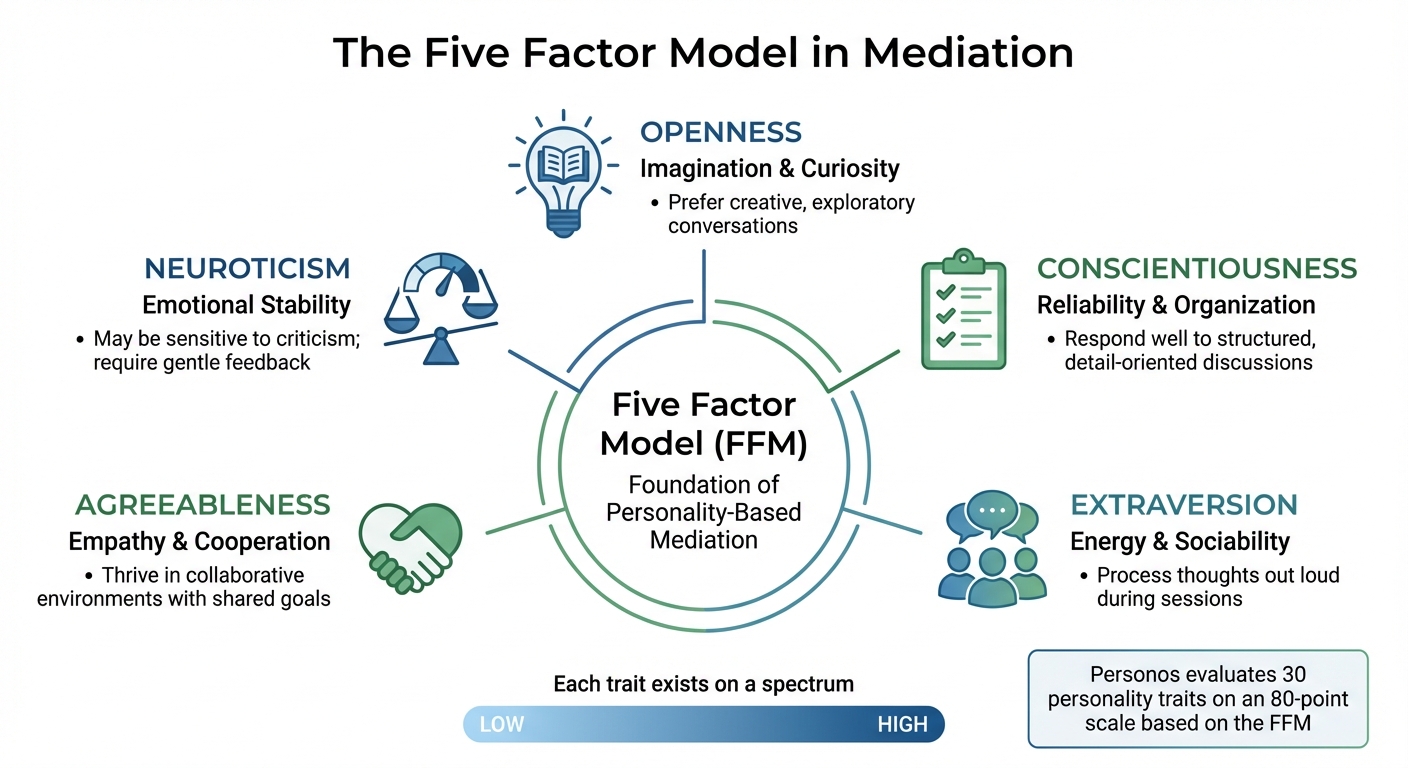
Five Factor Model Personality Traits in Mediation
Understanding the Five Factor Model
The Five Factor Model (FFM) is the backbone of personality-based mediation. It evaluates five key personality traits: openness (imagination and curiosity), conscientiousness (reliability and organization), extraversion (energy and sociability), agreeableness (empathy and cooperation), and neuroticism (emotional stability). Each trait exists on a spectrum, offering insights into how individuals might behave or react during mediation.
Personality assessments built around this model provide a steady framework for understanding behavior. They act as a consistent reference point, complementing AI tools used in mediation [2]. By analyzing these traits before mediation begins, you can prepare strategies that address potential challenges in advance, rather than reacting mid-session. This preparation ensures that the AI tools you choose integrate smoothly with the FFM's scientific principles.
Selecting AI Tools for Personality Analysis
When picking AI tools for mediation, focus on platforms grounded in established frameworks like the FFM. One standout option is Personos, which delivers real-time, AI-driven insights to enhance traditional mediation methods. It evaluates 30 personality traits on an 80-point scale, all based on the Five Factor Model. The platform's conversational AI tailors its recommendations to specific scenarios, such as fostering trust with hesitant participants. Meanwhile, its Dynamic Reports provide customized insights for each personality profile and interaction.
AI systems trained on structured assessments like the BFI-2 (Big Five Inventory) demonstrate better alignment with human responses in real-world contexts [6]. Personos also includes tools like an ActionBoard for tracking session progress and Prompts that offer actionable suggestions, helping mediators maintain momentum between meetings.
Ethical Use of Personality Data
Selecting the right tools is only part of the equation - using personality data responsibly is just as important. Ethical considerations are critical to maintaining trust and ensuring effective mediation. Mishandling personality data can lead to bias, breaches, or misuse, especially in the complex dynamics of multi-party mediation [3][4][5]. If improperly applied, this data could reinforce power imbalances or distort decision-making.
To mitigate these risks, always obtain clear, explicit consent before using personality data. Use HIPAA-compliant systems to safeguard confidentiality. Be transparent about the limitations of AI tools, such as their inability to interpret nonverbal cues or replace human judgment [2][3]. Keep human oversight central to the process, and regularly compare AI-generated insights with real-world outcomes to ensure accuracy. These practices help maintain the reliability and integrity of AI tools, making them a trusted resource throughout the mediation process.
Tailoring Communication Based on Personality Insights
Using personality data to enhance communication strategies can make interactions more effective and meaningful. By aligning your approach with individual traits, you can foster better understanding and collaboration.
Adjusting Communication Styles to Match Personality Types
Once you’ve identified someone’s personality traits, it’s easier to adapt your communication style to suit their preferences. Tools like Crystal can analyze these traits and suggest strategies for aligning mediation approaches with individual negotiation styles and preferences [7]. For instance:
- High conscientiousness: These individuals respond well to structured, detail-oriented discussions.
- High openness: They tend to prefer creative and exploratory conversations.
AI platforms can use personality data as a contextual layer to recommend adjustments in communication. For example, when mediating between an extravert who processes thoughts out loud and an introvert who needs time to reflect, structuring the session to accommodate both styles ensures balanced participation. This prevents one approach from overshadowing the other, creating a more inclusive environment.
These tailored adjustments also help in identifying and managing emotional triggers.
Identifying Emotional Triggers and Preferences
AI tools are particularly skilled at detecting patterns that may indicate emotional triggers, helping to de-escalate potential conflicts before they arise. For instance, sentiment analysis can flag negative language, prompting you to adjust your tone or rephrase statements to show empathy and build rapport [7].
Consider someone with high neuroticism - they may be more sensitive to criticism or uncertainty. Recognizing this allows you to frame feedback gently and provide reassurance about the process, reducing the risk of emotional escalation.
Advanced AI models like GPT-4o can emulate human personality traits and adapt communication outputs accordingly [4]. Platforms like Personos (https://personos.ai) take this further by offering tailored guidance based on complete personality profiles. Their Prompts feature provides actionable tips for navigating sensitive conversations, while Dynamic Reports highlight potential friction points between personalities, helping mediators address challenges proactively.
By understanding emotional triggers, mediators can create a foundation of trust that strengthens the mediation process.
Building Trust Through Personality-Based Approaches
Trust is essential for successful mediation, and personality insights can help you build it effectively. By incorporating personality assessments into AI coaching, you can address mismatched communication styles before they lead to conflict [2]. Tailoring your approach - such as allowing extra time for someone to process information or providing detailed documentation - demonstrates that you value and respect each participant’s perspective.
For example:
- Those high in agreeableness often thrive in collaborative environments with shared goals.
- Those with lower agreeableness may respond better to direct, fact-based communication.
AI tools like Personos enable real-time adjustments by identifying behavioral patterns early [2]. This creates a sense of psychological safety, helping participants feel understood and supported while keeping the process on track.
Using AI for Real-Time Mediation Support
Mediation sessions often require quick decision-making and the ability to adapt on the fly. AI tools can provide immediate assistance during these live interactions by analyzing emotional dynamics and offering communication tips based on personality profiles. This support enhances your ability to respond effectively in high-pressure situations.
Real-Time Sentiment Analysis
AI can track the emotional tone of a session, flagging mood shifts before conflicts escalate. For instance, if negativity is detected, you might choose to rephrase your response empathetically or take a moment to acknowledge the participants' concerns[7]. This is especially helpful when working with individuals who have heightened emotional sensitivities. For example, someone with high neuroticism might show signs of stress earlier, giving you a chance to step in and de-escalate tensions.
While you may already rely on nonverbal cues like body language or tone of voice, AI adds another layer by analyzing text-based sentiment in real time. These insights help you adapt your communication style as the conversation unfolds, ensuring your responses align with the emotional dynamics at play.
Getting Dynamic Communication Recommendations
AI platforms can provide real-time recommendations tailored to the personalities of the participants. For example, tools like Personos (https://personos.ai) use detailed personality profiles to suggest communication strategies. If one person prefers in-depth explanations while another values a more high-level approach, the platform can guide you on how to balance these preferences effectively.
This type of guidance is particularly useful in handling power imbalances or complex group dynamics. For instance, if one participant dominates the discussion while another remains quiet, AI can suggest ways to engage the quieter individual or redirect the conversation so all voices are heard[3]. Acting as a collaborative partner, the platform helps ensure all issues are addressed without letting personal biases influence the process. Additionally, these real-time insights contribute to long-term improvement by capturing lessons learned from each session.
Documenting Insights for Future Sessions
AI tools can also streamline the documentation process by automatically capturing personality insights and session outcomes. Platforms like Personos' ActionBoard allow you to turn these observations into actionable items, creating a record of effective strategies. This documentation becomes a valuable resource when working with recurring parties, as it enables you to review previous challenges, successful interventions, and communication patterns that have evolved over time.
It's crucial to maintain accurate and respectful records while safeguarding privacy. Focus on documenting behaviors and strategies rather than subjective opinions. This approach not only enhances your mediation skills but also ensures confidentiality and trust throughout the process.
Comparing AI Tools for Personality-Based Mediation
This section builds on the checklist for personality-driven mediation communication by comparing AI tools, highlighting how Personos stands out in managing emotions during mediation.
Key Features of Personos
Personos (https://personos.ai) is specifically designed for mediation professionals. It offers a chat feature that provides real-time, context-aware recommendations based on detailed personality profiles. For instance, if a participant becomes withdrawn during a session, you can describe the situation, and the tool will deliver tailored guidance. Additional features include Dynamic Reports and an ActionBoard, which turn insights into actionable tasks with just one click. At $9 per seat per month, Personos is budget-friendly, making it an excellent choice for nonprofits and professionals with heavy caseloads.
These features make Personos more than just another AI tool - it’s a purpose-built solution for mediators.
How Personos Compares to Other AI Tools
Unlike Personos, general-purpose tools like ChatGPT can suggest settlement figures and identify interests but fall short in emotional intelligence. They also occasionally produce errors or "hallucinations" that require careful review. For example, in one contract dispute, a chatbot suggested a settlement of $275,000, which differed slightly from the final $270,000 agreement.
"We have all heard about lawyers using chat‑based tools to augment their writings and including 'hallucinations' such as made‑up case citations." – Christopher K. Poole, CEO of JAMS [1]
Other platforms, such as CoCounsel, excel in legal document analysis, while tools like NextLevel and TheMediator.AI are strong in processing data and generating settlement options in group negotiations. However, none of these tools tackle the emotional side of mediation - the anger, frustration, and fear that often drive conflicts.
"Mediators' skill in managing emotions such as anger, frustration, and fear - which may be fueling the conflict - is central to the dispute resolution process." – Joseph Panetta, Bloomberg Law [1]
Personos fills this gap by combining personality-based communication strategies with real-time emotional management. It supports mediators in addressing both the analytical and emotional aspects of disputes, complementing their expertise and judgment in a way other tools cannot match.
Conclusion
Personality-based mediation changes the way professionals handle conflict by moving away from one-size-fits-all methods and focusing on tailored, data-informed communication strategies. By understanding how each party processes information, reacts under pressure, and establishes trust, you can predict and address potential friction points before they escalate. This approach shifts mediation from being reactive to proactive, easing tensions for everyone involved and leading to longer-lasting resolutions.
AI tools like Personos make this approach accessible. For just $9 per seat per month, the platform leverages the Five Factor Model's 30 personality traits to offer real-time guidance. It helps you navigate the emotional complexities of disputes while giving you clear explanations that build your expertise over time - rather than making you overly reliant on the technology. This tailored approach not only sharpens your skills but also helps ensure consistent outcomes in every mediation session.
Research supports the potential of AI in emotional and psychological contexts. Studies show that AI models trained on therapeutic literature have helped participants manage depression, anxiety, and eating disorders, achieving results comparable to human therapists in less time [3]. While AI cannot replace human judgment in mediation, it complements your intuition by providing consistent, personality-aware insights during every session.
To apply these ideas, start by reviewing personality profiles before your next mediation. Pay attention to how individuals prefer to receive feedback and what might provoke defensive reactions. Use AI tools to challenge your assumptions and explore alternative perspectives in complex cases. The goal isn’t to replace the human element in mediation - it’s to enhance your effectiveness and broaden your impact while keeping the human connection at the heart of the process.
FAQs
How accurate are AI-based personality insights in mediation?
AI-driven personality insights have shown impressive reliability in mediation, with studies reporting accuracy rates ranging from 83% to 94.5% for traits such as extraversion and conscientiousness. That said, the accuracy of these tools hinges on several factors, including the quality of the data, the specific context, and subtle differences tied to cultural factors, particularly in the U.S. While AI can offer powerful insights to refine mediation strategies, human involvement is still crucial to interpret subtleties and nuances that AI might overlook.
What consent and privacy steps should I follow when using personality data?
To handle personality data ethically in AI-driven mediation, here are some key steps to follow:
- Get clear consent: Make sure individuals fully understand how their data will be collected, stored, and used before they agree.
- Secure sensitive information: Use tools like encryption, strict access controls, and secure storage methods to protect data.
- Maintain transparency: Clearly explain how the data will be used, who has access, and the purpose behind its collection.
- Tackle ethical issues: Address potential concerns like bias or misuse, and ensure human oversight remains part of the process.
These steps help protect privacy and foster trust.
How can I use real-time AI tips without losing human judgment?
AI should act as a supportive tool, not a substitute for human expertise. It can analyze communication patterns and personality traits, offering tailored insights that help professionals make well-informed decisions. However, these insights should be seen as starting points - prompts to guide your approach - rather than definitive answers.
By blending AI's analytical capabilities with your professional experience and empathy, you can improve conflict resolution, foster collaboration, and strengthen client relationships. This balanced approach ensures that human judgment and understanding remain at the core of every interaction.