Why Teams Misalign and How AI Fixes It
AI detects communication and workflow breakdowns, delivers personality-based coaching and real-time prompts, and provides data-driven insights to realign teams.
Nick Blasi

Why Teams Misalign and How AI Fixes It
Team misalignment is costly. It leads to delays, wasted resources, and broken trust. Poor communication, siloed workflows, and personality clashes are the main culprits.
AI offers a solution by identifying problems early, improving communication, and providing actionable insights with AI tools. Tools like Personos analyze team dynamics in real-time, suggest tailored strategies, and track progress to keep teams aligned. At $9 per seat per month, Personos helps bridge gaps in collaboration and communication.
Key points:
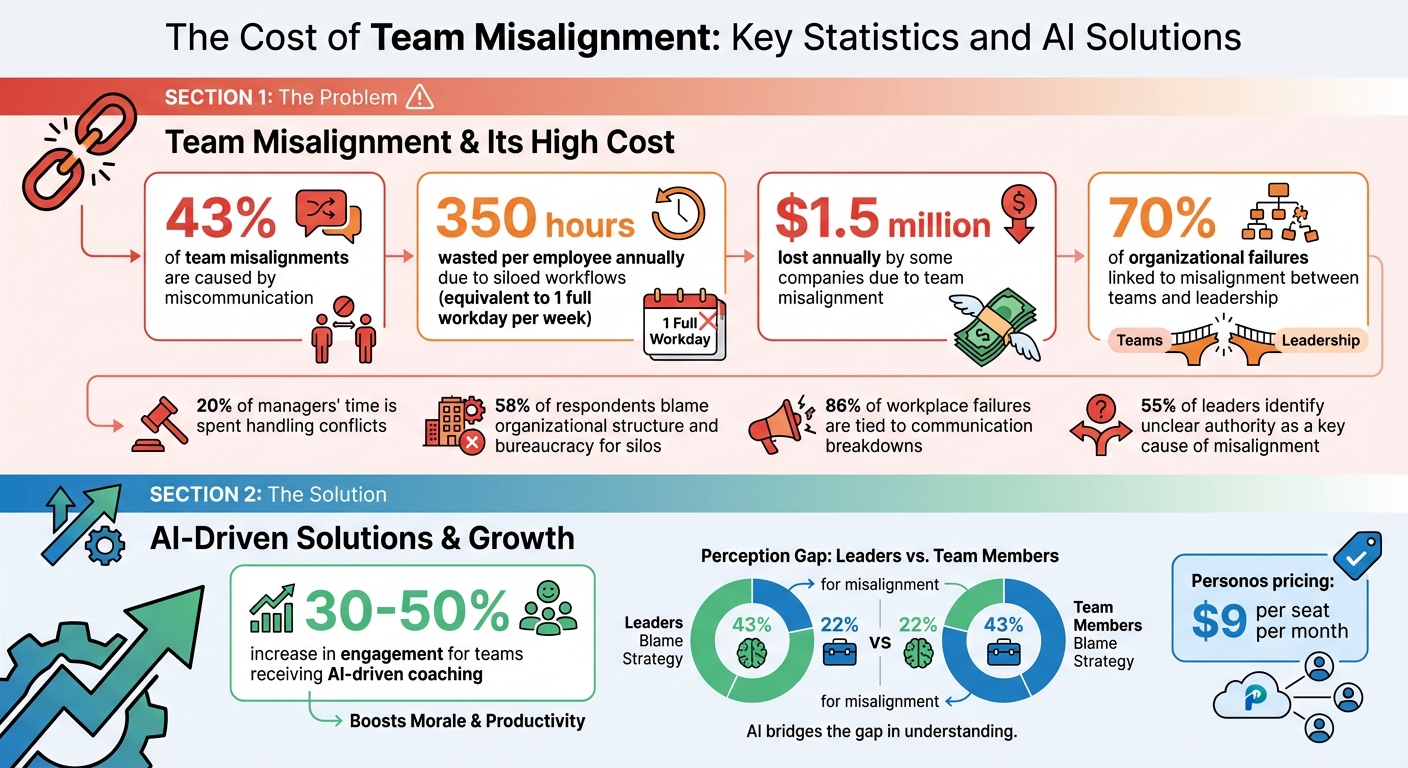
- Miscommunication causes 43% of team misalignments.
- Siloed workflows waste 350 hours per employee annually.
- AI tools like Personos monitor interactions, suggest fixes, and provide data-driven insights to improve teamwork.
Learn how AI can turn team challenges into better outcomes. Discover how AI-powered insights for resolving team conflicts can bridge these gaps.
The Cost of Team Misalignment: Key Statistics and AI Solutions
What Causes Team Misalignment
Communication Barriers
When communication breaks down, teams struggle to function smoothly. Two major culprits are missing information and ambiguous language. Missing information leaves team members guessing, slowing progress and disrupting workflows. Ambiguity, on the other hand, creates even bigger headaches. Research shows that unclear language often leads to systematic misunderstandings, which can derail decisions and waste valuable resources over time [2].
Here’s another striking fact: managers spend an average of 20% of their time handling conflicts [4]. A significant portion of these conflicts stems from a lack of "Theory of Mind" - the ability to understand what others on the team are thinking, feeling, or doing [1]. Without this shared understanding, team members struggle to anticipate each other’s needs or provide timely support, further compounding misalignment [1].
But communication issues don’t stop at spoken or written words. Structural barriers also play a big role in fragmenting team efforts.
Siloed Workflows
Silos form when departments work independently, with separate goals and communication channels. The result? Teams often prioritize their own objectives over the broader organizational mission, creating conflicts and inefficiencies [6]. In fact, siloed workflows waste 350 hours per year, which is equivalent to losing an entire workday every week [6].
The root of the problem is often systemic. A study revealed that 58% of respondents blamed organizational structure and bureaucracy for fostering silos [6]. Beyond just wasting time, these silos severely hinder cross-functional collaboration and derail strategic alignment.
However, structural issues aren’t the only obstacles. Misalignment can also arise from individual differences within the team.
Personality and Work Style Clashes
Overly simplistic personality assessments often fail to capture the complexity of individuals, leading to misunderstandings. Just like structural and communication gaps, unaddressed personality differences can cause friction in daily interactions. One key issue is that when personality test results are shared openly, employees may hold back honest responses out of fear of being judged. This limits the accuracy of data meant to improve team dynamics [3].
Even when teams receive detailed personality reports, they often lack the expertise to put this information to good use. Without proper interpretation, these insights are ignored, leaving a gap between the initial findings and their application in the workplace [3]. Static reports simply don’t translate into meaningful, long-term changes in how teams work together [3].
How AI Solves Team Misalignment
Early Detection of Issues
AI tools are like watchful eyes on team dynamics, monitoring interactions in real-time to catch potential problems before they spiral. By analyzing communication patterns, email and chat sentiments, and how often teams interact, these tools can flag early warning signs - like a drop in response rates between departments or an uptick in negative tone. Considering that 43% of team misalignments arise from communication barriers [7], spotting these issues early can make a huge difference. For instance, if AI detects growing frustration in messages, it gives managers the chance to step in with targeted coaching sessions to smooth things out.
Some systems take this a step further by incorporating personality psychology. Tools like Personos generate personality reports that highlight potential friction points between team members, shedding light on issues like mistrust or feelings of psychological unsafety [8]. This proactive approach is essential, especially when you realize that some companies lose up to $1.5 million annually due to team misalignment [11]. By identifying these subtle red flags early, managers can implement tailored solutions to prevent conflicts from escalating.
Personalized Communication Strategies
Once issues are identified, AI steps in with tailored communication strategies. Generic advice often falls flat because it doesn’t account for personality differences. That’s where tools like Personos shine - they suggest specific communication tweaks based on individual personality profiles. For example, if a direct communicator is working with someone who prefers a more analytical approach, the AI might recommend softer, more measured phrasing [8].
This level of personalization addresses a common workplace challenge: poor communication. Research shows that 86% of workplace failures are tied to communication breakdowns [11]. But AI-driven adjustments can increase engagement by 30–50% in teams that receive coaching. These tools also help bridge the disconnect between leaders and employees. While 43% of leaders blame strategy for misalignment, only 22% of team members agree [7]. By closing this perception gap, AI fosters better understanding and collaboration across all levels of an organization.
Data-Driven Collaboration Insights
After identifying and addressing communication gaps, AI provides the hard data needed to measure progress and pinpoint lingering misalignment. By pulling information from task trackers, meeting notes, and performance metrics, AI platforms can highlight where things are going off track. Dashboards reveal issues like conflicting priorities, siloed efforts, or inconsistencies in processes [10]. Tools like Personos even go further, offering detailed relationship and group analysis reports that quantify interpersonal dynamics. This helps teams align their goals, especially when departments are competing for limited resources [9].
AI doesn’t just stop at identifying problems - it provides actionable metrics like collaboration drag scores, goal alignment indices, and workflow efficiency maps. These insights show exactly where time is being wasted or authority is unclear [7]. With 70% of organizational failures linked to misalignment between teams and leadership [12], having this kind of data empowers managers to tackle issues head-on and realign their teams effectively.
AI Will Lock In Team Dysfunction
sbb-itb-f8fc6bf
How Personos Improves Team Dynamics
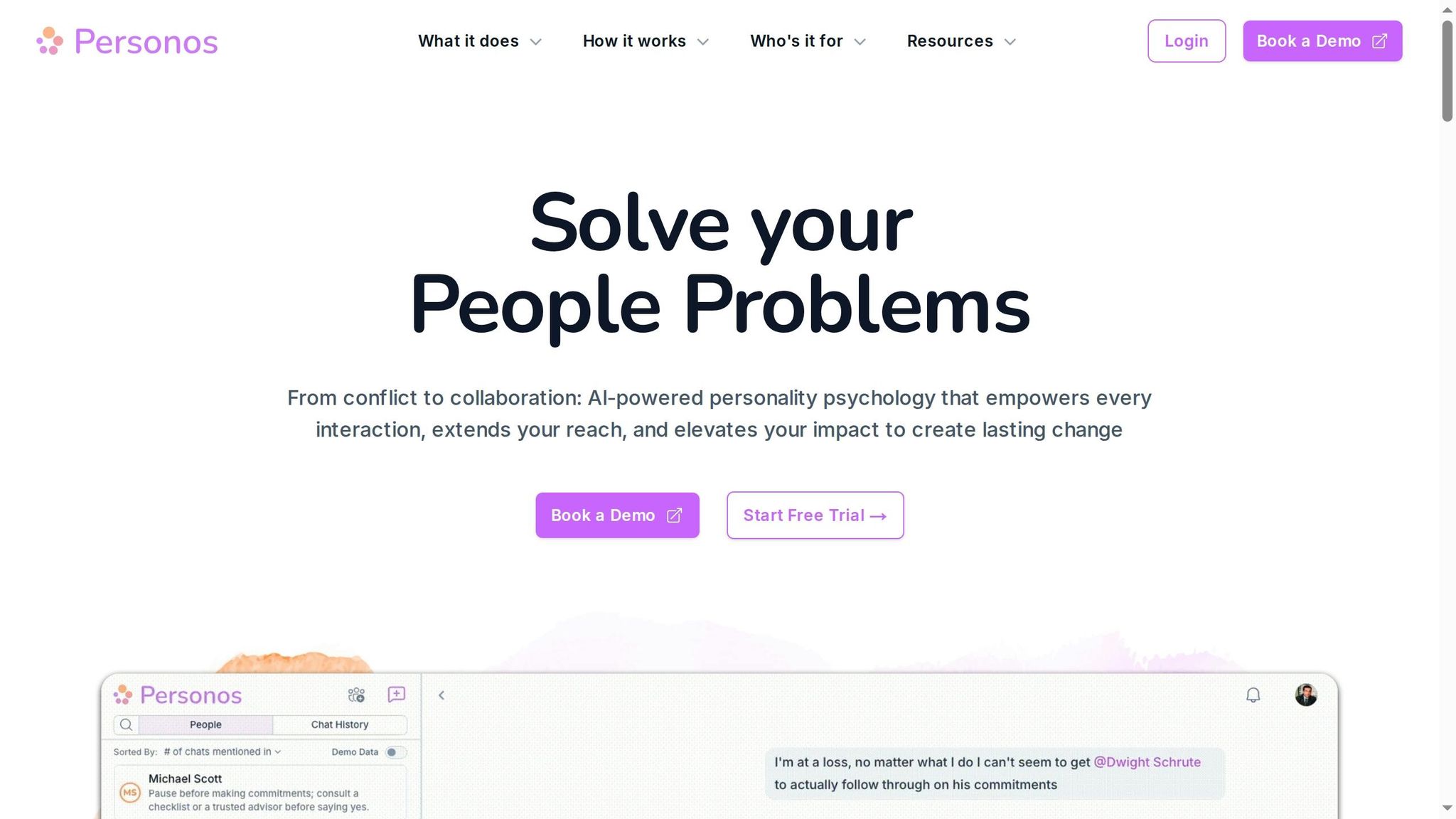
Personos takes AI's potential to the next level by using personality insights to strengthen team collaboration and address misalignment issues head-on.
Dynamic Personality Reports
Personos creates real-time personality profiles that dive into communication styles, work habits, and collaboration tendencies. Imagine a scenario where a dominant leader and an analytical team member are butting heads. The personality report pinpoints exactly where their decision-making styles clash - a common issue behind the 43% of misalignments caused by communication barriers [7].
These reports don’t just highlight problems - they provide actionable solutions. For instance, in a sales and marketing team dealing with siloed workflows, the group analysis might reveal how personality mismatches are creating bottlenecks. Teams can even upload their own values and role expectations, tailoring insights to match their unique environment. This allows managers to assign tasks that play to each team member's strengths while rebuilding trust - a critical step in addressing psychological safety concerns that often hinder collaboration [8].
With these insights, Personos helps teams make real-time adjustments during high-stakes conversations.
Real-Time Communication Prompts
Personos offers context-specific communication prompts during meetings to keep discussions productive. If a debate starts to heat up, the AI might suggest, “Acknowledge their viewpoint first” or “Rephrase for clarity to avoid misunderstandings.” These aren’t one-size-fits-all tips - they’re carefully tailored to the personalities involved, directly addressing common workplace communication breakdowns.
These prompts also tackle practical issues like unclear authority, which 55% of leaders identify as a key cause of misalignment [7]. For example, in a cross-functional meeting where roles are unclear, Personos might suggest: “Clarify roles: Who is responsible for this decision?” By offering immediate, actionable guidance, the tool helps teams align on priorities and avoid the wasted time and energy that come from poor communication. The prompts are even customized based on whether you’re a contributor, manager, or leader, ensuring the advice fits your role.
This kind of real-time support sets the stage for smoother collaboration and project execution.
Task Tracking and Relationship Analysis
Personos combines task management with personality data by overlaying insights directly onto task boards. This allows managers to assign high-priority tasks to decisive team members while prompting check-ins for pairs with clashing styles. It’s a practical way to address common issues like unclear deadlines and ownership.
For example, when a product team struggles with silos between sales and marketing, the relationship analysis might show how a sales rep’s impatience conflicts with marketing’s detail-oriented approach [8]. Personos tracks progress on tasks like “Lead gen campaign” and flags potential risks, such as employee disengagement. By monitoring these dynamics and suggesting timely task reassignments, Personos helps prevent last-minute crises and keeps teams focused on shared objectives.
With tools like these, Personos ensures collaboration stays on track, even in the most complex team environments.
Conclusion
Key Takeaways
Team misalignment often stems from fragmented communication, coordination hiccups, and a lack of shared understanding around project goals. These issues blur accountability and hinder collaboration. While AI can enhance individual productivity, it doesn't inherently solve deeper teamwork challenges[5].
Research from Carnegie Mellon University highlights this shift: "AI hasn't fixed teamwork, but it shifted collaborative culture: efficiency became a norm, transparency and responsible use became markers of professionalism, and AI was increasingly accepted as part of teamwork"[5]. This underscores that misalignment is a complex issue involving processes, technology, and human behavior.
Personos addresses these challenges by combining personality psychology with AI to foster group awareness - something traditional tools often overlook. Through dynamic personality reports, real-time communication prompts, and relationship analysis, it helps teams build shared understanding. Studies reveal that AI personas offering supportive communication cues can enhance discussion quality while maintaining psychological safety, a key factor in team alignment[13]. These tools provide actionable insights to improve overall team performance.
Next Steps
If your team struggles with unclear roles, poor communication, or recurring conflicts, it might be time to move beyond generic productivity tools. AI solutions like Personos are designed to bridge the gap between task efficiency and team cohesion. By leveraging personality-based interventions, dynamic reporting, and real-time prompts, Personos transforms interpersonal friction into opportunities for alignment.
The journey from misalignment to harmony takes time, but AI-driven tools can establish clear norms around communication, accountability, and collaboration for hybrid teams[13]. At just $9 per seat per month, you can explore Personos at https://personos.ai and see how it can turn team challenges into meaningful progress.
FAQs
How can AI identify early warning signs of team misalignment?
AI can spot early warning signs of team misalignment by analyzing how people communicate and behave in workplace interactions. It sifts through data like emails, chat messages, and meeting transcripts, using tools like natural language processing (NLP) and sentiment analysis. These tools help detect subtle changes in tone, negative emotions, or even a drop in engagement - signals that may point to potential conflicts or disengagement within the team.
What makes this approach so effective is its proactive nature. By identifying these issues early, teams can step in with targeted strategies to improve communication and collaboration before problems escalate. With continuous monitoring of interactions, AI plays a key role in keeping teams aligned, minimizing conflicts, and fostering a more connected and productive work environment.
What communication strategies does Personos suggest for improving team interactions?
Personos focuses on creating communication strategies that align with individual personalities and are guided by emotional intelligence. By adjusting how we communicate - whether through tone, word choice, or style - to suit a colleague's preferences, teams can minimize misunderstandings and build stronger, more meaningful connections. For instance, using clear and empathetic language combined with "I" statements can help address challenges constructively while fostering trust.
The platform also offers real-time coaching and proactive suggestions, powered by AI insights into personality traits and emotional cues. This helps team members adapt their communication during conversations, promoting a psychologically safe space where open and honest dialogue can flourish. These techniques are designed to tackle conflicts early, improve teamwork, and create a more cohesive group dynamic.
How does AI, like Personos, help teams work better together?
AI tools, such as Personos, are transforming how teams collaborate by examining personality traits and communication habits. They can identify potential conflicts and misunderstandings early, preventing issues from escalating. Through real-time insights and tailored coaching, these tools help team members grasp each other's work styles, encouraging clearer communication and mutual respect.
Managers also benefit from these tools by gaining the ability to match roles to team strengths, anticipate compatibility, and adjust to evolving team dynamics. With features like dynamic personality profiles and proactive communication suggestions, AI promotes smoother interactions, minimizes conflicts, and keeps teams efficient and unified.