How Emotional Resilience Varies by Personality Type
How Big Five traits, MBTI preferences, and AI coaching shape resilience—practical coping strategies tailored to personality for work and life.
Rachel Johnson

How Emotional Resilience Varies by Personality Type
Emotional resilience - the ability to recover from stress and adversity - is influenced by personality traits. Research shows that traits like extraversion, conscientiousness, agreeableness, and openness boost resilience, while neuroticism can hinder it. Here's a quick breakdown:
-
Big Five Personality Traits:
- Emotional stability (low neuroticism): Key for quick recovery from stress.
- Conscientiousness: Promotes structured problem-solving and persistence.
- Extraversion: Encourages social support and positive emotions.
- Agreeableness: Builds resilience through empathy and relationships.
- Openness: Helps reframe challenges as opportunities for growth.
-
MBTI Framework:
- Extraverts find strength in social interactions, while introverts recover through reflection.
- Judging types prefer structure, while Perceiving types thrive in flexibility.
- Each MBTI type has unique resilience strategies, such as logical problem-solving (NT types) or emotional support (NF types).
-
Personos (AI Coaching):
- Combines personality data with real-time recommendations.
- Offers tools like habit tracking, conflict resolution prompts, and team analysis.
- Supports resilience-building for individuals and teams.
Key takeaway: Resilience isn’t about changing who you are - it’s about leveraging your natural strengths and addressing blind spots. Platforms like Personos provide personalized strategies to improve stress recovery, whether through structured plans, emotional support, or reflective practices.
How emotionally resilient people think differently (and how you can too)
How Personality Affects Resilience
Personality plays a big role in how we handle stress, shaping both the intensity of our emotions and the coping strategies we choose. Traits from the Big Five framework and MBTI preferences reveal unique patterns of resilience that show up in our work, relationships, and personal challenges. Let’s explore how different personality traits influence resilience.
Emotional stability versus neuroticism stands out as one of the strongest indicators of resilience. Those with low neuroticism tend to experience less anxiety and overthinking under stress, helping them recover more quickly. In contrast, people high in neuroticism often face intense worry and self-doubt, requiring deliberate emotional management and strong support systems to regain balance. For instance, a 2021 study confirmed that resilience tends to decrease with neuroticism while showing positive connections with the other Big Five traits [3].
Imagine someone emotionally stable losing their job - they might acknowledge the stress but quickly shift toward problem-solving. Meanwhile, someone high in neuroticism might spiral into worst-case scenarios, struggle with sleep, and find it harder to take constructive steps without external support.
Conscientiousness boosts resilience through structure and persistence. Conscientious individuals tackle challenges with well-thought-out plans and consistent effort. After losing a job, they might create a detailed job-search strategy with daily goals. On the other hand, someone less conscientious might feel overwhelmed by the process and benefit from external accountability or simplified routines to stay on track.
Extraversion contributes to resilience through positive emotions and social connections. Extraverts are often more resilient because they experience and express positive emotions, which help buffer stress [3]. They tend to lean on active coping strategies, such as brainstorming with colleagues or joining support groups. Introverts, however, might prefer quiet reflection, journaling, or solo problem-solving before seeking outside help. Their resilience strategies often align with their preference for depth and introspection.
Agreeableness strengthens resilience through relationships and cooperation. Highly agreeable individuals often gain resilience from their empathy and ability to form supportive relationships. They also tend to have a strong sense of purpose, which helps them persevere during tough times [3]. However, their tendency to prioritize others' needs can lead to burnout, making it important for them to set boundaries and practice self-care.
Openness to experience enhances resilience through flexibility and curiosity. Open-minded individuals often view challenges as opportunities to learn and grow. They use meaning-focused coping strategies, reframing setbacks to extract valuable lessons [3]. For example, someone passed over for a promotion might reflect on what they can learn and explore new opportunities. However, balancing this big-picture thinking with actionable steps is crucial to avoid getting stuck in abstract thought.
The MBTI framework adds another layer of insight into resilience. Extraverts recharge by talking through problems and taking action, while introverts need quiet time to process before reaching out for help. Judging types find comfort in structure and clear decisions, while Perceiving types prefer to adapt and keep their options open. For instance, an ISTJ might rely on discipline and routine to recover from setbacks, while an ENFP might use their optimism and creativity to reframe challenges but may need extra support to follow through.
Different MBTI types also show varied strengths under pressure. An ENFJ might draw resilience from their strong relationships and emotional intelligence, though they risk burnout from overextending themselves. An INTP may take longer to recover emotionally but excel at analyzing setbacks, benefiting from pairing their analytical skills with self-compassion. Similarly, an ENTJ might rely on willpower and strategic planning, while an ISFJ could find strength in consistency and step-by-step problem-solving [2].
For coaches and advisors, tailoring strategies to individual personalities can make a big difference. Those high in neuroticism might benefit from techniques like mindfulness and cognitive reappraisal or gradual exposure to manageable stress. Conscientious individuals can stabilize progress with structured plans and goal-setting but should balance this with self-compassion to avoid perfectionism. Extraverts thrive with collaborative problem-solving, while introverts can build resilience by nurturing a close, trusted circle and engaging in reflective practices like journaling.
The takeaway? Resilience isn’t about changing who you are - it’s about using your natural strengths while developing complementary skills to address blind spots. For example, an extravert might lean on their social network but also practice independent coping strategies, while an introvert could embrace their love for introspection while learning when to seek help. Similarly, a spontaneous Perceiving type might add simple routines without sacrificing flexibility, and a Thinking type could pair systematic planning with emotional outlets. These tailored approaches provide a foundation for effective coaching strategies, which we’ll explore further below.
1. Big Five Personality Traits
Understanding the Big Five traits provides a clearer perspective on how personality influences resilience, offering valuable insights for creating personalized coaching strategies.
Resilience Patterns
The Big Five model breaks personality into five key dimensions: openness, conscientiousness, extraversion, agreeableness, and neuroticism (or emotional stability when low). Research shows that individuals with higher emotional stability and strong scores in the other four traits tend to exhibit greater resilience [4][5]. For example, those with high emotional stability can stay calm under pressure, manage their emotions effectively, and bounce back quickly from setbacks. On the other hand, individuals high in neuroticism often struggle with anxiety, mood swings, and difficulties recovering from stress.
Extraversion supports resilience by fostering positive emotions and encouraging social connections. Extraverts often process stress by seeking support from friends, colleagues, or social groups, while introverts might prefer quieter approaches, such as journaling or one-on-one conversations.
Conscientiousness plays a role in resilience by encouraging structured and goal-oriented responses to challenges. Highly conscientious individuals often rely on detailed plans and routines to navigate adversity. Those with lower conscientiousness may benefit from external aids, like habit-tracking tools or regular check-ins, to stay on track.
Agreeableness strengthens resilience through the ability to build trusting, supportive relationships. People high in agreeableness often create strong networks that provide both emotional and practical help during tough times. In contrast, lower levels of agreeableness can lead to more conflict, making it harder to cope effectively.
Openness contributes to resilience by promoting cognitive flexibility and a willingness to see challenges as opportunities for growth. Open-minded individuals are more likely to embrace new perspectives and learning experiences. In contrast, those who prefer routine may find comfort in predictability, which can limit adaptability during rapid changes.
Interestingly, research also suggests that as people age, increases in emotional stability, agreeableness, and conscientiousness contribute to improved resilience over time [4][5].
These patterns highlight the unique ways each personality trait shapes how people manage and recover from challenges.
Coping Strategies
Each Big Five personality profile is linked to different coping styles when dealing with emotional setbacks. For instance, individuals high in neuroticism may rely on emotion-focused strategies, such as seeking reassurance or ruminating. In contrast, those with greater emotional stability often combine problem-solving with healthy emotional expression.
Extraverts typically turn to social engagement, whether by talking with trusted friends or participating in group activities. Introverts, on the other hand, may prefer reflective coping methods, like structured planning or writing, to process stress.
Agreeable individuals often use cooperative problem-solving and draw strength from their relationships to cope. Similarly, those high in openness tend to approach challenges with curiosity, reframing setbacks as opportunities to learn and exploring alternative perspectives to navigate difficulties.
Coaching and Development Tools
By applying these insights, coaches can tailor strategies to enhance resilience based on individual personality profiles.
For clients high in neuroticism, structured emotion-regulation techniques - like mindfulness, cognitive restructuring, or stress journaling - can be particularly effective. Clear, step-by-step plans and regular progress check-ins help build their confidence over time.
Extraverted clients thrive in group-based settings, benefiting from collaborative problem-solving and peer accountability. Conscientious individuals respond well to detailed action plans, habit tracking, and measurable progress markers, though they may need reminders to balance discipline with self-compassion.
Agreeable clients often engage deeply with reflective exercises, values-driven goal setting, and collaborative projects that emphasize the importance of supportive relationships. Open-minded individuals, meanwhile, excel with creative exercises and exploratory questions that encourage them to view challenges as growth opportunities, paired with practical steps to move forward.
In U.S. workplaces, incorporating a brief Big Five assessment into coaching programs or employee support initiatives can help personalize resilience-building strategies. Platforms like Personos use Big Five insights to provide real-time, personality-based coaching. With AI-driven tools, these platforms can offer tailored guidance for managing stress and resolving conflicts, making resilience coaching more accessible and impactful at scale.
2. MBTI Personality Framework
The Myers-Briggs Type Indicator (MBTI) organizes personalities into 16 distinct types based on four preference pairs: Extraversion–Introversion, Sensing–Intuition, Thinking–Feeling, and Judging–Perceiving. These combinations shape how individuals handle stress, regulate emotions, and seek support, directly influencing their resilience patterns. Unlike the Big Five's broad, dimensional approach, MBTI offers actionable insights that help U.S. workplaces and coaches understand why people respond differently to similar challenges.
Resilience Patterns
The 16 MBTI types can be grouped into four temperaments, each with unique resilience traits:
- SJ types (ISTJ, ISFJ, ESTJ, ESFJ) thrive on routine, responsibility, and structure. They rely on established systems when under pressure. For instance, an ISTJ manager facing budget cuts might develop a detailed cost-reduction plan. However, their reliance on structure can make them inflexible when sudden changes demand adaptability.
- SP types (ISTP, ISFP, ESTP, ESFP) are action-driven and excel in quick, on-the-spot problem-solving. An ESTP sales leader losing a major client might immediately shift focus to new prospects the same day. While their fast responses are effective in urgent situations, they may neglect long-term emotional processing.
- NF types (INFJ, INFP, ENFJ, ENFP) draw strength from their values, relationships, and optimism. For example, an ENFJ might view setbacks as opportunities to better serve their team, leaning on their emotional intelligence to foster support networks. However, they can become overwhelmed if situations conflict with their deeply held beliefs.
- NT types (INTJ, INTP, ENTJ, ENTP) rely on logic, strategic thinking, and systematic problem-solving. An INTJ product manager, after a failed launch, might analyze what went wrong and create a more effective plan. While their analytical approach strengthens strategies, it can delay emotional processing of setbacks.
The Extraversion–Introversion dimension adds nuance to these temperaments. Extraverted types (e.g., ENFJ, ESFJ, ESTP) often process stress by engaging with others, rallying teams, and seeking external support. In contrast, introverted types (e.g., INTP, ISFP, ISTJ) typically turn inward, using reflection and personal values to regain focus before re-engaging.
These temperament groups also shape how individuals cope with stress, as explored below.
Coping Strategies
The Thinking–Feeling preference influences how people handle setbacks. Thinking types (T) tend to focus on solutions, workflows, and metrics, often overlooking emotional impacts. For example, a T-type leader addressing a missed revenue target might prioritize process adjustments over team morale. While efficient, this approach can sometimes alienate others.
Feeling types (F), on the other hand, prioritize emotional well-being and relationships. An F-type leader in the same situation might focus on team morale first, ensuring everyone feels heard before making changes. This approach fosters trust but can delay tough decisions.
The Judging–Perceiving dimension also plays a role. Judging types prefer structure and predictability, which helps them manage uncertainty but can lead to rigidity when plans change. Perceiving types, by contrast, excel in flexibility and improvisation, adapting quickly to shifting circumstances. However, their openness can sometimes result in unresolved issues or missed deadlines if follow-through is lacking.
Understanding these differences allows for tailored coaching strategies, which can further enhance resilience.
Coaching and Development Tools
Effective resilience coaching aligns with an individual's MBTI preferences, making strategies more practical and impactful in workplace settings:
- NF types benefit from aligning challenges with their core values. For instance, an ENFP might reframe setbacks as growth opportunities. Practices like values-based goal setting, journaling, and regular check-ins with trusted colleagues are particularly helpful during high-stress periods.
- NT types thrive on strategic reframing and skill-building. An INTJ might analyze a failed project and design experiments to improve outcomes. Simple techniques like identifying emotions before responding to stress or incorporating brief breathing exercises can complement their logical approach and boost resilience.
- Introverted Feeling or Intuition types (e.g., INFP, INFJ, ISFP) often need structured alone time to process setbacks. Scheduled activities like evening walks or journaling sessions can help them work through emotions and recover steadily.
- Sensing-Judging types (ISTJ, ISFJ, ESTJ, ESFJ) find strength in routines. Clear, step-by-step plans with measurable progress markers help them maintain stability during crises.
- Perceiving types (e.g., ENFP, INTP, ESTP) benefit from planning backup options in advance. This allows them to leverage their adaptability while staying focused. Brief mindfulness exercises and contingency plans tailored to their type can help them navigate stress more effectively.
Team leaders can use MBTI insights to build more resilient teams by balancing diverse strengths. For example, pairing action-oriented SPs with structured SJs, or combining visionary NFs with strategic NTs, helps address blind spots. Rotating roles during high-pressure periods - assigning Judging types to manage timelines while Perceiving types explore creative solutions - ensures that different coping needs are met. Establishing team norms, like quiet time for introverts or group debriefs for extraverts, further supports collective resilience.
Platforms like Personos can enhance resilience development by using personality data to deliver real-time coaching. For instance, the platform might encourage a Judging type to incorporate flexibility into their plans or prompt a Feeling type to set boundaries during emotionally taxing situations. It could also suggest grounding questions or follow-up tasks after challenging meetings to promote reflection and behavioral adjustments. These MBTI-guided tools reinforce personalized coaching and help individuals strengthen their resilience.
It’s crucial to remember that MBTI highlights preferences, not abilities. Anyone can build resilience with the right support. Avoid stereotyping or limiting people based on their four-letter type. Instead, use MBTI insights alongside observed behaviors, direct feedback, and evidence-based practices to create tailored strategies for resilience-building. Personality frameworks are tools for self-awareness and growth - not definitive labels or predictors of mental health outcomes.
sbb-itb-f8fc6bf
3. Personos (AI-powered personality coaching platform)
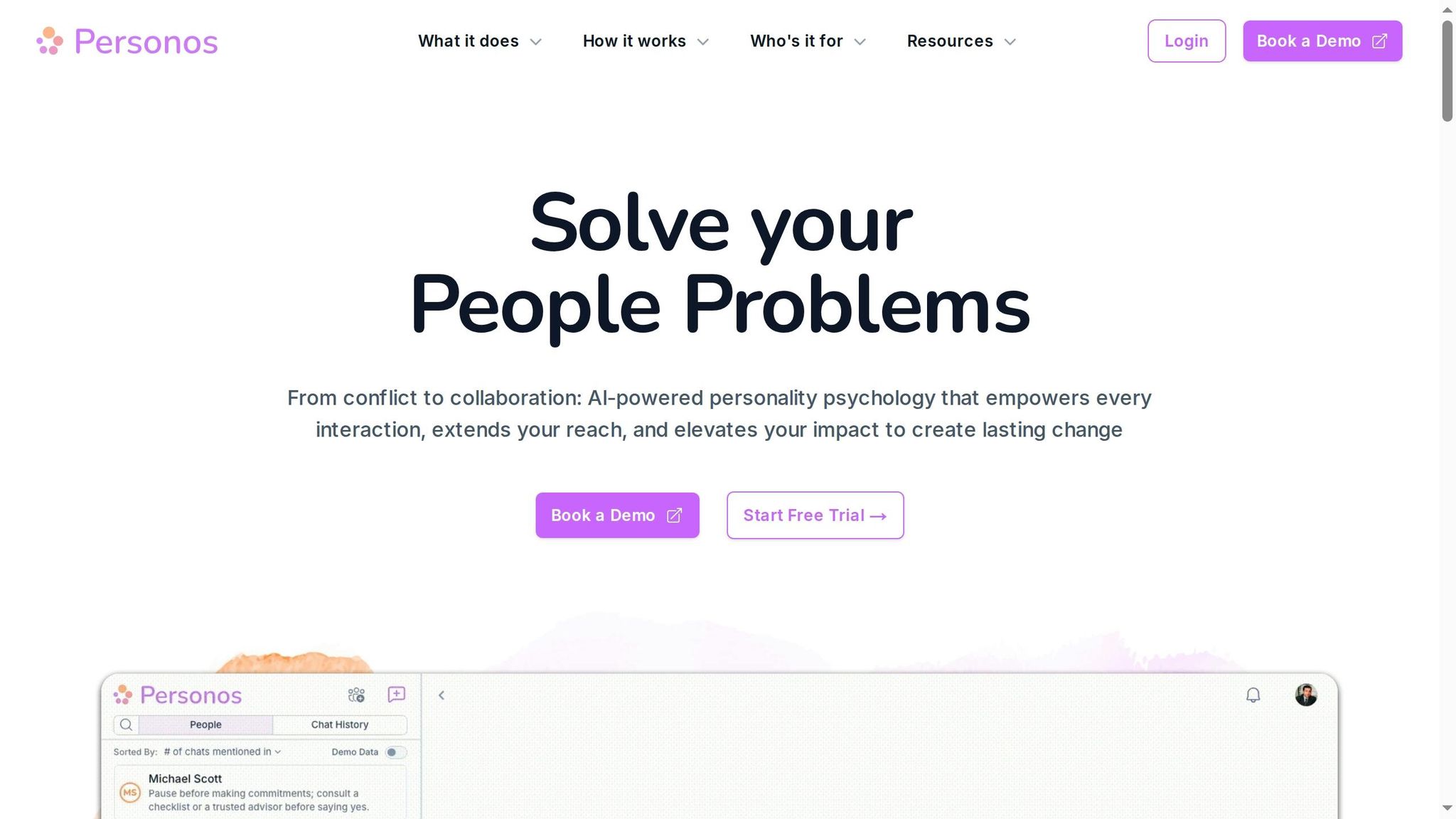
Personos (https://personos.ai) is a platform designed for U.S.-based professionals - coaches, therapists, HR leaders, and managers - to translate personality insights into actionable guidance for everyday scenarios. By blending personality psychology with AI, it helps users navigate challenges like performance reviews, conflict resolution, and career transitions. The platform focuses on building emotional resilience on a large scale while honoring individual differences, seamlessly aligning with earlier discussions on personality-driven resilience.
Resilience Patterns
Personos takes a deep dive into resilience by analyzing 30 personality traits alongside background details and situational factors. This approach uncovers resilience patterns that might otherwise take months to detect. It identifies tendencies such as who recovers quickly versus slowly, who internalizes stress versus externalizes it, and who relies on action, analysis, or relationships to cope. For example, an analytical, introverted employee might withdraw during sudden organizational changes, while an extroverted, optimistic colleague could step up as a morale booster in the same scenario. With dynamic dashboards and reports, leaders and coaches can quickly determine whether someone needs more structure, emotional support, or autonomy to stay resilient.
Coping Strategies
The platform connects personality insights with proven coping strategies tailored to natural thinking and relational styles. Whether it’s a manager handling a high-pressure product launch, a healthcare worker dealing with burnout, or a student preparing for exams, Personos provides context-specific recommendations. It analyzes communication styles and personality traits to suggest practical solutions like scheduling short breaks, conducting structured debriefs, or using boundary-setting scripts. These strategies are then integrated into a personalized resilience plan.
"In recovery, timing is everything. Personos helps me anticipate when a client is on the edge of shutting down and adjust my approach so we stay connected. That kind of in-the-moment support is priceless." - Carla Mendoza, LCSW, Addiction recovery counselor [1]
To make these strategies actionable, the platform includes Personos Prompts, which deliver real-time reminders. For instance, it might suggest a Judging personality type add flexibility to their plans or encourage a Feeling type to set boundaries during emotionally intense situations.
Coaching and Development Tools
Personos offers a suite of tools that build on established coaching frameworks like the MBTI and Big Five, providing practical ways to enhance resilience. These include:
- Personos Chat & Specialized Chats: AI-driven conversational tools to rehearse and prepare for difficult interactions.
- Dynamic Reports: Detailed personal, relationship, and team reports that highlight triggers, protective factors, and resilience strengths.
- ActionBoard: A tracker for resilience habits, such as journaling, structured check-ins, or boundary-setting.
- Transparent Reasoning: Clear explanations of the personality-based logic behind each recommendation.
- Personos Prompts: Real-time nudges to encourage users to apply coping strategies during challenging moments.
These tools support executive coaches in tailoring leadership development plans, enable HR teams to design targeted training programs, and assist therapists in complementing traditional care with personality-based insights. Additionally, the platform’s Relationship and Group Analysis features provide a clear view of how team members interact under stress, helping leaders create balanced, resilient teams by leveraging diverse strengths.
It’s worth noting that Personos is not a replacement for licensed mental health care. Its insights are probabilistic rather than diagnostic, and users should pair the platform’s recommendations with professional judgment and open communication. When used ethically - prioritizing privacy, offering clear explanations, and inviting dialogue - Personos can be a valuable tool for fostering personal and organizational resilience. A 7-day free trial is available, no credit card required.
Pros and Cons
When it comes to understanding emotional resilience, each framework offers its own set of strengths and drawbacks. The Big Five, MBTI, and Personos frameworks cater to different needs, making them useful in various contexts. Whether you're a coach, HR professional, or someone looking to build personal resilience, knowing how and when to apply these tools can significantly enhance your approach. Here's a closer look at their unique features and limitations.
The Big Five is grounded in solid scientific research. Studies show that traits like high extraversion, agreeableness, conscientiousness, emotional stability, and openness are linked to stronger resilience, while neuroticism has the most significant negative correlation with stress management [3]. This framework's ability to measure traits continuously allows for tracking stress responses over time, making it especially valuable for workplace wellness programs and identifying individuals who might struggle under pressure [3][6].
However, the Big Five can feel abstract to clients. Translating broad trait categories into actionable advice often requires extra effort from coaches, who need to bridge the gap between data and practical application [3][6].
MBTI, on the other hand, excels at providing accessible, narrative-driven insights. Its type-specific descriptions make it easy for individuals to identify their coping styles and discuss resilience in relatable terms. This ease of use makes MBTI a favorite in team workshops and personal development settings.
Yet, MBTI faces criticism for its lack of scientific reliability. Its binary categories can oversimplify complex stress responses, and its predictive power pales in comparison to trait-based models like the Big Five [2][6]. For professionals seeking precise metrics or incremental progress tracking, MBTI may feel limiting.
Personos offers a modern, tech-driven approach by combining personality insights with AI coaching. It evaluates 30 personality traits alongside situational data to provide dynamic, real-time guidance. For example, a manager preparing for a product launch might receive advice tailored to that specific scenario, while the same manager handling team conflict would get entirely different recommendations. Tools like Personos Chat, ActionBoard, and relationship analysis make it easy to support resilience across entire teams. One company even reduced team turnover by 45% within six months of using Personos [1]. At $9 per user per month, the platform is designed for ongoing use rather than one-off assessments.
However, Personos is still relatively new, and its effectiveness lacks the long-term validation seen with the Big Five or the widespread familiarity of MBTI. Its recommendations rely heavily on AI accuracy, which may not always capture the nuances of human behavior. Additionally, organizations need to address data privacy concerns and ensure users are comfortable engaging with the platform [2].
Here's a summary table comparing the three frameworks:
| Framework | Resilience Patterns | Coping Strategies | Coaching Tools | Key Strengths | Main Limitations |
|---|---|---|---|---|---|
| Big Five | Links resilience to traits like low neuroticism, high extraversion, and conscientiousness [3][6] | Supports strategies like emotion regulation for high neuroticism or structured planning for conscientiousness [3][6] | Validated questionnaires and normed scores for tracking [3][6] | Scientifically reliable, tracks stress vulnerability over time [3][6] | Abstract for clients; requires translation into practical advice [3][6] |
| MBTI | Highlights type-specific resilience, e.g., ENFJ relational focus or ISTJ steady discipline [2] | Offers self-reflection tools based on coping preferences [2][6] | Type reports and engaging language for workshops [2][6] | Easy to understand, fosters quick engagement in team settings [2] | Limited reliability; oversimplifies responses; risk of stereotyping [2][6] |
| Personos | Combines personality traits with situational data for tailored resilience insights | Provides actionable prompts and tools like conflict resolution suggestions | AI-driven reports, group analysis, and task tracking | Action-oriented, scalable, supports real-time coaching [1] | Lacks long-term validation; relies on AI accuracy; requires user trust [2] |
In the U.S., the choice often depends on the specific context. Use the Big Five for measurable data - ideal for screening employees in high-stress roles or tracking wellness program outcomes. Turn to MBTI for fostering self-awareness and encouraging discussions about coping styles, keeping its scientific limitations in mind. Opt for Personos when continuous coaching and real-time support are needed, especially for remote teams or professionals navigating high-pressure scenarios.
In many cases, combining these frameworks can yield the best results. For example, a coach might use the Big Five to identify individuals at risk of burnout, MBTI to help them understand their coping preferences, and Personos to provide ongoing, actionable support between sessions. This layered approach balances scientific rigor with practical usability, helping clients build resilience step by step.
Conclusion
Emotional resilience isn’t a one-size-fits-all concept - it’s deeply influenced by personality. While those prone to anxiety might need specific tools and support to strengthen their resilience, emotionally stable individuals often recover more quickly from challenges.
Tailored coaching can help by aligning resilience strategies with individual traits. For example, extraverts often find strength in social connections, conscientious individuals thrive with structured planning, and agreeable personalities rely on empathy and supportive relationships. Frameworks like MBTI offer a way to identify these tendencies, pointing toward strategies that resonate - whether through social interaction, reflective practices, problem-solving, or fostering relational harmony.
For coaches, leaders, and therapists, the key is to match resilience-building techniques with personality traits. Extraverts might benefit from social support systems, while conscientious clients may excel with structured routines. Psychoeducation about personality can also empower clients to co-create stress management strategies. By tracking progress - such as recovery time and coping effectiveness - approaches can be refined for better outcomes.
Platforms like Personos make this process even more accessible. Through personalized coaching prompts, dynamic reports, and task tracking, tools like these help coaches and leaders foster resilience-building habits. Whether it’s improving conflict resolution, enhancing recovery practices, or strengthening communication, these platforms provide actionable insights.
To start, identify your personality tendencies. Are you more emotionally sensitive or task-oriented? Do you recharge through social interaction or solitude? Choose a resilience habit that fits your style. For instance, if you’re socially driven, schedule regular check-ins with friends. If you’re introspective, try reflective journaling. Tactics like time-limited worry sessions for managing anxiety or breaking goals into smaller steps for conscientious individuals can also help. The key is to experiment and adjust based on what shortens your stress recovery time.
Personality models simplify complex traits, offering a clearer path to resilience. When used flexibly - especially with tools like Personos that adapt recommendations in real time - these models provide a more precise and engaging alternative to generic approaches.
Building emotional resilience is an ongoing journey. It requires regular evaluation and fine-tuning. Track your mood stability, stress levels, and coping behaviors over time rather than relying on a single assessment. Revisit your strategies as life evolves, and use digital tools to gather real-world data. Whether you’re navigating corporate stress, managing healthcare burnout, or handling classroom challenges, personality-based tools can guide you toward a more sustainable and personalized approach to emotional resilience - one step at a time.
FAQs
How do personality traits affect emotional resilience and its development?
Personality traits play a big part in how people handle challenges and build emotional strength. For instance, individuals who score high in openness often find it easier to adjust to new situations, while those high in conscientiousness may lean on well-organized coping mechanisms. In contrast, people with higher levels of neuroticism might struggle more with setbacks but can make significant progress with the right guidance.
Recognizing these differences paves the way for personalized approaches to emotional resilience. Tools like Personos provide customized insights and strategies based on personality profiles, helping individuals build resilience in ways that align naturally with their strengths and tendencies.
Is emotional resilience something you can develop, or is it shaped by your personality?
Emotional resilience stems from a mix of your natural personality traits and the experiences you've encountered throughout life. While some people might naturally handle stress and challenges more smoothly, resilience isn’t something you’re just born with - it’s a skill you can build through self-awareness, consistent effort, and the right support.
Getting to know your personality better can reveal a lot about how you handle emotions and respond to tough situations. Tools like personality-based coaching can offer customized strategies to help you grow your resilience, enhance communication, and manage relationships with greater ease.
How can Personos support individuals with high neuroticism in building emotional resilience?
Personos supports individuals with high neuroticism by helping them build emotional resilience through personalized, real-time insights tailored to their specific personality traits. Using a combination of AI and principles from personality psychology, it offers tools such as dynamic personality reports and proactive communication prompts designed to address emotional challenges head-on.
These tools enable users to handle conflicts more effectively, enhance their communication skills, and create strategies that cater to their unique emotional needs. Over time, this approach helps users strengthen their resilience and improve their ability to navigate life's challenges.