How Emotional Resilience Improves Conflict Management
Leaders who build emotional resilience stay calm under pressure, use self-awareness and mindfulness, and convert workplace conflicts into collaborative solutions.
Christian Thomas

How Emotional Resilience Improves Conflict Management
Emotional resilience is the ability to stay calm, manage stress, and make clear decisions during conflict. It’s a critical skill for leaders who face workplace challenges like personality clashes or high-pressure negotiations. By controlling emotional reactions, leaders can maintain trust, improve team dynamics, and turn disagreements into productive outcomes.
Key takeaways:
- Emotional resilience helps leaders manage stress and avoid impulsive decisions.
- Staying composed prevents conflicts from escalating and fosters better communication.
- Techniques like deep breathing, reframing thoughts, and mindfulness build resilience.
- Real-time tools like Personos AI offer personalized insights to improve conflict management.
The result? Leaders who practice emotional resilience not only handle disputes effectively but also create stronger, more collaborative teams.
Building Emotional Resilience in Difficult Conversations
How Emotional Resilience Improves Decision-Making During Conflict
When conflict arises, our natural instincts often push us to react defensively - whether that means fighting back, withdrawing, or shutting down. Emotional resilience flips the script. It helps keep your prefrontal cortex, the part of the brain responsible for rational thinking and problem-solving, in control. This prevents the amygdala, the fight-or-flight center, from hijacking your responses. With this mental balance, you can approach conflict with a clear head. You'll be able to gather facts, consider different perspectives, and think through long-term consequences instead of making impulsive decisions you might regret later. This ability to stay grounded is key to navigating tense situations effectively.
Staying Calm Under Pressure
Remaining calm during conflict doesn’t mean ignoring your emotions - it’s about managing them in the moment. Resilient individuals use techniques like pausing, taking deep breaths (inhale for 4 seconds, exhale for 6), and grounding themselves by standing firmly or relaxing their shoulders. These small actions can make a big difference in maintaining clarity when tensions are high. For instance, during a heated disagreement over resources, a leader with emotional resilience might say, "I understand this is frustrating for both of you - let’s pause for 30 seconds and then go over the facts step by step." This measured response keeps the discussion on track and avoids unnecessary escalation.
Improving Clarity and Objectivity
Emotional resilience doesn’t just help you stay calm - it also sharpens your ability to think clearly under pressure. It reduces the influence of biases like confirmation bias (favoring information that supports your existing beliefs) and attribution error (blaming others’ actions on their character rather than circumstances). Resilient leaders are more comfortable sitting with uncertainty and discomfort, which allows them to ask thoughtful questions, challenge their assumptions, and consider perspectives they might otherwise overlook. They actively seek input from all stakeholders, including quieter voices or minority viewpoints, and focus on identifying patterns in needs and interests rather than getting stuck on rigid positions. This openness helps them separate facts from interpretations, focus on the issue rather than the individual, and make decisions that align with shared goals and long-term benefits - not personal pride or status.
How to Build Emotional Resilience
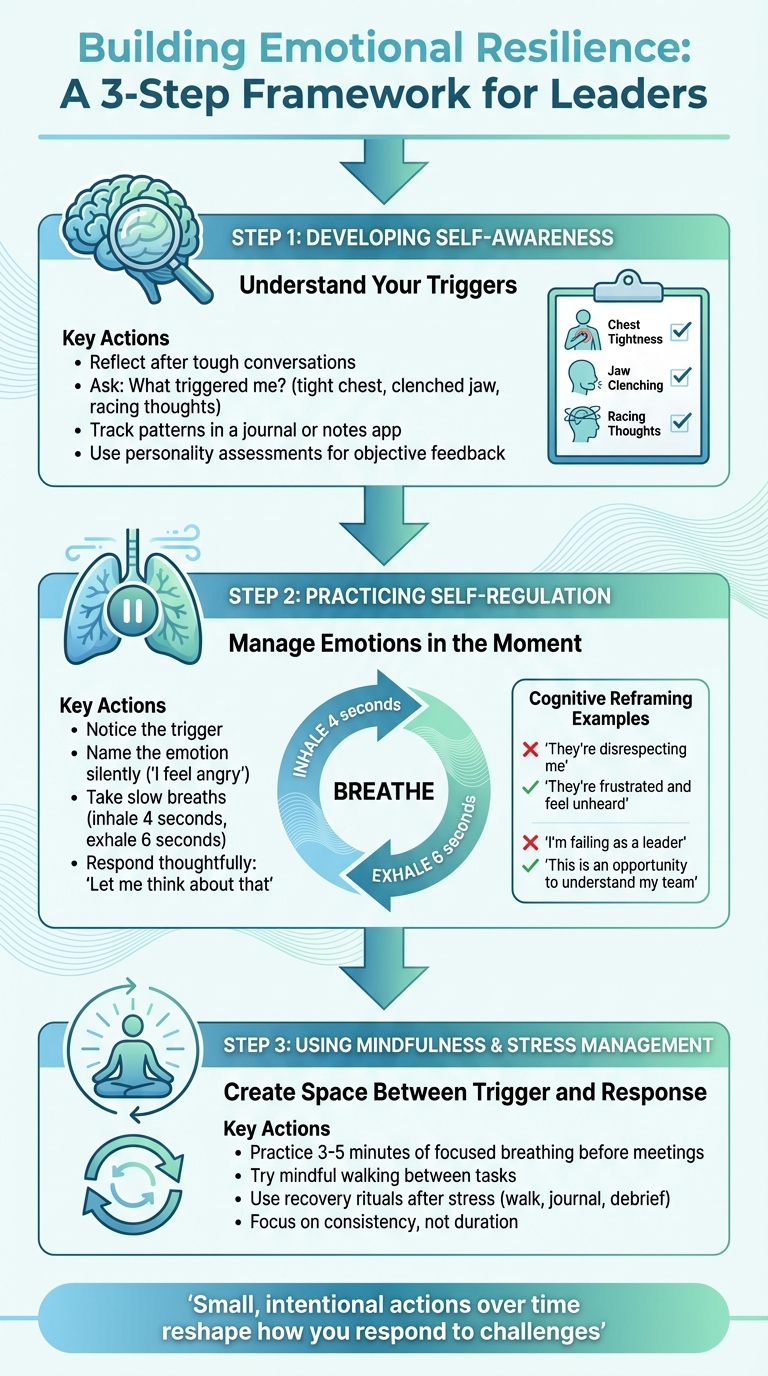
Building Emotional Resilience: A 3-Step Framework for Leaders
Building emotional resilience isn't about innate talent - it's a skill set you can develop with consistent effort. Think of it like building physical strength: small, intentional actions over time can reshape how you respond to challenges. By focusing on self-awareness, emotional regulation, and mindfulness, you can train your brain to handle conflict and stress more effectively.
Developing Self-Awareness
Self-awareness begins with understanding what sets you off before it takes control. After a tough conversation, take a moment to reflect. Ask yourself: What triggered me? Did I feel a tight chest, a clenched jaw, or racing thoughts? What story did I tell myself about the situation? These physical and mental signals are your early warning system, helping you recognize when you're being triggered. Tracking these patterns in a journal or notes app can help you spot trends and prepare for future situations.
For deeper insights, personality assessments can be a game-changer. Tools like Personos analyze personality traits and provide detailed reports that reveal how you typically respond under stress. This kind of objective feedback can help you step back and separate your emotional reactions from the actual issues you're facing.
Practicing Self-Regulation Techniques
Once you’ve identified your triggers, the next step is learning how to manage your emotions in the heat of the moment. Start with a simple process: notice the trigger (like frustration or defensiveness), silently name the emotion (“I feel angry”), take a few slow breaths, and respond with a phrase such as, “Let me think about that for a second.” This approach gives you time to respond thoughtfully rather than react impulsively.
Another useful tool is cognitive reframing. For instance, if you catch yourself thinking, “They’re disrespecting me,” pause and reframe it as, “They’re frustrated and feel unheard right now.” Similarly, instead of, “This conflict means I’m failing as a leader,” try thinking, “Conflict is part of leadership; this is an opportunity to understand my team better.” Reframing your thoughts helps you see challenges as manageable, reducing emotional intensity.
Using Mindfulness and Stress Management
Mindfulness helps you notice your emotions without acting on them immediately, creating a pause between what triggers you and how you respond. Even just three to five minutes of focused breathing before a tough meeting can make a difference. Or try mindful walking - simply observe your surroundings without judgment as you move from one place to another. The key is consistency, not duration.
After particularly stressful moments, recovery rituals can help you reset. A quick walk, jotting down thoughts in a journal, or talking things over with a trusted colleague can prevent stress from piling up. Use these moments to reflect on challenging interactions and turn them into opportunities for growth. Small but intentional practices like these can make a lasting impact on your ability to stay resilient.
sbb-itb-f8fc6bf
Using Emotional Resilience During Conflicts
Conflict challenges your ability to stay composed. Whether it’s a heated exchange in a meeting or a curt email from a colleague, maintaining your emotional balance can shift the outcome. In these moments, resilience isn’t just about knowing what to do - it’s about applying those strategies when the pressure is on. Effective leaders don’t just understand conflict resolution; they practice it, even in the toughest situations.
Active Listening and Empathy
When tensions rise, the natural reaction is often to get defensive or shut down. Emotional resilience allows you to resist those instincts and stay open. Active listening is key here - focusing fully on the other person without planning your response or interrupting. Nonverbal cues, like maintaining eye contact or nodding, can also signal calm and attentiveness.
A practical way to engage in active listening is by paraphrasing what the other person has said. For instance, you might say, "It sounds like you feel the deadline was unrealistic - am I understanding that correctly?" Open-ended questions, such as "Can you explain what led to this situation from your perspective?" encourage dialogue and help you uncover the full story. Reflecting both the facts and emotions you observe can also make a big difference. For example, saying, "I can sense you're feeling overwhelmed and frustrated about the workload", shows that you’re not just hearing their words but understanding their feelings.
"In recovery, timing is everything. Personos helps me anticipate when a client is on the edge of shutting down and adjust my approach so we stay connected." - Carla Mendoza, LCSW, Addiction Recovery Counselor
Empathy plays a crucial role in defusing conflict. Acknowledging someone’s stress with a simple statement like, "I can see this has been really difficult for you", can make them feel valued and heard. Over time, this approach builds trust and creates an environment where open communication feels safe.
Using Resilience to Find Win-Win Solutions
Once you’ve listened and empathized, the next step is turning the conversation toward solutions. Resilient leaders focus on collaboration rather than blame. Emotional steadiness helps you move beyond "who’s right" and instead explore what everyone truly needs. Ask questions to uncover shared goals, whether it’s staying within a $500,000 budget, hitting a 09/30/2026 deadline, or maintaining product standards.
Reframing the conflict as a joint problem-solving effort can shift the tone of the conversation. For example, you might say, "We’re both aiming to balance quality and cost - what solutions could work for everyone?" Using inclusive language like "both/and" instead of "either/or" opens the door for cooperation. You could add, "You’re right that the timeline is tight, and we also need to meet the client’s expectations. Let’s figure out how to adjust the scope together." This approach requires emotional control to navigate uncertainty and avoid rushing to an easy but ineffective compromise.
Tools like Personos can be particularly helpful in these situations. Designed to enhance self-awareness, Personos provides real-time prompts during challenging conversations, reminding you to slow down, ask clarifying questions, or validate emotions. It also offers dynamic personality insights, revealing potential triggers and preferred communication styles for you and your team. Over time, this kind of support can help you turn resilience strategies into habits, making conflict management a natural part of your leadership style.
How Personos AI Strengthens Emotional Resilience
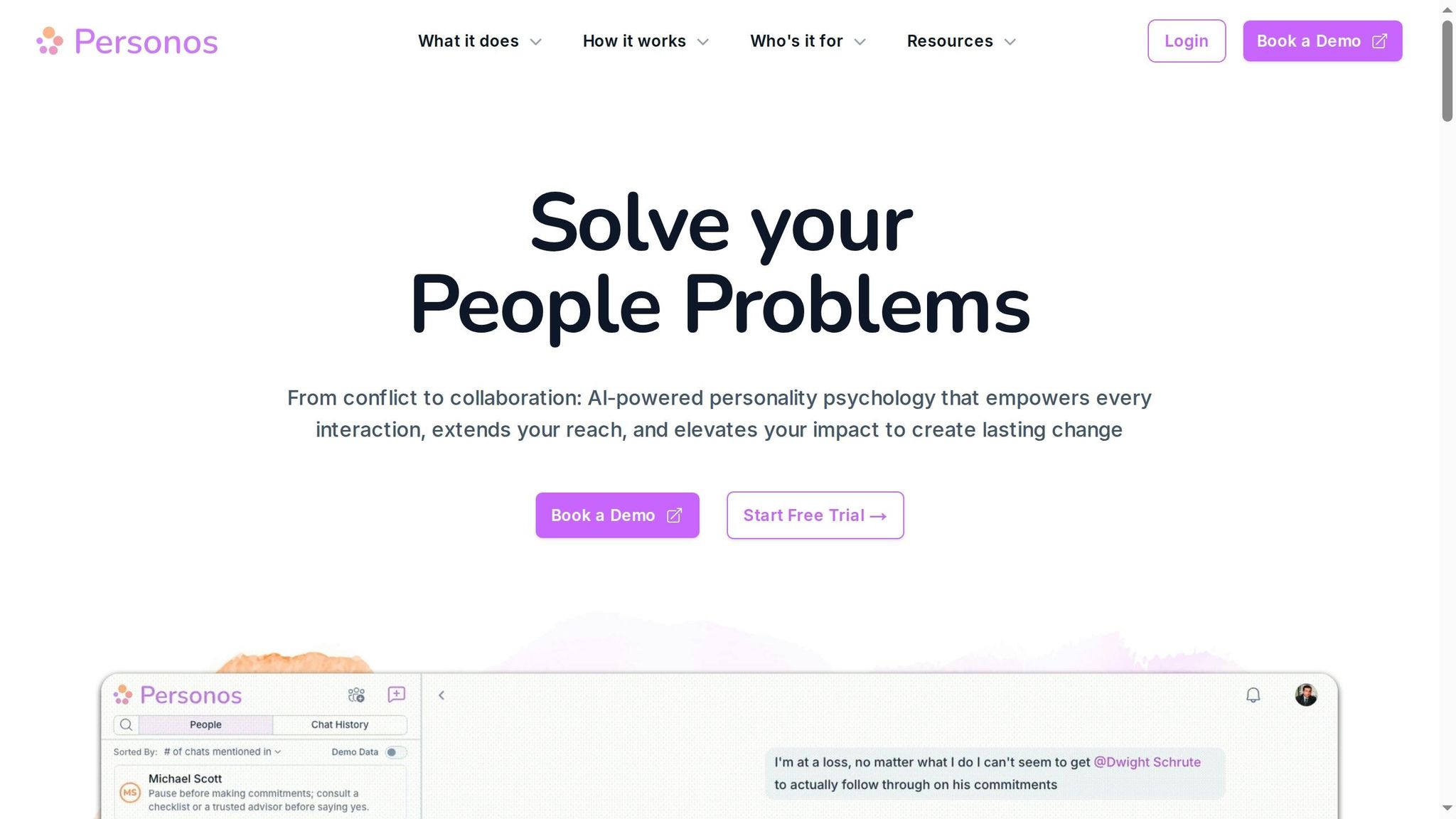
Developing emotional resilience takes effort and consistency, but Personos makes the process smoother and faster. By blending personality psychology with AI, Personos offers leaders real-time guidance during conflicts, helping them maintain composure when emotions run high. It provides practical insights that encourage pauses, reframing, and responses rooted in leadership principles. This AI-powered tool complements traditional resilience-building methods, giving leaders an extra edge during challenging interactions.
Real-Time Conflict Insights with AI
Navigating tense conversations is no easy task, especially when balancing communication styles and personality differences. Personos steps in with real-time, actionable prompts tailored to personality data. For instance, before a high-stakes meeting like a budget negotiation or performance review, you might receive a suggestion like, "Slow down and ask clarifying questions - this person values precision and may feel overwhelmed by a rushed approach." These insights turn personality data into practical strategies you can use on the spot.
What sets Personos apart is its dynamic personality reports, which go beyond static assessments. These reports provide a deeper understanding of how individuals typically react to stress, disagreements, and feedback. Before a crucial meeting, you can review how a team member handles criticism or time pressure and adjust your approach accordingly. Sarah Mitchell, MBA, and VP of Operations, shared her experience:
"We reduced team turnover by 45% in six months. Personos helped us understand why certain team dynamics weren't working and gave managers the exact words to fix it."
Building Self-Awareness with Personality Analysis
Emotional resilience starts with self-awareness, but recognizing your own patterns under stress can be tough. Personos helps by identifying how you typically respond during conflicts - whether you tend to withdraw, become overly assertive, or rush to resolve issues. The platform pairs these insights with concise coaching prompts, such as, "Notice when your voice gets louder - what are you trying to protect right now?" Your dashboard tracks patterns, like becoming more controlling as deadlines approach, and offers targeted interventions to help you manage your reactions.
Personos also includes a conversational AI feature that lets you practice difficult conversations. It provides feedback on your word choice, emotional tone, and pacing, helping you build the mental habits needed to stay calm and effective in real-world conflicts.
Enhancing Team Dynamics with Personos
Many workplace conflicts arise from personality differences that go unnoticed until tensions boil over. Personos's group analysis reports shed light on collective team tendencies, such as a preference for direct communication combined with low tolerance for uncertainty, or a mix of risk-takers and cautious planners. This information helps you spot potential friction points and establish guidelines to prevent them, like clearer decision-making processes or structured feedback practices.
The platform also highlights complementary strengths within your team, reframing tension as an opportunity rather than a problem. For instance, pairing a visionary thinker with a detail-oriented executor can balance creativity and precision, minimizing conflict while maximizing productivity. By aligning roles with individual strengths, Personos helps address potential issues before they escalate.
Conclusion
Conflicts are an inevitable part of leadership, but emotional resilience is what determines whether those moments erode trust or strengthen your team. By staying composed under pressure, managing your reactions, and approaching disagreements with empathy, you can turn tension into trust and friction into progress. Resilience isn’t something you’re born with - it’s a skill you develop through self-awareness, mindfulness, and consistent practice.
The impact of resilience goes beyond just personal growth; it reshapes team dynamics too. Leaders who build emotional resilience create environments where psychological safety thrives, set an example of constructive behavior, and encourage open, collaborative problem-solving. Studies show that emotionally intelligent leaders are better at managing conflicts, increasing team engagement, and improving employee retention. When you work on your resilience, you’re not just bettering yourself - you’re also investing in your team’s success and well-being.
Start small by pausing before reacting and reflecting on what triggers you. Tools like Personos can help speed up this process by offering real-time personality insights, personalized communication tips, and dynamic reports that highlight patterns in your behavior. For just $9/month per seat, the Pro Plan adds AI-powered support designed to enhance your conflict management skills. With these resources, you can build a solid foundation for effective, emotionally intelligent leadership.
Every conflict is an opportunity to grow. The more you practice staying present, listening with intention, and viewing tension as valuable information rather than a threat, the more skilled you’ll become at navigating challenges. With daily habits and structured support, you can turn conflicts from energy drains into opportunities for stronger relationships, better decisions, and a more cohesive team.
FAQs
How does emotional resilience help leaders and teams handle conflicts more effectively?
Emotional resilience allows leaders and team members to maintain their composure, even in high-pressure situations. It helps them regulate their emotions and handle conflicts with a calm and rational approach. This reduces the chance of emotional reactions or miscommunications, creating space for open and constructive dialogue.
When emotional resilience is prioritized, teams can shift their focus toward solving problems instead of pointing fingers. This approach not only prevents conflicts from escalating but also builds trust and strengthens collaboration, fostering a more united and efficient team dynamic.
How can leaders build emotional resilience to handle conflicts effectively?
Building emotional resilience as a leader begins with self-awareness - recognizing your emotions and understanding what triggers them. To handle stress effectively, try techniques like mindfulness or deep breathing, which can help you maintain composure in high-pressure situations. Shifting your focus toward solutions instead of dwelling on problems can foster a more positive outlook. Additionally, seeking feedback from others is a great way to refine your interpersonal skills and grow as a leader.
Leveraging tools like Personos can also be a game-changer. These tools provide insights into personality dynamics, enabling you to handle conflicts more effectively, communicate with greater clarity, and make well-informed decisions even when faced with tough challenges.
How does Personos AI help leaders build emotional resilience during conflicts?
Personos AI helps build emotional resilience by delivering real-time, tailored insights that align with a person's unique personality traits. This allows leaders to maintain composure, grasp others' viewpoints more effectively, and make well-considered choices during moments of conflict.
With features like dynamic personality reports and proactive communication suggestions, Personos equips leaders to handle tough situations with clarity and assurance. The result? Smoother conflict resolution and stronger, more meaningful connections with others.