AI Tools for Personality-Based Mentor Pairing
Compare six AI mentoring platforms: choose personality-first matching for relationship quality or ops-first tools for scale.
Nick Blasi

AI Tools for Personality-Based Mentor Pairing
If you need better mentor matches, the split is simple: some tools help you run a mentoring program, while one leans much more into personality data and in-the-moment support.
Here’s the short version:
- Personos focuses on Big Five personality data, fit scoring, chat support, action tracking, and custom reports. It starts at $9 per seat/month.
- Chronus focuses on large program matching, admin control, guided plans, and benchmark reporting.
- MentorcliQ puts more weight on automation, retention, and staff workflows than deep personality data.
- Mentorloop keeps things simple with goal- and interest-based matching plus program dashboards.
- Qooper centers on matching, reminders, milestones, and engagement tracking.
- MentorEase uses NLP from resumes and profiles to find links, but it does not use a built-in personality model.
If I strip it down even more, this is what matters most:
- Choose Personos if you care most about match depth, personality detail, and live guidance by applying the Five Factor Model to daily interactions
- Choose Chronus or MentorcliQ if you care most about scale and admin control
- Choose Mentorloop, Qooper, or MentorEase if you want lighter program management with simpler matching
About 6 platforms are compared here across 4 key areas:
- personality depth
- match approach
- mentor support
- reporting
Quick Comparison
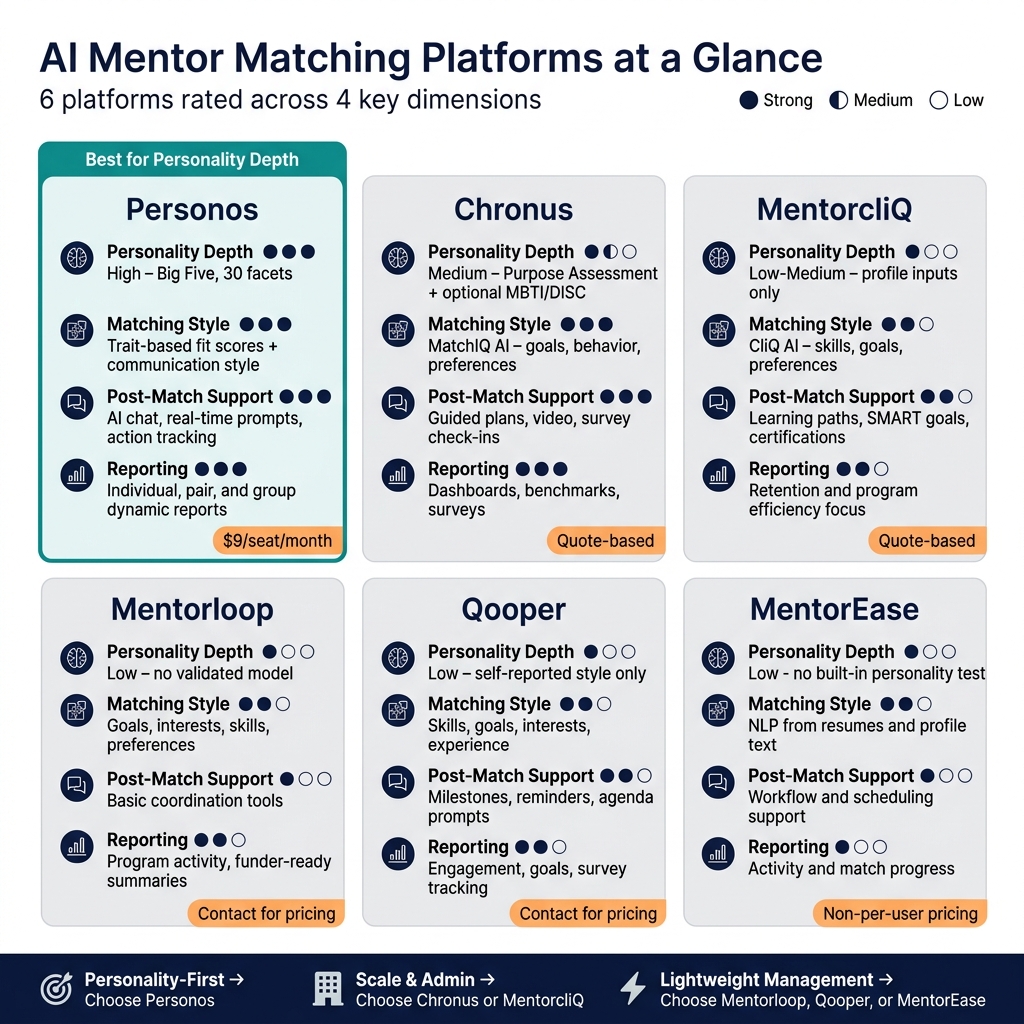
AI Mentor Matching Platforms Compared: Personality Depth, Matching & Support
| Platform | Personality Depth | Matching Style | Support After Match | Reporting Focus |
|---|---|---|---|---|
| Personos | High, Big Five with 30 facets | Trait-based fit scores plus context and communication style | AI chat, prompts, action tracking | Individual, pair, and group reports |
| Chronus | Medium, purpose-based with optional MBTI or DISC | AI matching using goals, behavior, preferences, and profile data | Guided mentoring, reminders, check-ins, video | Dashboards, surveys, benchmark data |
| MentorcliQ | Low to medium, mostly profile inputs | AI matching using goals, skills, and preferences | Learning paths, courses, SMART goals | Retention and program efficiency |
| Mentorloop | Low, no validated personality model | Goals, interests, skills, and preferences | Basic coordination tools | Program activity and funder-ready summaries |
| Qooper | Low, self-reported style and preference data | Skills, goals, interests, and experience | Milestones, reminders, agenda prompts | Engagement, goals, and survey tracking |
| MentorEase | Low, no built-in personality test | NLP from resumes and profile text | Workflow and scheduling support | Activity and match progress |
My takeaway: if your main problem is running the program, the admin-first tools make more sense. If your main problem is relationship quality, Personos is the clearest personality-first option.
That’s the lens I’d use for the rest of this comparison.
1. Personos
Personos costs $9 per seat per month, which puts it within reach for smaller nonprofits.
Personality Assessment
Personos uses the Five Factor Model (FFM), also known as the Big Five, to measure 30 separate personality facets. That level of detail can produce millions of possible personality profiles[1]. Assessments stay private, which may help people answer more openly and lead to more accurate profiles. The platform can also study real interactions, including text, video, and audio, to build or refine profiles over time instead of leaning only on a one-time self-report.
Matching Engine
The matching engine calculates fit scores by looking at individual traits along with program context, relationship goals, and communication styles. That helps teams spot both fit and likely friction before a match even starts. It also moves past simple type labels and gets into the smaller differences in how people think and communicate.
Guidance and Support
Once a match is made, conversational AI chat offers real-time, personality-aware help for hard conversations, mentees in crisis, or trust-building issues. Prompts can send daily, weekly, or monthly nudges based on the relationship and what’s happening at the time.
Tracking and Reporting
The ActionBoard tracks action items pulled from chat insights, reports, or prompts, which helps staff monitor progress between sessions. Dynamic Reports create custom insights at three levels:
- Individual
- Relationship (mentor-to-mentee)
- Group
That can make impact reporting simpler for funders and stakeholders.
The next platforms lean more into broad program administration, with personality playing a smaller part in the workflow.
2. Chronus
Compared with Personos, Chronus puts less weight on deep personality profiling and more on purpose, behavior, and scale. It’s built for enterprise mentoring programs, where matching a large number of people well matters just as much as matching them fast.
Personality Assessment
Chronus uses a 10-minute Purpose Assessment to match people based on shared or complementary motivators, like learning, contribution, or recognition. Teams can also add MBTI or DISC data if they want another layer.
The goal here is pretty simple: improve match fit without making everyone sit through a long personality inventory.
Matching Engine
Chronus runs on MatchIQ®, an AI-powered matching engine that pulls from profile fields, skills, goals, behavior data, participant preferences, and Purpose Assessment results.
Admins can handle matching in a few ways:
- Run it fully automatically
- Review AI-suggested pairs
- Give participants ranked match recommendations and let them choose
MatchIQ can also spot less obvious overlaps, including shared interests and background connections that might otherwise get missed.
Guidance and Support
After matches are made, Guided Mentoring helps keep things on track. It includes structured plans, milestone templates, task reminders, and conversation guides tied to each person’s development goals.
Chronus also includes integrated video meetings, which helps remote mentoring happen in one place instead of pushing people into yet another app. Survey check-ins can flag weak or struggling matches early, so admins have a chance to step in before the relationship stalls.
Tracking and Reporting
Chronus includes customizable dashboards, real-time analytics, and survey data that link mentoring activity to outcomes like retention, engagement, and advancement.
Its standout feature is the industry’s first Mentoring Benchmarks tool, which lets organizations compare program performance against similar programs.[5]
Pricing is quote-based. Next, MentorcliQ leans even more toward enterprise program administration.
3. MentorcliQ
MentorcliQ leans hard into AI-driven program automation and enterprise-scale admin work. That makes it a stronger fit for large programs that need scale and less hands-on coordination, not so much for deep personality-based matching.
Profile Inputs
MentorcliQ builds matches around participant goals, skills, and preferences. It doesn't go deep on personality profiling.
Matching Engine
Matching runs through CliQ AI, MentorcliQ's proprietary engine trained on 20 years of mentoring program data. It looks at skills, goals, and preferences to suggest pairings. At the same time, Admin AI takes care of backend logistics, which can cut down the manual work for program coordinators.
Guidance and Support
After participants are matched, they get personalized learning paths, courses, certifications, and SMART goals tied to skill gaps. So the platform doesn't stop at the match itself. It keeps attention on helping the relationship grow after that, instead of only automating admin tasks.
Tracking and Reporting
MentorcliQ stands out most in retention and program-efficiency reporting, but it offers less detail when it comes to relationship-level progress. For nonprofits and helping programs, that means it's often more useful for staff efficiency and retention reporting than for close-up insight into how each relationship is developing.
Compared with Personos, MentorcliQ puts more weight on operational efficiency than personality depth.
4. Mentorloop
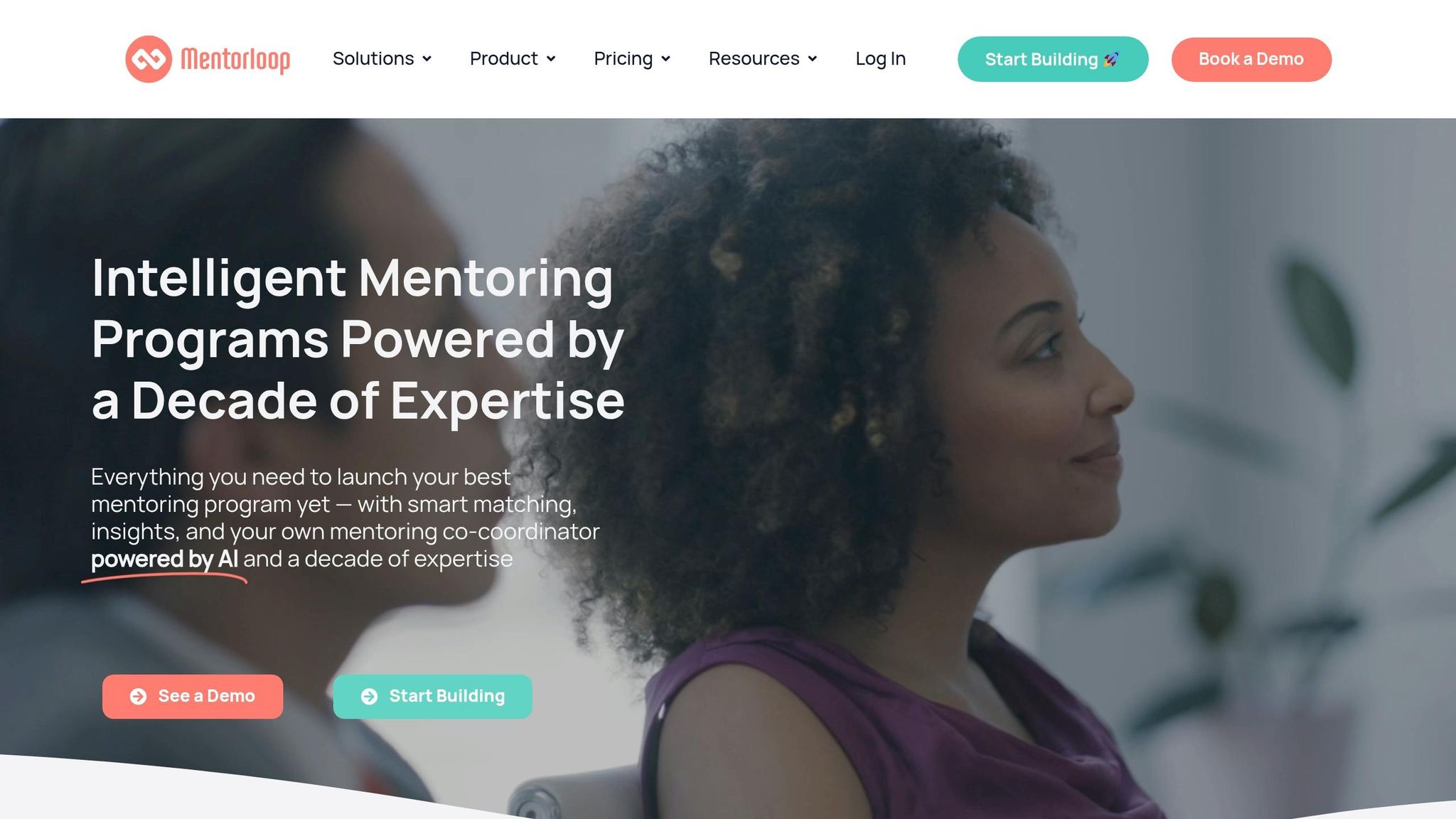
Mentorloop is closer to a general mentoring management tool than a platform built around deep personality-based matching. It uses self-reported goals, skills, interests, and preferences to pair mentors and mentees.
Personality Assessment
Mentorloop relies on profile data instead of validated personality testing. That can work for basic matching, but it doesn't add much personality depth.
Matching Engine
Its matching engine leans on shared goals and practical fit, not personality nuance. That makes pairings easier to manage, but it leaves little room for adaptive coaching or emotional intelligence solutions after the match is made.
Guidance and Support
Mentorloop helps with coordination, but it doesn't provide real-time, situation-specific coaching. If a program needs that extra layer of support, it may need a platform with more personality awareness.
Tracking and Reporting
Mentorloop tracks program activity, but its reporting is geared more toward administration than personality-level insight into relationship quality or outcomes.
Next, Qooper adds more automation and participant support.
5. Qooper
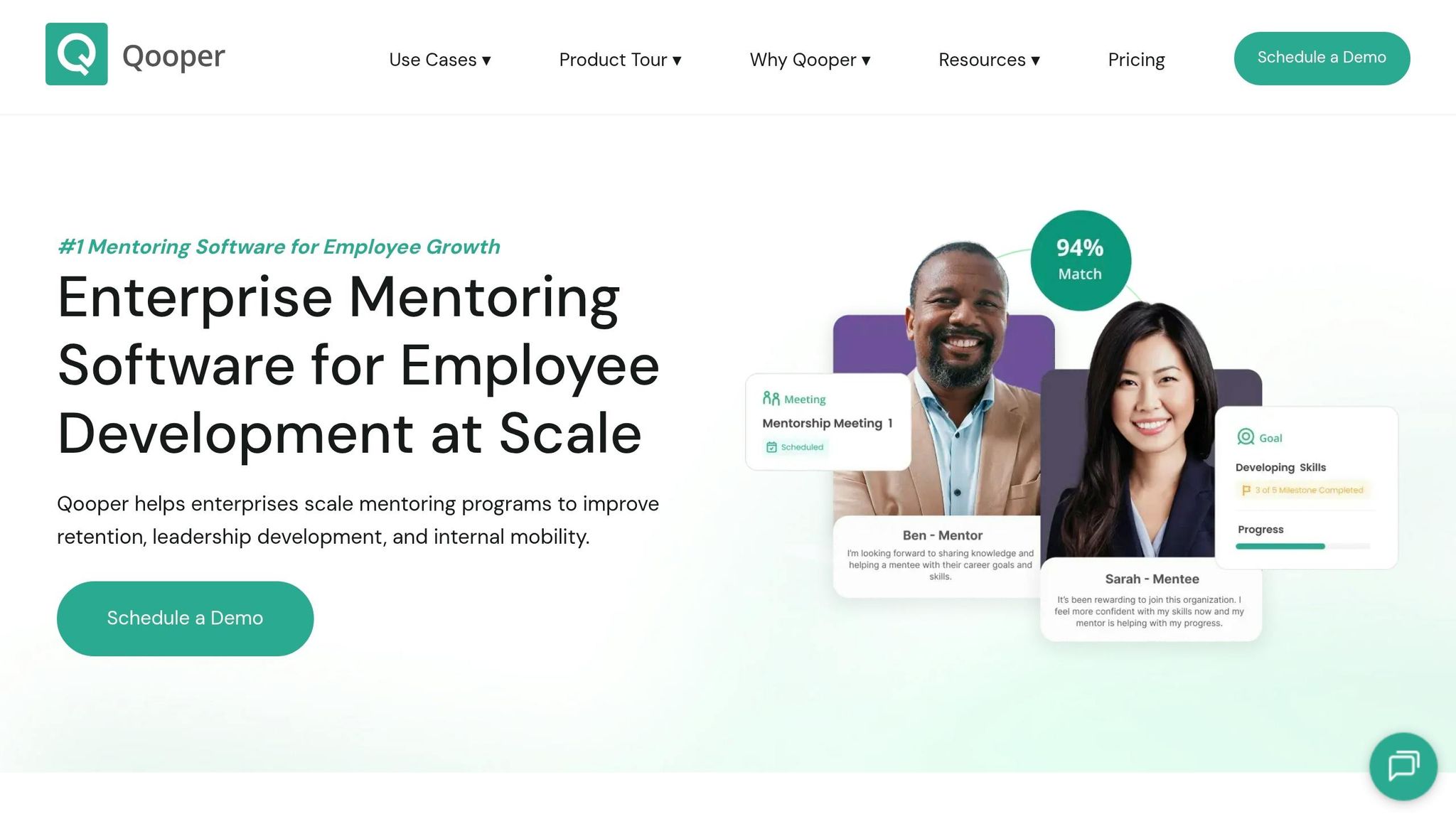
Like Mentorloop, Qooper leans more toward day-to-day mentoring management than personality-based matching. Its focus is practical: matching people, sending reminders, and tracking progress. It doesn't go deep on personality analysis.
Personality Assessment
Qooper does not use validated personality frameworks. Instead, it relies on self-reported mentoring styles and preferences during onboarding. That gives programs a simple starting point, but it does not measure personality in much depth.
Matching Engine
Its matching engine pairs mentors and mentees based on skills, professional goals, interests, and experience levels. That helps with practical fit, not psychological compatibility. Most of its strength comes after the match, where it helps keep the program organized and on track.
Guidance and Support
Learning Paths, Milestones, reminders, and agenda prompts help structure support after matching.
Tracking and Reporting
The platform tracks engagement through meeting logs, goal-setting modules, and feedback surveys. Participants can follow progress against goals and program metrics, which helps nonprofit teams with program oversight and engagement reporting.
Next, MentorEase shifts the focus to a similar mix of automation and admin support.
6. MentorEase
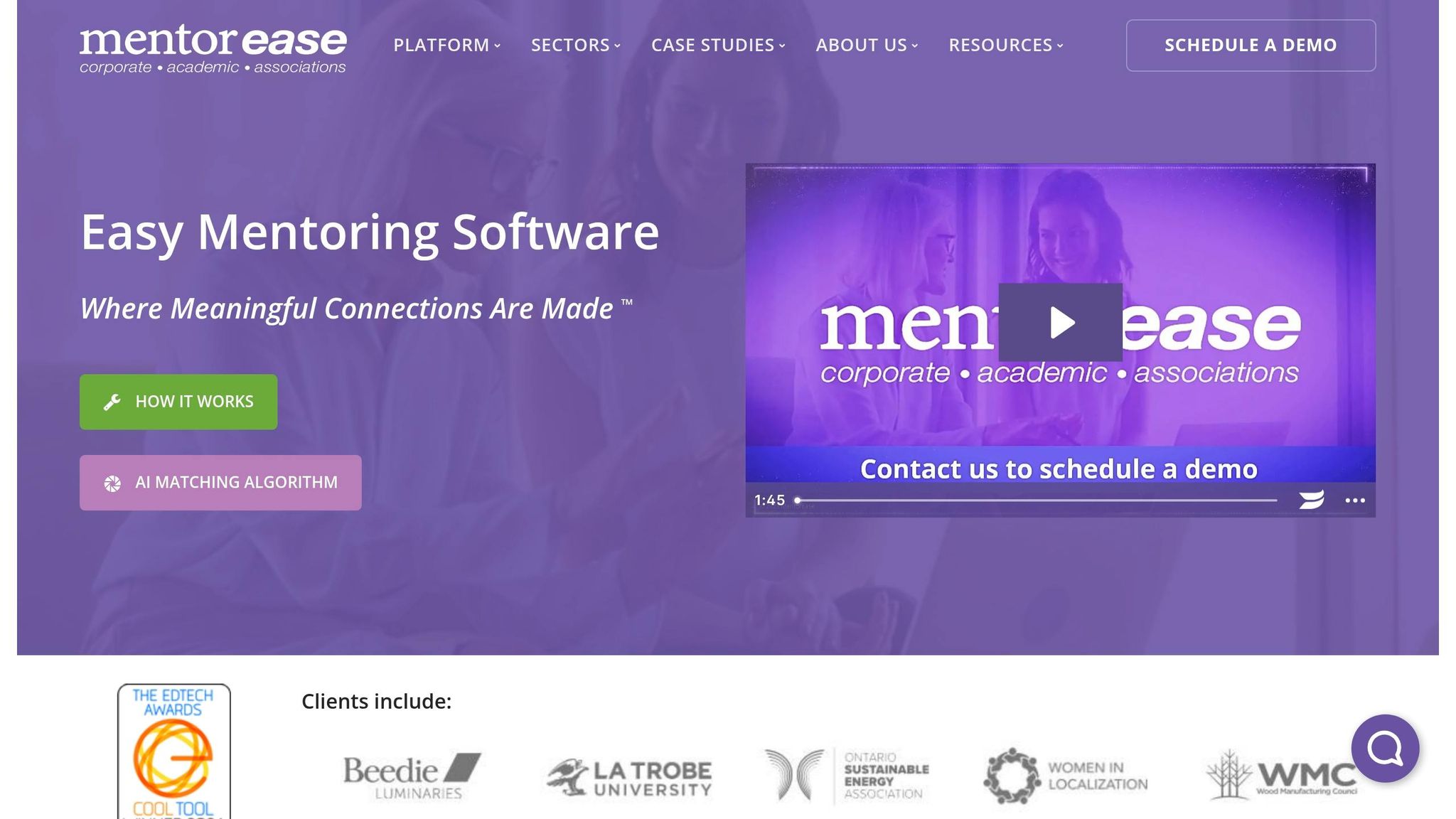
MentorEase takes a different path from the platforms above. Instead of using a built-in personality test, it leans on NLP to read resumes and professional profiles and pull matching signals straight from the text.
Personality Assessment
MentorEase does not use a proprietary personality assessment. It looks for useful cues in existing profiles, but it does not replace a full personality assessment. It can also work with external personality tools alongside career goals.
Matching Engine
Its main strength is spotting hard-to-find connections that a manual review might miss. That can bring up links like shared lived experience, niche interests, or similar background details. MentorEase is best understood as an NLP-driven admin and matching tool with limited personality depth.
Guidance and Support
After the match is made, MentorEase stays centered on workflow support rather than deep coaching. It automates profile retrieval and scheduling, which helps coordinators handle large pools more efficiently.
Tracking and Reporting
It tracks activity, match progress, and program workflow. That keeps program oversight connected to day-to-day mentor activity, which works well for teams that want a lighter administrative workflow.
Pros and Cons by Platform
After looking at each platform on its own, the table below gives you the short version. It highlights the main differences in personality depth, matching, support, and reporting, so you can see where each tool fits best and where it falls short.
| Platform | Strengths | Limitations | Best-Fit Use Case |
|---|---|---|---|
| Personos | validated Big Five-based personality insight; real-time guidance; customized reporting; progress tracking [7][8][13] | Not a full mentoring program platform. It does not include bulk enrollment, automated cohort workflows, or program-wide scheduling | Nonprofits and frontline helping professionals that need personality-aware coaching and crisis support alongside a separate program management tool |
| Chronus | Enterprise-grade MatchIQ® AI matching based on profile, goal, and behavior data; strong reporting for funders and boards; admin review and participant-choice matching options [3][4] | Limited personality assessment; less suited to real-time emotional guidance [3][7] | Large, multi-site mentoring programs |
| MentorcliQ | Configurable SMART Matching; solid program dashboards; structured workflows that support retention and consistency [12] | Mainly built for corporate talent development; personality data is mostly self-reported; less useful for situational coaching [7] | Large nonprofits or social enterprises that want structured program management and strong analytics, paired with an external personality tool |
| Mentorloop | Intuitive Live Program Dashboard with real-time Sentiment scores; easy for small teams to manage many pairs; one-click PDF reports for funders [9][10] | No validated personality model; matching is based on profiles and preferences [7][9] | Medium-size nonprofit programs that care most about ease of use, live program health monitoring, and narrative impact reporting |
| Qooper | Flexible program types, including mentoring, coaching, and buddy systems; automated matching workflows; engagement and retention analytics [7] | Personality is handled as a self-reported preference, not a core matching driver; limited real-time AI guidance for high-stakes interactions [7] | Nonprofits and educational institutions that want flexible, configurable mentoring infrastructure with solid analytics |
| MentorEase | NLP-driven matching that surfaces hard-to-find connections from resumes and open text; non-per-user pricing that fits smaller organizations [2][11] | No validated personality assessment; AI is centered on extraction and matching, not coaching; no visible trait model for participants [2][6][7] | Associations and nonprofits that need efficient AI-assisted matching and program reporting on a budget |
The pattern here is pretty clear. Most of these platforms are built to run programs at scale. Personos stands out for validated personality depth and real-time guidance. So the choice comes down to what your program needs most: operational scale, deeper personality insight, or a mix of the two.
Conclusion
There’s no one-size-fits-all platform for every nonprofit mentoring program. The right pick comes down to your main bottleneck: program coordination or match quality.
If your biggest challenge is scale, an operations-first platform makes more sense. Tools like Chronus, MentorcliQ, Mentorloop, Qooper, and MentorEase can cut down on manual matching, scheduling, and reporting. That gives staff more control and saves time where day-to-day admin tends to pile up.
If your bigger concern is stronger one-to-one support, the focus shifts. In that case, Personos stands out. Its Big Five-based profiles and real-time guidance help staff deal with trust breaks, shutdowns, and crisis conversations. That makes it the clear personality-first choice for programs where personality-aware pairing and in-the-moment support matter most.
Some programs need both. In those cases, a hybrid model can make the most sense: use an operations-first platform to run the program, and use Personos for higher-risk relationships. That way, you can pair operations data with relationship data when reporting to funders.
The bottom line is simple: choose the tool that fixes your biggest gap, whether that’s operations or relationship quality.
FAQs
How do I choose between match quality and program management?
You don't have to pick one or the other if you use an AI platform that brings both together. Older tools often force a trade-off: static matching on one side, separate admin tracking on the other. Platforms like Personos connect match quality with program management.
Personos uses the Five Factor Model and situational context to make pairings stronger, while its ActionBoard handles task management and progress tracking. That helps turn personality insights into action and supports better outcomes.
Can personality-based matching improve mentor relationships?
Yes. Personality-based matching can make mentor relationships work better because it lines up communication and behavior styles instead of forcing everyone into the same mold.
Tools like Personos use models such as the Five Factor Model to give real-time, tailored guidance. That helps mentors spot needs early, adjust how they respond, build trust, reduce conflict, and support more meaningful outcomes.
Do I need a separate tool for coaching after the match?
No. Advanced platforms like Personos bring coaching, progress tracking, and accountability into the same workflow.
That means the work doesn't stop after the first match. Features like an ActionBoard, conversational AI, and configurable prompts help link the initial pairing to day-to-day development. So you can track progress and support practitioners between sessions, all in one place.