How AI Shifts Tone by Personality and Context
How personality, context, and human review guide AI to adapt tone safely for case management, counseling, and outreach.
Christian Thomas

How AI Shifts Tone by Personality and Context
The short answer: I’d use AI tone-shifting to make messages fit the person, the moment, and the goal, while keeping a steady voice and clear human review.
Here’s the core idea in plain English:
-
Personality shapes the default style
- Some people want direct, brief messages
- Others need more reassurance, structure, or warmth
-
Context can override personality
- Crisis, distress, deadlines, and risk change how a message should sound
- In urgent moments, clarity and safety come first
-
Tone is not the same as voice
- Voice stays steady
- Tone shifts based on situation, stress level, and relationship history
-
Good systems use more than presets
- Basic tools offer options like friendly or formal
- Better systems use personality data, current context, and prior exchanges
-
Helping work needs guardrails
- Mark what was extracted, inferred, or unclear
- Keep sensitive data locked down
- Review messages for bias, pressure, stigma, and privacy risk
-
This matters because wording changes outcomes
- The article notes that 93% of behavioral health workers reported burnout
- Drafts that fit the situation can cut phrasing work and help staff stay focused on people
-
The main use cases are clear
- Case management: balance warmth, clarity, and urgency
- Counseling: match emotional state without echoing distress
- Nonprofit outreach: tailor donor and community messages without pressure
A simple way to think about it: AI should not guess wildly or sound like a different person every time. It should make small, traceable shifts so the message feels respectful, clear, and safe.
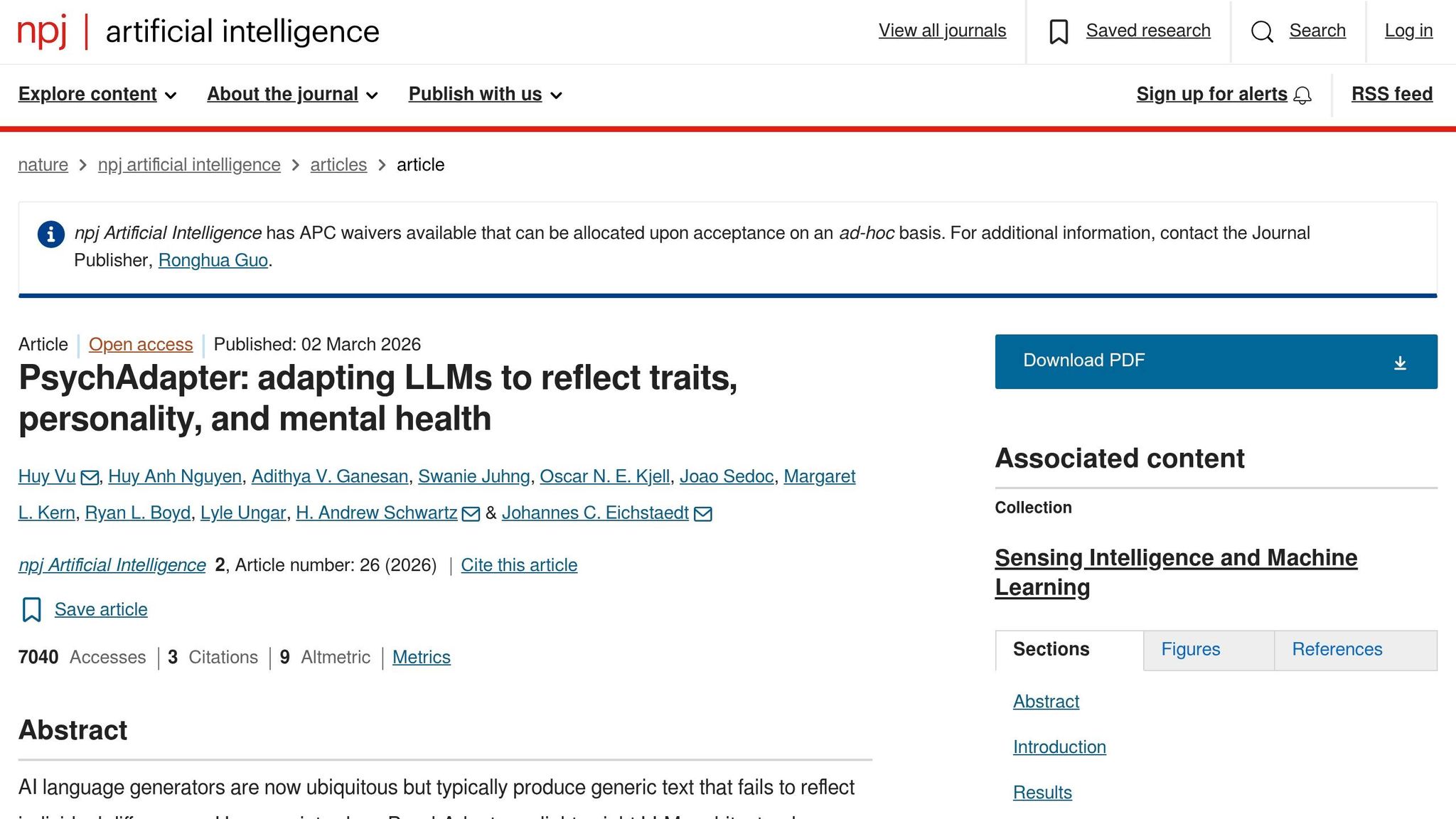
AI Finally Has a Personality - Stanford's PsychAdapter Explained
Quick comparison
| Area | What changes tone most | Main risk to avoid |
|---|---|---|
| case management | Urgency, confusion, follow-up stage | Sounding cold or too forceful |
| Counseling | Distress level, pacing, emotional state | Mirroring distress or sounding unsafe |
| Nonprofit outreach | Audience role, trust level, prior connection | Sounding presumptuous or pushy |
If I were summarizing the full article in one line, I’d say this: AI tone-shifting works best when personality guides the baseline, context sets the immediate need, and humans check the final message before it goes out.
How AI Decides When and How to Change Tone
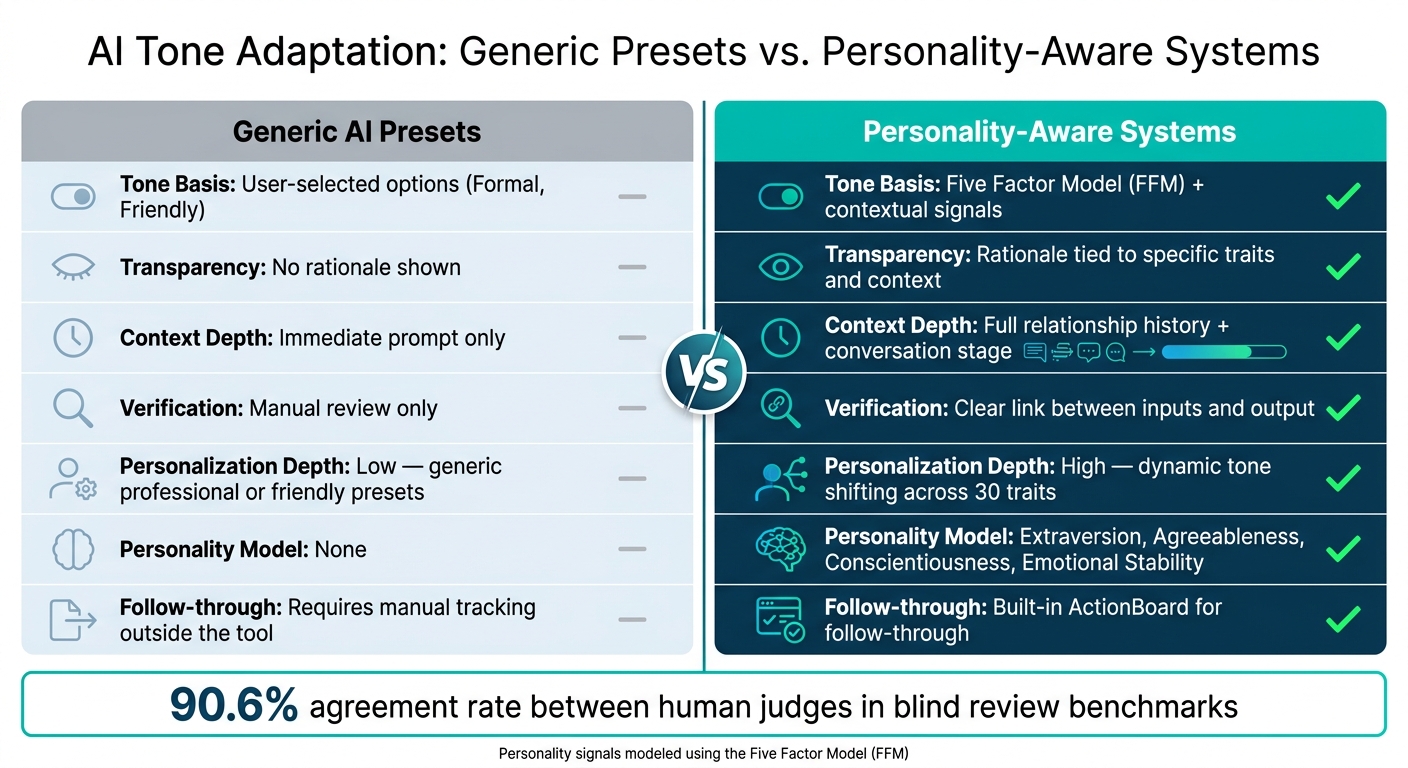
AI Tone Adaptation: Generic Presets vs. Personality-Aware Systems
Tone adaptation draws from three things: personality, context, and conversation history. Put simply, a well-built system looks at who the person is, what’s happening right now, and what has already been said. That includes personality traits, current mood or distress level, relationship history, and the stage of the conversation.
Each layer narrows the wording choices. The goal is simple: make the response fit the person and the moment.
Personality Signals That Shape Communication Style
Personality signals are mainly modeled with the Five Factor Model (FFM), which looks at traits such as extraversion, agreeableness, conscientiousness, and emotional stability.
These traits affect tone in direct ways. Someone high in extraversion may respond better to energetic, affirming language and shorter back-and-forth exchanges. That helps keep engagement up. Someone high in conscientiousness often wants structure, clear timelines, and specific next steps. They usually want to know exactly what comes next.
Agreeableness matters too. A person with high agreeableness may need softer framing when receiving hard feedback, so the message doesn’t sound harsh. Someone lower on that scale may prefer direct, no-frills language. Less padding, less friction.
High emotional reactivity often calls for more reassurance, slower pacing, and careful wording around risk or failure. In those moments, tone is not just style. It helps maintain a sense of safety.
Without a profile, tone choices are less precise.
Personality sets the default tone. Context can override it when the moment calls for more urgency, caution, or warmth.
Context Signals That Matter in Real Conversations
Personality sets the default style. Context sets the immediate need. In helping conversations, that difference matters a lot. It can shape whether a message feels safe, clear, or intrusive.
Key context signals include:
- emotional state
- urgency
- risk level
- relationship type
- prior interactions
- conversation stage
A first outreach to a new client usually needs a warmer, lower-stakes tone that helps build safety. A crisis response is different. It calls for short sentences, calm reassurance, and concrete safety steps, no matter what the client’s personality profile says.
Advanced AI systems also separate explicit context from inferred context. Explicit context comes from messages or notes. Inferred context comes from patterns in prior interactions. That split matters. If an AI starts guessing emotional states or social background it has not actually confirmed, the tone can feel presumptuous or just plain off. [1]
Basic Tone Presets vs. Personality-Aware Systems
This is where static presets and adaptive systems part ways.
Most general-purpose AI writing tools give you a few fixed style options, like formal or friendly. That’s useful, but only up to a point. Those presets do not adjust to the individual, and they can apply the same tone to very different situations.
Personality-aware systems go further. Instead of a simple style toggle, they use the full personality profile plus context signals to generate wording that fits the specific person and situation. They also explain why a certain tone was chosen, including which traits carried more weight and which context factors were active. [1]
| Feature | Generic AI Presets | Personality-Aware Systems (e.g., Personos) |
|---|---|---|
| Tone Basis | User-selected (Formal, Friendly) | Five Factor Model + contextual signals |
| Transparency | No rationale shown | Rationale tied to specific traits and context |
| Context Depth | Immediate prompt only | Full relationship history + conversation stage |
| Verification | Manual review | A clear link between inputs and output |
Personos uses full personality profiles, case notes, relationship history, and situational context to explain why a tone was chosen.
The next section shows how these signals change actual messages in case management, counseling, and nonprofit outreach.
What Tone Adaptation Looks Like in Case Management, Counseling, and Nonprofit Outreach
Tone adaptation changes the message on the page, not just the theory behind it. The examples below show how the same kind of update can sound very different based on the person, the situation, and what needs to happen next.
Case Management: Balancing Warmth, Clarity, and Urgency
Three missed appointments can call for three different tones.
A frustrated client who does better with brevity doesn't need a long, extra-friendly follow-up. A better fit is direct and respectful: We missed you at your appointment today. Please call us to reschedule so we can keep your case moving forward. Short. Respectful. No filler.
A confused client, especially someone new to the system or juggling a lot, needs more support in the wording. Something like: We noticed you missed your appointment this morning. That happens. Here's what to do next: call us, and we'll help you reschedule. The tone is warmer, and the next step is plain.
A client in urgent need, such as someone whose housing application or benefits review depends on timely follow-up, needs a different kind of message. At that point, personality matters less than action. The AI puts clarity first: Your application is at risk if we miss today's follow-up. Please call us immediately or reply to this message. We can help. No pleasantries. No ambiguity.
When time matters, urgency comes before personality. The same system can write all three messages. What changes is the factor in the lead. That same pattern shows up in counseling too, where emotional state matters just as much as the words themselves.
Counseling and Coaching: Matching Emotional State Without Mirroring Distress
In counseling, AI has to avoid turning up the emotional volume. If a client is overwhelmed, a reply that mirrors that intensity, even with good intent, can make things worse. The aim is to stay present without piling on.
In high-distress moments, good AI shortens sentences, cuts complex phrasing, and leans on grounding language. For example: I hear you. That sounds really hard. Let's slow down for a second. That is tone, not script. It signals safety without rushing into fixes. The goal is tone adjustment, not emotional mirroring.
When distress is high, emotional state comes before style. During routine check-ins, the tone can shift. A client who is steady and ready to move ahead will often respond better to shared, action-focused language: You've made a lot of progress. What feels like the right next step for you? The difference is pacing. The AI reads where the person is, not just what kind of person they are.
Personos uses full personality profiles and context to generate live, case-specific tone guidance. For trust-building with resistant clients, that kind of case-specific guidance is hard to copy with a generic AI assistant.
Nonprofit Outreach: Tailoring Donor and Community Messages Without Pressure
Nonprofit outreach still runs on trust, clarity, and restraint. The same tone logic applies to donor and community outreach, where trust and pressure need careful balance. Audience role and trust level shape the message first. A first-time donor and a foundation officer should not get the same follow-up.
For data-oriented recipients, such as foundations, institutional funders, and board members, AI can pull structured impact metrics and present them in a clean way. In those cases, the message can lead with numbers and outcomes because that's what the audience expects.
For relationship-centered community members or first-time donors, the very same update often works better as a story. The AI shifts to narrative: Last spring, a family in our program found stable housing for the first time in two years. Your contribution helped make that possible. Same result, different framing.
One useful guardrail is separating facts from inferences. If a donor's connection to a program is only inferred, not confirmed, the message should show that uncertainty with softer, more curious language. We thought this update might be relevant to you - reply if this is relevant. That keeps personalization from slipping into presumption. These examples also show why guardrails need to come before scale.
Guardrails for Respectful, Safe, and Culturally Aware Tone Adaptation
Tone adaptation should support care, not bulldoze past it. The safest setup is one where every tone shift is traceable, reviewable, and tied to clear data. If a system changes its tone, staff should be able to see what it knows, what it inferred, and when a person needs to step in.
That matters even more in helping settings. Safer systems make assumptions visible, keep sensitive data under tight control, and give practitioners a chance to check tone decisions before anything reaches a client.
Avoiding Bias, Stigma, and Harmful Language
Mark each tone adjustment as EXTRACTED, INFERRED, or AMBIGUOUS. That simple label helps staff catch weak or unsupported assumptions before a message goes out. Pre-response checks can also steer the assistant back to those rules before it writes a reply.
Human review should look closely for wording that feels stigmatizing or too forceful. In U.S. human services, plain and inclusive language matters. Tone should stay non-coercive and de-escalating, especially when emotional keywords suggest distress.
Privacy, Consent, and Boundaries in Personality-Aware AI
Treat personality-related data as sensitive. In counseling and case management, use no-retention settings and SOC 2 Type II-level access controls.
Local-first processing can keep sensitive information on-site. In plain English, that means the most sensitive context stays under tighter control instead of bouncing around more systems than it needs to. After access is locked down, test the system on realistic cases before rollout to ensure better outcomes.
How to Test Whether Tone Adaptation Is Safe and Useful
Testing should happen before broad rollout. Blind human review can score empathy and clarity without telling reviewers whether a response came from AI or a human. In benchmark settings, this kind of validation has reached a 90.6% agreement rate between human judges [1].
Run the system through counseling, case management, and nonprofit outreach scenarios that look like the work people actually do. Then trace each tone choice back to its source input. The core check is pretty simple:
- Does the message help the client?
- Does it respect boundaries?
- Does it stay appropriate across different backgrounds and situations?
| Evaluation Area | What to Check | Review Trigger |
|---|---|---|
| Tone Alignment | Does the AI match intended warmth or urgency? | High volume of "Ambiguous" confidence tags |
| Empathy | Does it acknowledge emotional state without amplifying distress? | Detection of high-arousal emotional keywords |
| Clarity | Is the language plain, inclusive, and free of jargon? | Use of stigmatizing labels or complex jargon |
| De-escalation | Does it use calm, non-coercive phrasing in tense situations? | Aggressive or high-arousal input |
| Privacy Risk | Are personality scores or raw trait data exposed in the output? | Any attempt to surface raw personality scores |
| Cultural Sensitivity | Does it avoid assumptions about identity or motivation? | Inferences made without an "Extracted" source |
Each tone choice should link to a short rationale note that shows which inputs were extracted and which were inferred. That gives teams a clean review step before deployment.
How to Choose and Roll Out a Tone-Adaptive AI Tool
What to Look for in a Tone-Adaptive AI Platform
Once a system clears safety checks, the next step is simple: pick a tool that can handle actual helping work. Plenty of AI products say they can personalize communication. Far fewer are built for frontline support.
Start with personality depth. Look for a tool based on validated personality models, not demographic labels or click patterns.
Then check transparency. Teams should be able to see why the system made a suggestion, where it came from, and override it before anything gets sent.
Workflow fit also matters. Tone guidance is only useful if staff can act on it. The best platforms connect tone guidance to reports, nudges, and trackable tasks. Personos brings those pieces together in one system, which makes the guidance easier to use in day-to-day work.
Put security and privacy near the top of the list too. SOC 2 Type II, zero-retention options, and local-first processing should be part of the review process [2].
Personos vs. Generic AI Assistants vs. CRM Personalization Tools
Generic AI assistants and CRM tools both have strengths. But neither was built for the messy, human side of frontline services. That difference shows up fast when a conversation involves stress, urgency, resistance, or emotional strain.
| Feature | Personos | Generic AI Assistants | CRM Personalization Tools |
|---|---|---|---|
| Primary Inputs | Personality signals + real-time context | User prompts + general training data | Static database fields + interaction history |
| Depth of Personalization | High: dynamic tone shifting across 30 traits | Low: generic professional or friendly presets | Medium: segmented by tags or categories |
| Transparency | Explainable rationale + source labels | Low: black-box responses | Visible rules, no personality layer |
| Privacy Controls | ZDR and local-first options | Variable | High: internal data silos |
| Case Management Fit | High: balances warmth and urgency | Low: lacks situational nuance | Medium: useful for scheduling only |
| Counseling Fit | High: matches emotional state | Low: risk of mirroring distress | None: not designed for interaction |
| Follow-through | Built-in ActionBoard for follow-through | None: requires manual tracking outside the tool | Low: limited to automated triggers |
CRM tools are useful for handling volume and logging touchpoints. That's their lane. But they weren't made for the emotional and relational weight of a crisis exchange or a resistant client interaction.
Generic AI assistants can write a decent draft. The problem is that, without personality data and situational context, they're guessing at tone. A personality-first platform narrows that gap by tying each output to something measurable.
Conclusion: Key Points for Helping Professionals
If a tool checks these boxes, rollout stops being a shot in the dark. It becomes a staff adoption and review process.
Use both personality and context. Require guardrails. Keep human review in the loop. Case management, counseling, and nonprofit outreach each need different wording patterns, and the best tools account for that without forcing practitioners to rewrite prompts every time.
Guardrails matter. Bias checks, consent boundaries, and privacy controls are what make tone adaptation safe enough for work with vulnerable populations.
The goal is to extend reach without losing judgment or dignity. The right tool helps a case manager find the right words at 4:45 p.m. on a Friday, when the caseload is full and a client is struggling, and then tracks whether the conversation led anywhere. Better tone adaptation should help workers send better messages, protect dignity, and cut manual rework.
FAQs
How is tone different from voice?
Voice is the steady persona behind how you communicate. Tone is the mood or attitude you bring to a given moment.
Voice tends to stay the same. Tone changes with the situation, like stress, team dynamics, or client needs. Personos can help people shift tone to fit the moment without losing a consistent voice.
When should context override personality?
When the stakes are high, context comes first.
That matters most in situations involving safety, urgent decisions, or ethics. In those moments, the goal isn't to match someone's preferred style. The goal is to respond in a way that is clear, responsible, and useful.
Personality insights can still help with tone, rapport, and nuance. They can make a response feel more human and better aligned with the person on the other side. But in a crisis or any other high-stakes exchange, context should drive the structure and wording so the response stays effective and avoids harm.
How can teams safely review tone shifts?
Teams can review tone shifts more safely when they use AI that includes built-in guardrails, encrypted interactions, and private data handling. That matters because these tools can flag patterns, but they shouldn't be the last word.
AI insights work best as a starting point, not a final call. It's smart to compare them with human observation and direct, open conversation before acting on them.
Regular audits across demographic groups can also help teams spot bias and fix it early. Personos adds transparent, research-backed logic, so users can see which traits and principles shaped a recommendation.