AI Pulse Surveys for Team Morale
Pulse scores alone won't fix morale—measure sentiment, diagnose causes, and equip managers with behavior-focused guidance.
Rachel Johnson

AI Pulse Surveys for Team Morale
If you need a fast answer, here it is: Officevibe is the simplest pick for small teams that want short morale check-ins, Culture Amp and Lattice fit teams that want more analysis and follow-through, TinyPulse and HeartCount stay on the lighter end, and Personos is different because it focuses on team friction and communication instead of survey scores.
I’d break the article down like this:
- Officevibe: best for low-effort weekly morale checks
- TinyPulse: simple pulse surveys, but less context behind score changes
- Culture Amp: more analysis for teams that want to know what is driving morale
- Lattice: better when managers need survey results tied to next steps
- HeartCount: short check-ins with light reporting
- Personos: not a survey tool, but a communication and relationship tool for morale issues tied to burnout, stress, or conflict
The comparison looks at 5 points:
- Question quality
- Reporting depth
- Follow-up prompts
- Trend tracking
- Fit for small and mid-size helping teams
For many helping teams, this is the core split: some tools measure morale, while others help you deal with the people issues behind it. That matters when burnout and turnover stay high. In the U.S., burnout has remained a major workplace issue, with many surveys in recent years showing that around 40% to 50% of workers report burnout symptoms. Short pulse surveys can help spot problems early, but scores alone do not tell managers what to say next.
Quick Comparison
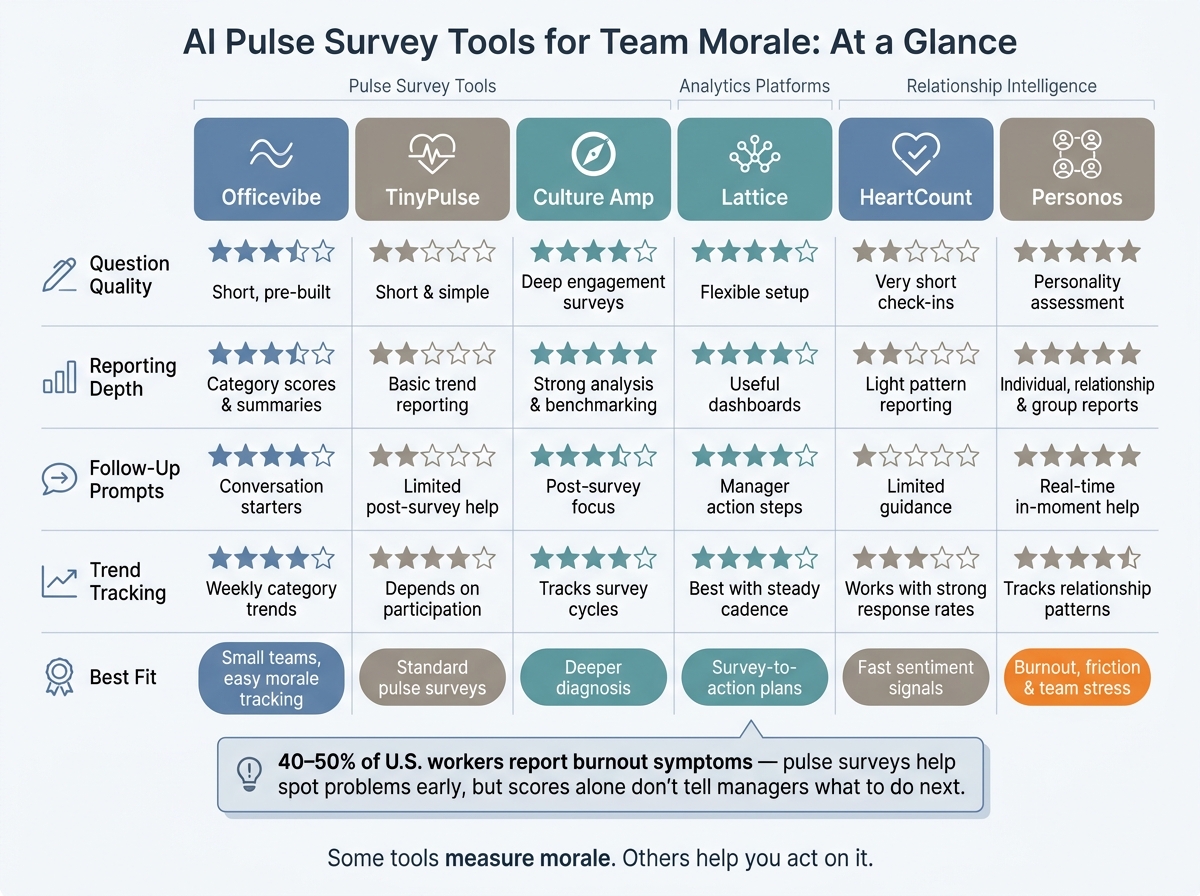
AI Pulse Survey Tools Compared: Features, Depth & Best Fit
| Tool | Question Quality | Reporting Depth | Follow-Up Prompts | Trend Tracking | Best Fit |
|---|---|---|---|---|---|
| Officevibe | Short, pre-built questions | Clear category scores and simple summaries | Suggested conversation starters | Weekly category trends | Small teams that want easy morale tracking |
| TinyPulse | Short and simple | Basic trend reporting with less context | Limited after-survey help | Depends on steady participation | Teams that want standard pulse surveys |
| Culture Amp | Deeper engagement surveys | Strong analysis and benchmarking | More post-survey than in-the-moment | Tracks survey cycles | Teams that want deeper diagnosis |
| Lattice | More flexible survey setup | Useful if managers act on it fast | Built around manager follow-through | Best with a steady survey rhythm | Teams linking surveys to action plans |
| HeartCount | Very short check-ins | Light pattern reporting | Limited guidance | Works best with strong response rates | Teams that want fast sentiment signals |
| Personos | AI-driven personality analysis, not pulse questions | Individual, relationship, and group reports | Personalized coaching and communication help | Tracks relationship patterns, not morale scores | Helping teams dealing with friction, burnout, and team stress |
Bottom line: if you want simple morale tracking, start with Officevibe. If you want deeper survey analysis, look at Culture Amp or Lattice. If your team keeps seeing the same morale problems and managers still do not know how to respond, Personos stands out because it focuses on behavior, communication, and stress between people.
That is the main takeaway from the full comparison below.
1. Officevibe
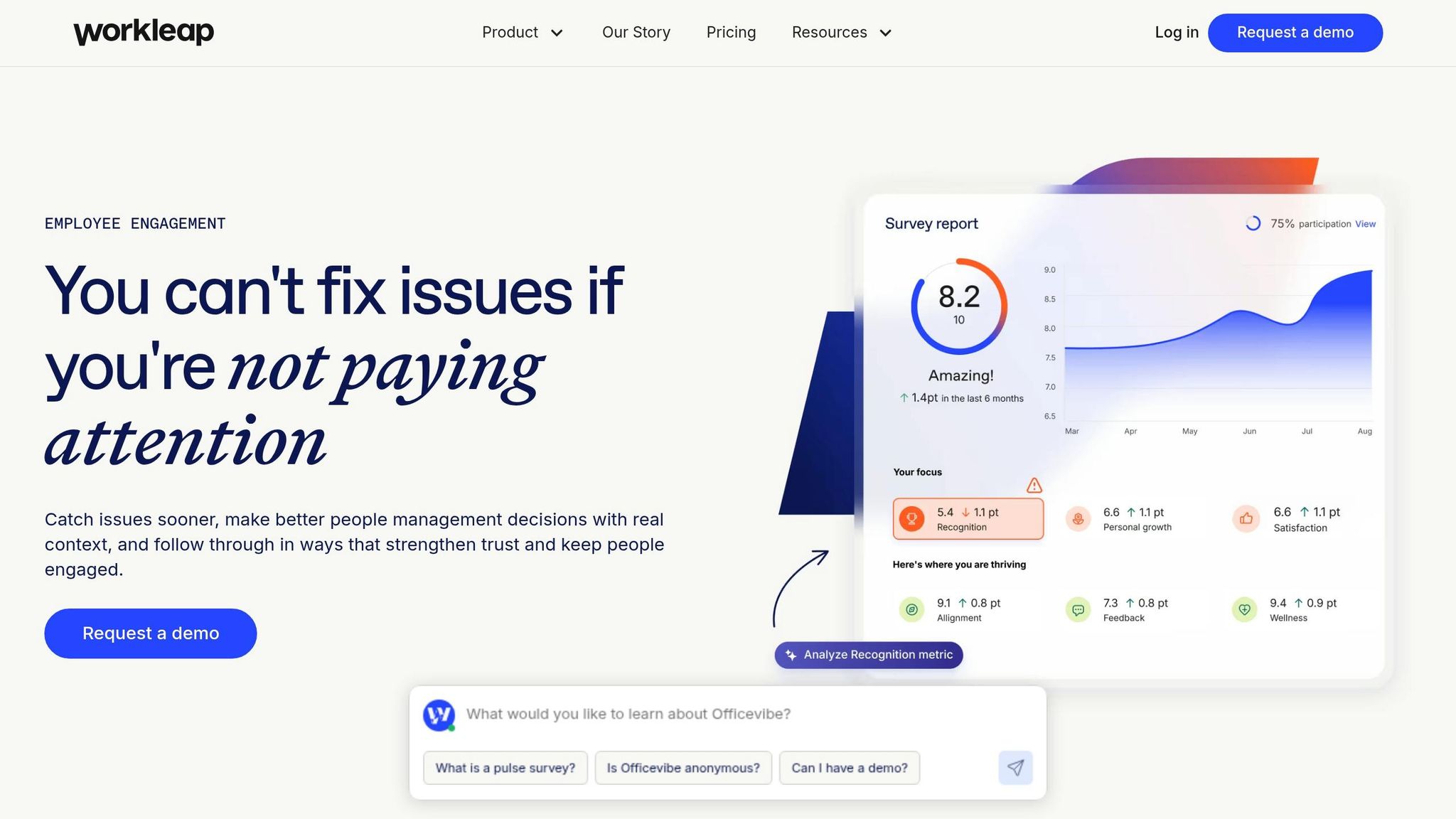
Officevibe is the baseline pick here. It works well for teams that want simple morale tracking without a heavy setup.
Question Quality
Officevibe uses short, pre-built survey questions that are easy to send and take almost no prep. For small helping teams with limited time, that low barrier to entry is a clear plus. Staff can answer in under two minutes without feeling like they’re slogging through a form.
Reporting Depth
Officevibe’s reporting dashboard shows team scores by category, like recognition, personal growth, and relationship with manager, and it flags dips over time. The summaries are easy to read and don’t require an HR analyst to make sense of them. That fits lean nonprofit teams that need quick, useful snapshots instead of deep data exports.
Follow-Up Prompts
When a low score shows up, Officevibe gives managers suggested conversation starters tied to the flagged category. That nudge makes it easier to act fast instead of staring at a result and wondering what to say.
Trend Tracking
Officevibe tracks morale scores week over week and shows movement in specific categories, which helps teams spot whether a dip is a one-off or part of a longer pattern. You can see how morale shifts after a policy change, a leadership transition, or a high-stress stretch in the caseload.
That makes Officevibe a practical starting point for morale tracking, while Personos fits better when the core issue is interpersonal friction, not just survey data.
2. TinyPulse
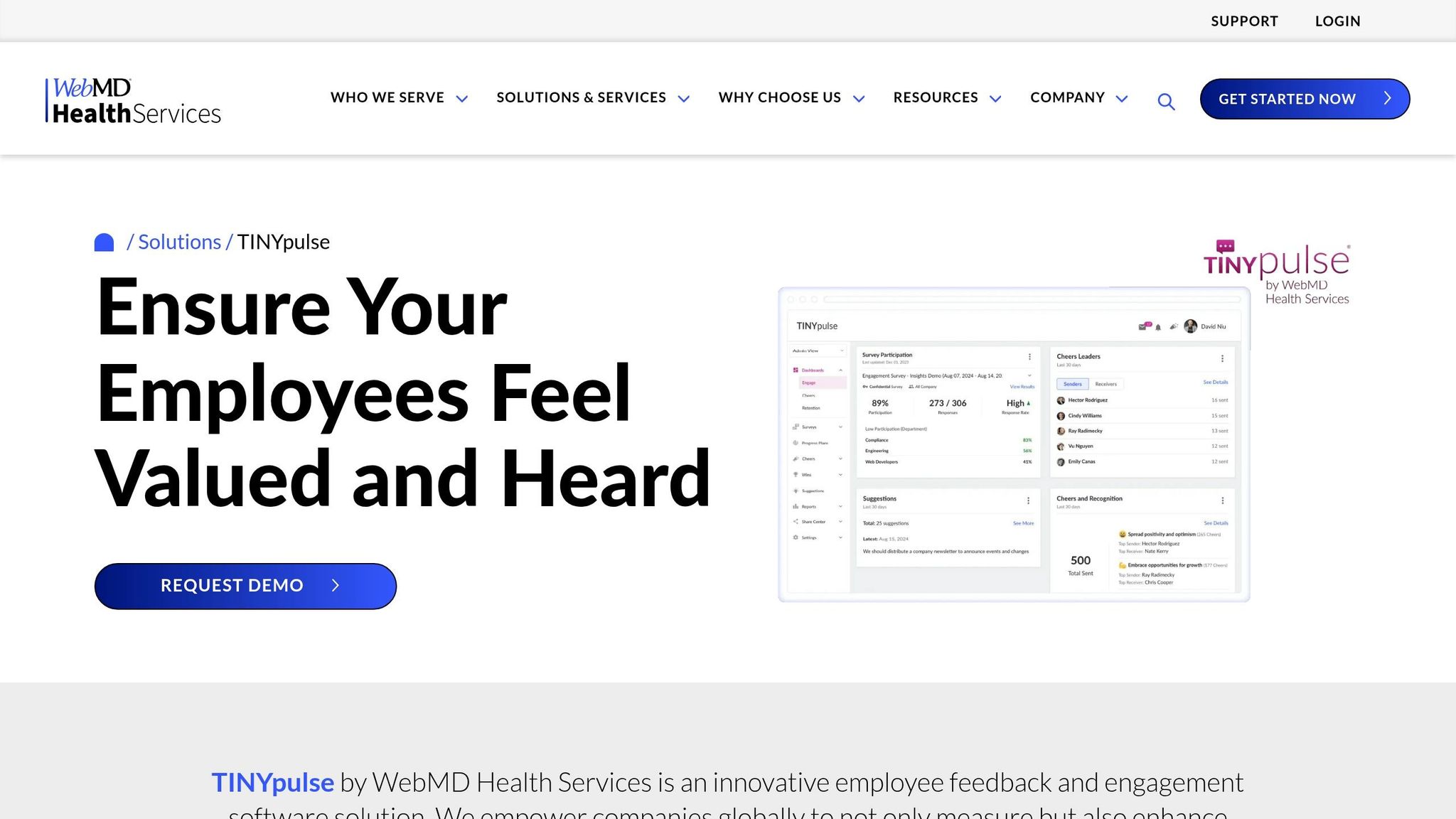
Where Officevibe leans into simple pulse tracking, TinyPulse stays closer to the classic survey model. It’s a straightforward pulse-survey tool for teams that want regular morale checks without much setup. It tends to fit best when staff can respond on a steady basis and managers care more about recurring trend data than in-the-moment guidance. In that setup, question design, reporting depth, and follow-up support matter just as much as ease of use.
Question Quality
TinyPulse keeps questions short and easy to answer, which helps cut response burden. For teams handling high caseloads, that simplicity can make a big difference. Staff can finish a check-in fast without feeling like it’s one more thing piled onto the day. The trade-off is pretty clear: results only show what employees report in that moment, so the tool can miss tension that builds between check-ins.
Reporting Depth
TinyPulse reporting shows broad trends, but it offers less context around why morale shifted. Personos goes deeper with dynamic personality and relationship reports, group insights, and organizational context layers that help managers see what’s happening below the surface [2].
Follow-Up Prompts
TinyPulse surfaces issues after the survey. It does not guide managers in the moment. For teams that need fast action under pressure, that gap matters. Personos gives instant, in-the-moment prompts instead [1].
Trend Tracking
TinyPulse tracks morale over time, but its value depends on steady participation. If response rates slip, the picture gets less clear. Personos cuts survey burden by moving toward long-term analytics and real-time risk detection instead of relying only on repeated manual surveys , which is critical for burnout prevention [2][3].
TinyPulse is a basic morale-check option. The next tools add more depth, automation, or manager support.
3. Culture Amp
Culture Amp fits teams that want to figure out why morale changes, not just track a score. That gives it more depth, but it also makes it less lightweight than many small teams want.
Question Quality
Culture Amp leans on deeper engagement surveys. So it's better for diagnosing morale issues like emotional resilience than for quick pulse checks.
Reporting Depth
Compared with TinyPulse, Culture Amp goes much deeper on analysis. Its Impact Analysis shows which factors, like leadership, development, or alignment, have the biggest effect on morale, with filters for department, team, and demographic. Benchmarking also gives boards and funders more context.
Follow-Up Prompts
Culture Amp does its best work after the survey closes. It doesn't guide managers in the moment. Personos does, with real-time, situation-specific support.
Trend Tracking
Culture Amp tracks engagement across survey cycles, so it works best for teams that can run surveys on a regular cadence. Personos leans on real-time guidance instead of depending only on repeat surveys.
Lattice shifts the focus away from survey depth and toward manager execution and team follow-through.
4. Lattice
Where Culture Amp helps diagnose morale, Lattice does a better job of turning that data into manager action. It fits teams that want morale data tied to follow-through, not just survey collection. For small and mid-size helping organizations, the main question is simple: does the platform turn check-ins into clear next steps without piling on admin work?
Question Quality
Use Lattice when you need enough AI tools for real-time personalization to reflect frontline realities without making the pulse too complicated. If the questions stay too broad, they can miss the day-to-day details that shape morale in helping teams.
Reporting Depth
Lattice's reporting only matters if a small team can read it fast and do something with it. Deep dashboards can help. Extra analysis can't. For small teams with limited HR support, the real test is whether managers can move from dashboard to action without getting stuck.
Follow-Up Prompts
This matters even more in small teams, where managers need help with the next conversation, not one more dashboard. Lattice is at its best when managers need a clean next step after results come in. Personos is a better fit when teams need real-time guidance and personality insights to solve conflicts before friction grows.
Trend Tracking
Lattice only pays off if check-ins happen often enough to show movement over time. Trend tracking helps when the team sticks to a regular pulse cadence. When surveys get skipped, the signal gets weak fast.
5. HeartCount
HeartCount is a lighter option for teams that want fast morale check-ins without the added workflow load that comes with Lattice.
Question Quality
HeartCount keeps check-ins short, which makes them easier to complete for staff handling heavy caseloads. That shorter format can help participation stay up. The tradeoff is that the questions tend to stay at the surface. If your team is dealing with layered people issues, those check-ins may not show what's actually moving morale.
Reporting Depth
The reporting shows morale patterns over time, but it does less to explain why scores shift. For small helping teams without dedicated HR staff, that can be frustrating. You can see the numbers, but turning them into clear next steps is harder.
Follow-Up Prompts
Follow-up help is limited, so managers still have to make sense of the results on their own and decide what to do next. HeartCount shows what staff reported. It doesn't help lead the next conversation. That can be fine when the issue is simple, but it leaves more work on the manager when burnout or team friction is what's driving the change.
Trend Tracking
HeartCount tracks morale movement across check-in cycles, but that only works well when participation stays steady. If response rates drop, which often happens in high-turnover or high-stress settings, the trend line can lose trust fast.
Where HeartCount leans on survey data alone, Personos focuses on the people dynamics behind those scores with real-time, personalized coaching strategies based on personality psychology. For teams that want more than morale scores and need help understanding the human side behind them, Personos is the stronger next step.
6. Personos
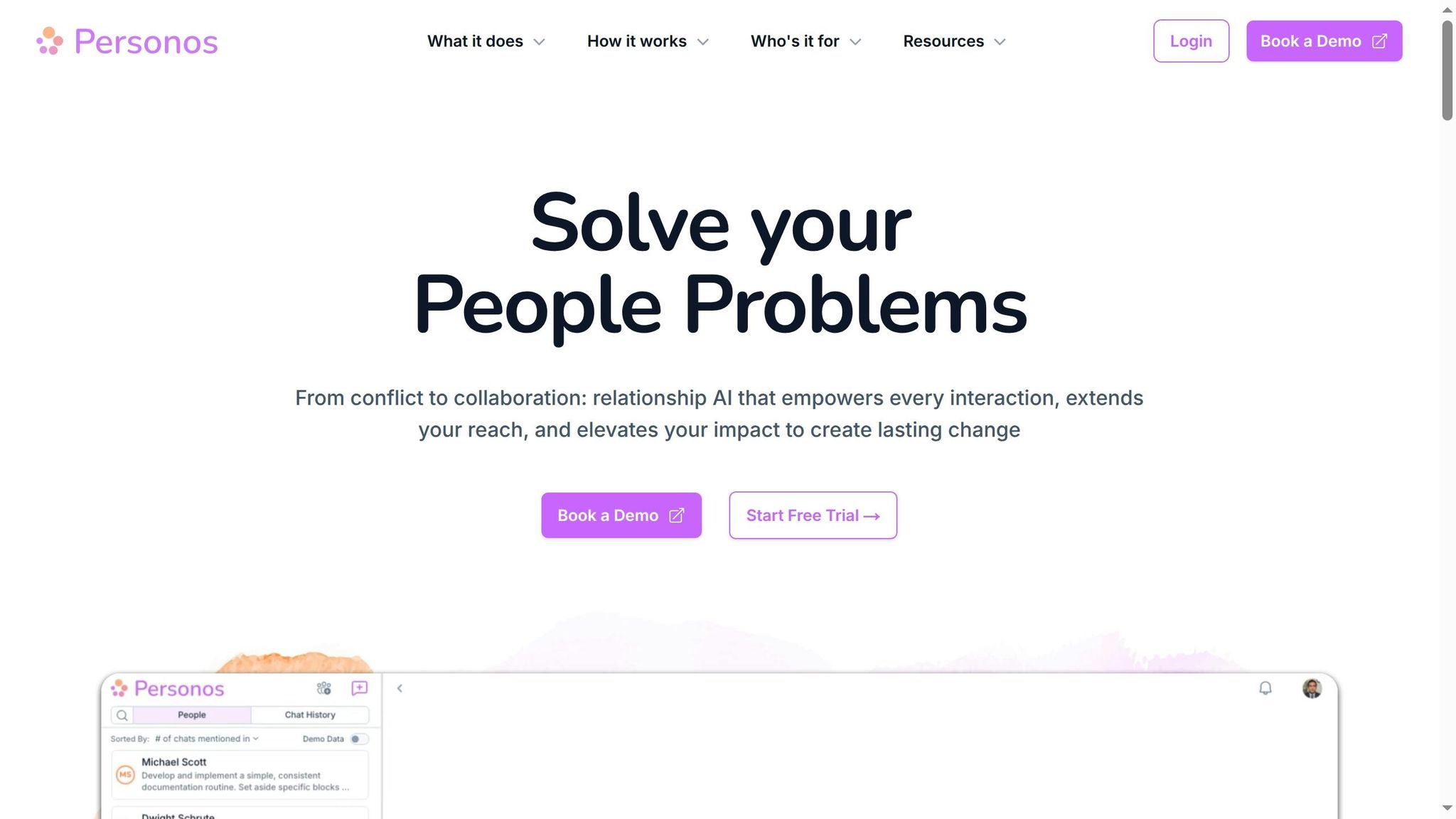
Personos isn't a pulse-survey tool. It's a relationship intelligence platform that uses a Five-Factor Model assessment across 30 traits to guide communication, stress, and collaboration.
That makes it a different kind of morale tool. Instead of looking at a weekly score, Personos focuses on the relationship patterns behind disengagement.
Question Quality
Instead of rotating pulse questions, Personos uses a structured personality assessment to set a baseline for each team member.
That baseline helps managers spot communication stress before it turns into disengagement. For teams dealing with more complicated staff dynamics, this can reveal morale risks that recurring pulse questions often miss.
Reporting Depth
Personos creates real-time Dynamic Reports at the individual, relationship, and group levels. Each report includes a "Put Into Action" section that points to motivators, blind spots, and conflict patterns, which makes the output easier for small teams to use when time is tight [4].
Follow-Up Prompts
Personos Chat offers immediate help for difficult conversations and communication shifts. The ActionBoard tracks follow-through, and Prompts help keep that guidance active between sessions.
Trend Tracking
Personos does not track morale scores over time. It tracks how relationships and communication patterns change, surfacing likely friction points such as communication mismatches or unmet expectations before they turn into team friction.
For teams that need earlier warning signs than a pulse survey can give, that difference can matter a lot.
Pros and Cons of Each Tool
No single platform fits every helping organization. The best pick comes down to what your team needs most: fast morale checks, deeper data, or a way to see what’s causing tension beneath the scores.
The table below pulls the earlier comparison into a quick decision guide.
| Tool | Pros | Cons | Best Fit |
|---|---|---|---|
| Officevibe | Low-lift weekly pulse tracking | Limited depth for complex organizational issues | Small teams needing lightweight, frequent morale checks |
| TinyPulse | Simple pulse checks with peer recognition | Surface-level reporting; misses diagnostic depth | Organizations prioritizing recognition and quick feedback loops |
| Culture Amp | Deep analytics and benchmarking | Can overwhelm small teams; higher price point | Mid-to-large organizations requiring data-driven cultural insights |
| Lattice | Combines surveys with manager workflows | Complex feature set may exceed small nonprofit needs | Organizations looking for an all-in-one people management platform |
| HeartCount | Fast sentiment signals with low friction | Limited follow-up guidance for interpersonal conflict | Organizations needing rapid sentiment as an early signal |
| Personos | Personality-based guidance for helping teams | Relationship focus may need a separate HR metrics tool | Helping organizations needing insight into burnout, conflict, and team dynamics |
The big split here is pretty simple: some tools measure morale, while others help explain the human dynamics behind it.
Conclusion
After looking at question quality, reporting depth, follow-up prompts, and trend tracking, the choice mostly comes down to fit. The right tool depends on what your team needs most: fast pulse checks, deeper analysis, or help with what to do once the results come in.
Use Officevibe, TinyPulse, or HeartCount for light weekly check-ins. Use Culture Amp or Lattice when you need deeper analysis and planning. The split is pretty clear: some tools measure morale, while others help teams respond to morale problems. That’s where survey tools end and behavior guidance begins.
When repeated pulse scores keep pointing to the same friction, survey data by itself isn’t enough. The problem shows up when the same scores keep flashing the same issue, but managers still don’t know how to respond. That’s where Personos fits best as a companion to pulse surveys. Pairing a pulse tool with Personos makes sense when recurring burnout, conflict, and high-caseload communication in helping organizations call for behavioral insights for leaders, not just another score.
The best morale tool is the one your team will use consistently and turn into action fast.
FAQs
How often should we run pulse surveys?
A good balance is weekly pulse or practice prompts and quarterly reassessments. That gives teams a steady read on morale without wearing people out with too many surveys.
Unlike static annual approaches, Personos supports continuous, real-time insight. So teams can watch changes as they happen and adjust more often, without the extra burden that comes with old-school survey cycles.
When should we use a survey tool versus Personos?
Use a pulse survey tool when you want broad, periodic feedback, like quarterly check-ins that help you spot company-wide trends, shifts in engagement, or places where work starts to slow down. It gives you a fast snapshot of team sentiment across the organization.
Use Personos when you need ongoing, action-focused help with specific interpersonal dynamics or high-pressure moments. Surveys show you how your team is doing. Personos helps you make it better with real-time, context-aware guidance.
What if staff stop responding to surveys?
When staff stop responding, that’s often a sign of survey fatigue or plain disengagement. A quarterly cadence helps strike a better balance. You still gather feedback, but you’re not eating up too much staff time.
Tools like Personos can also spot disengagement or frustration through real-time communication patterns. That gives managers a chance to step in with personalized coaching before things get worse.