AI Personality Reports for Emotion and Trust
A comparison of six AI personality platforms showing why relationship-first, Five Factor reports best build trust in helping professions.
Rachel Johnson

AI Personality Reports for Emotion and Trust
If you need personality reports for trust-heavy client work, this comparison points to one clear result: Personos is the only tool here built around one-to-one, peer, and group support for helping professionals.
I see six platforms in the article, but they do not do the same job. Personos, Crystal Knows, Humantic AI, Traitify, NAVRYN, and IBM Watson Personality Insights differ on four points:
- Trust-building value
- Emotional alignment
- Reasoning transparency
- Workflow fit
The short version is simple:
- Personos uses the Five Factor Model, scores 30 facets on an 80-point scale, and includes personal, relationship, group, and coaching reports
- Crystal Knows leans on DISC and is more about message style than deep relationship guidance
- Humantic AI gives fast personality reads from resumes, email, and LinkedIn, but stays at a higher level
- Traitify is more of a one-person assessment tool, with no peer or group reporting
- NAVRYN has too little public detail to judge with confidence
- IBM Watson Personality Insights was built for individual text analysis, not relationship-based support
Quick Comparison
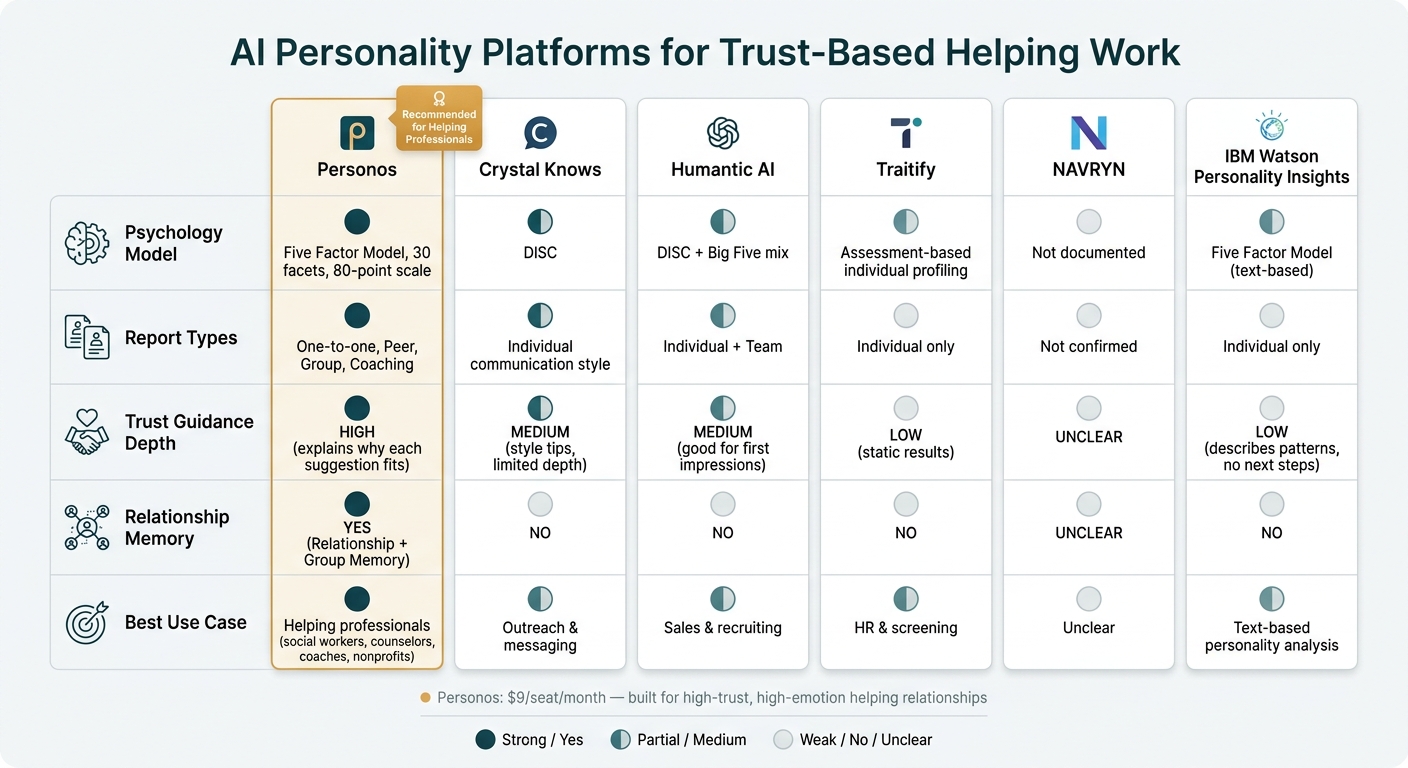
AI Personality Platforms Compared: Trust, Depth & Helping-Profession Fit
| Platform | Model | Report types | Trust guidance | Best use |
|---|---|---|---|---|
| Personos | Five Factor Model, 30 facets, 80-point scale | One-to-one, peer, group, and coaching | Shows why each suggestion fits the person and situation | Helping professionals |
| Crystal Knows | DISC | Mostly individual communication style | Style tips, less depth on why | Outreach and messaging |
| Humantic AI | DISC + Big Five mix | Individual and team views | Good for first impressions, less for long-term support | Sales and recruiting |
| Traitify | Assessment-based individual profiling | Mainly individual | Static results, limited relationship use | HR and screening |
| NAVRYN | Not clearly documented | Not clearly documented | Not clear from public sources | Hard to assess |
| IBM Watson Personality Insights | Five Factor Model from text | Individual only | Describes patterns, but not what to say next | Text-based personality analysis |
What stands out most to me is context. The article keeps coming back to one point: generic advice like “listen actively” is often too broad when the work is emotional, high stakes, and tied to trust. In those cases, a report has to fit the person, the relationship, and the moment.
That is the main lens for the section that follows.
1. Personos
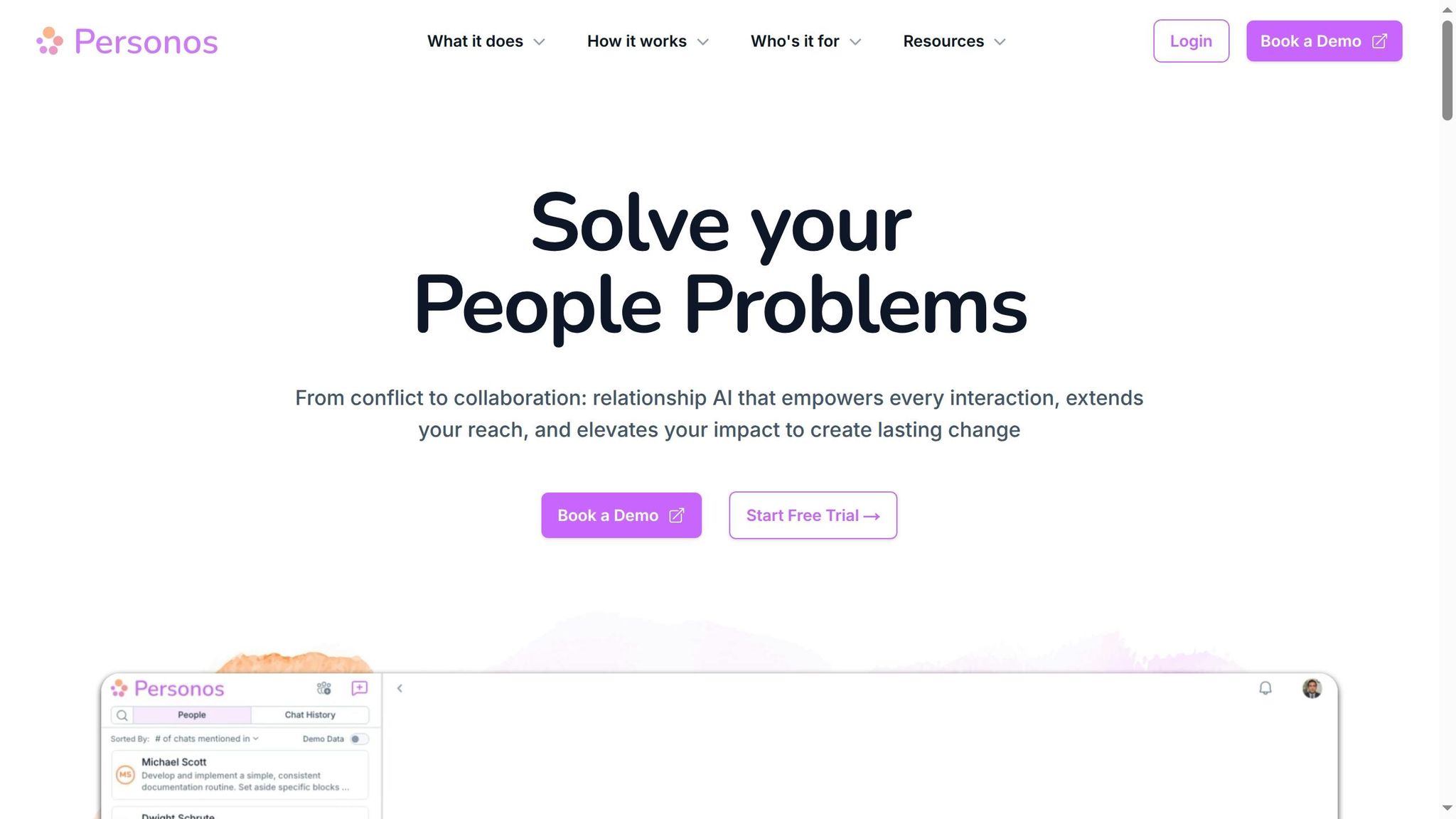
Personos is built for helping professionals, including social workers, case managers, counselors, coaches, and nonprofit staff.
Psychology Model
Personos uses the Five Factor Model (FFM) and measures personality across 30 distinct facets scored on an 80-point scale [2]. That level of detail lets the platform reflect the exact trust barriers a client may bring into the room. It also gives practitioners more precise guidance than broad type-based tools.
Report Scope
Personos generates Personal Reports, Relationship Reports, Group Reports, and, for helping professionals, Coaching Reports. These reports cover one-to-one, peer, and group dynamics across helping settings [2].
Trust Guidance
Personos explains which traits, situations, and psychological principles shaped each recommendation. That matters when trust depends on showing why a suggestion fits a specific person and moment. In high-stakes work, practitioners need reasons, not scripts.
The platform also keeps Relationship Memory and Group Memory [2], so guidance stays tied to prior history, boundaries, and interactions. In plain terms, it doesn’t treat each interaction like a blank slate. That makes Personos the benchmark for judging how the next tools handle trust, context, and explanation.
Helping-Context Fit
This helps practitioners keep support consistent between sessions and adjust communication to a client’s actual behavior. ActionBoard turns insights into tasks, and Prompts send short between-session prompts without adding workload.
With Personos as the baseline, the next platforms differ mostly in two areas:
- How much context they keep
- How clearly they explain their guidance
2. Crystal Knows
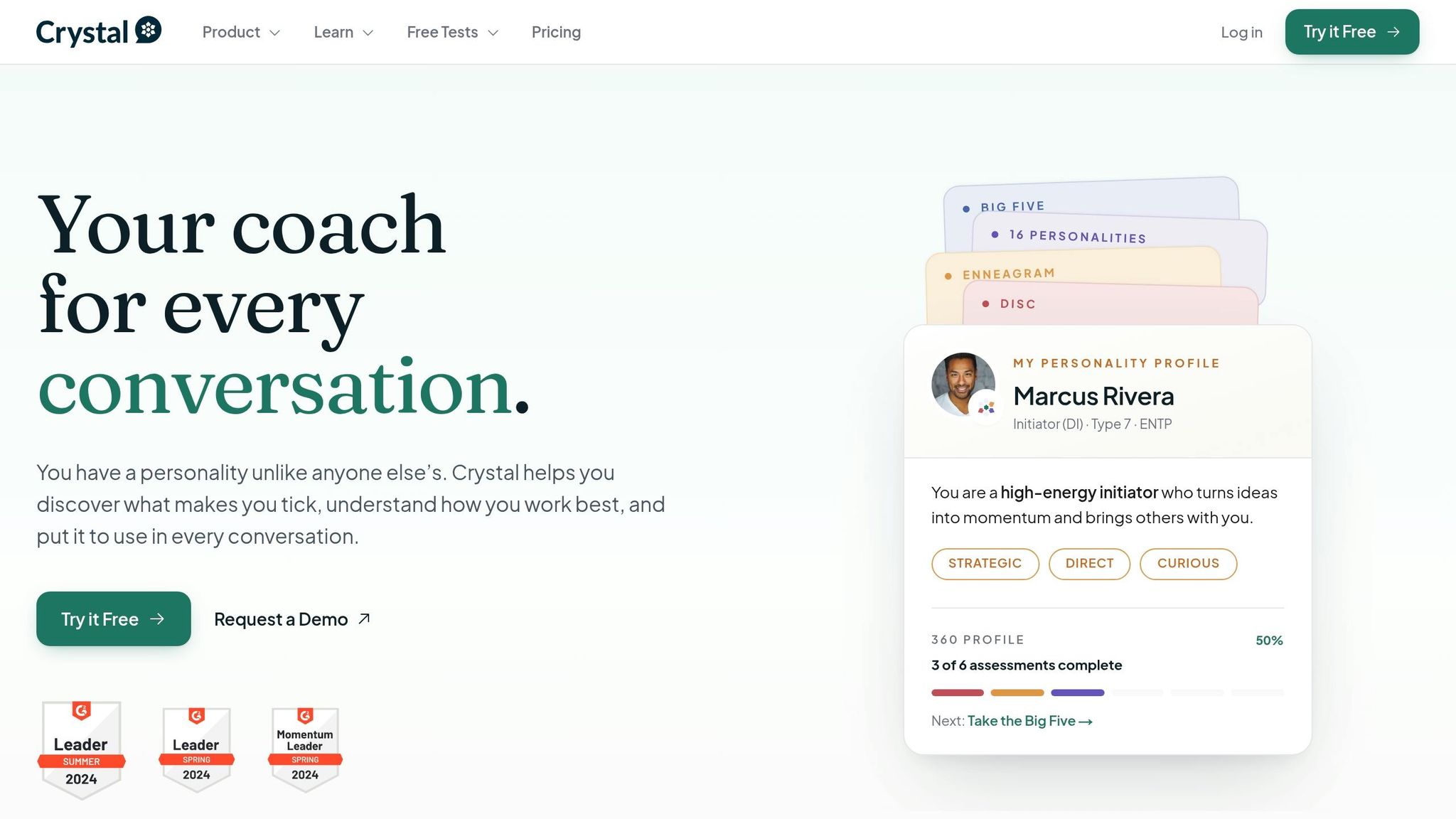
Compared with Personos, Crystal Knows moves away from full personality context and leans more on fast communication cues.
Psychology Model
Crystal Knows uses DISC. That model is good at reading broad communication style fast, but it doesn't go as deep into trait detail as Personos. So it works better for general messaging than for one-to-one, peer, or group guidance in helping settings.
Report Scope
Crystal Knows is mainly a communication-style tool. It centers on behavioral tendencies and messaging style, which makes it a better fit for general outreach than for the relationship-aware guidance helping professionals often need.
Trust Guidance
Crystal Knows offers style cues, but it spends less time on the psychological why. Because of that, it is weaker in trust-critical conversations.
Helping-Context Fit
That narrower scope makes Crystal Knows less suited to ongoing helping work, where practitioners need continuity across sessions, relationships, and groups. By comparison, Personos keeps guidance tied to prior interactions, relationships, and groups.
3. Humantic AI
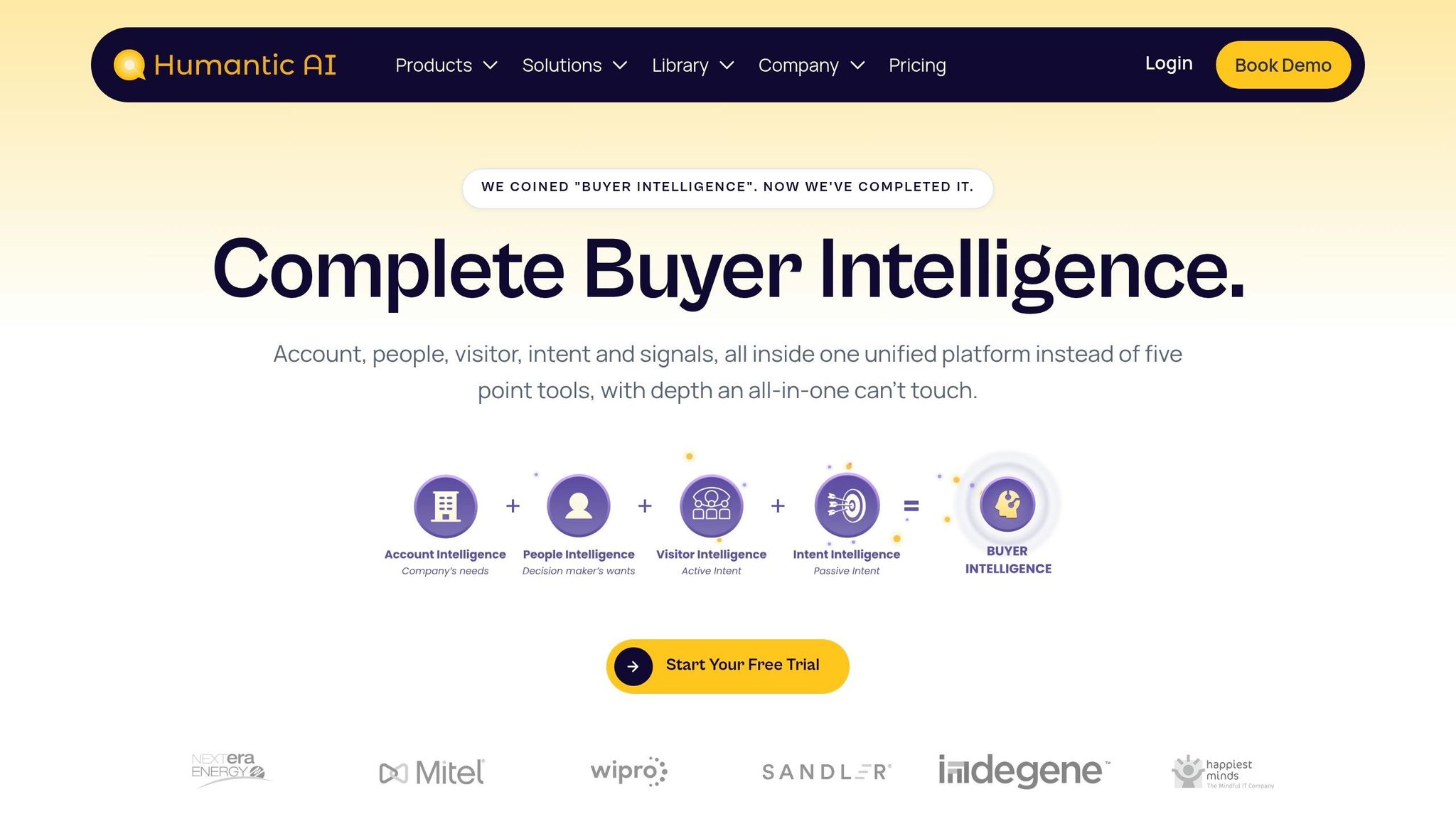
Humantic AI is faster and lighter than Personos. But for trust-critical helping work, it doesn't go as deep.
Psychology Model
Humantic AI uses a mix of DISC and the Big Five to create personality reads from resumes, emails, and LinkedIn profiles. That makes setup fast and simple.
The tradeoff is depth. Compared with Personos' 30-facet, 80-point scoring, Humantic AI gives you a higher-level view. You get a broad snapshot of behavior, not the more detailed profile that trust-critical helping work often calls for.
Report Scope
Humantic AI centers on personality insights for individual buyers and teams. It's built mainly for sales and recruiting use cases.
It doesn't include relationship-specific or group reports made for helping settings. In other words, there's no match for Personos' Relationship Reports, Group Reports, or Coaching Reports when a practitioner needs guidance for client work.
Trust Guidance
Humantic AI can help with first impressions and early rapport. That's useful in short or transactional interactions.
But it doesn't keep relationship history or give situation-specific guidance across sessions. That's a pretty big gap for long-term client work. If you're handling a complex case, a style read at intake won't be enough.
So while Humantic AI works well for quick readouts, it's less useful than Personos for steady one-to-one, peer, and group support in helping settings.
4. Traitify
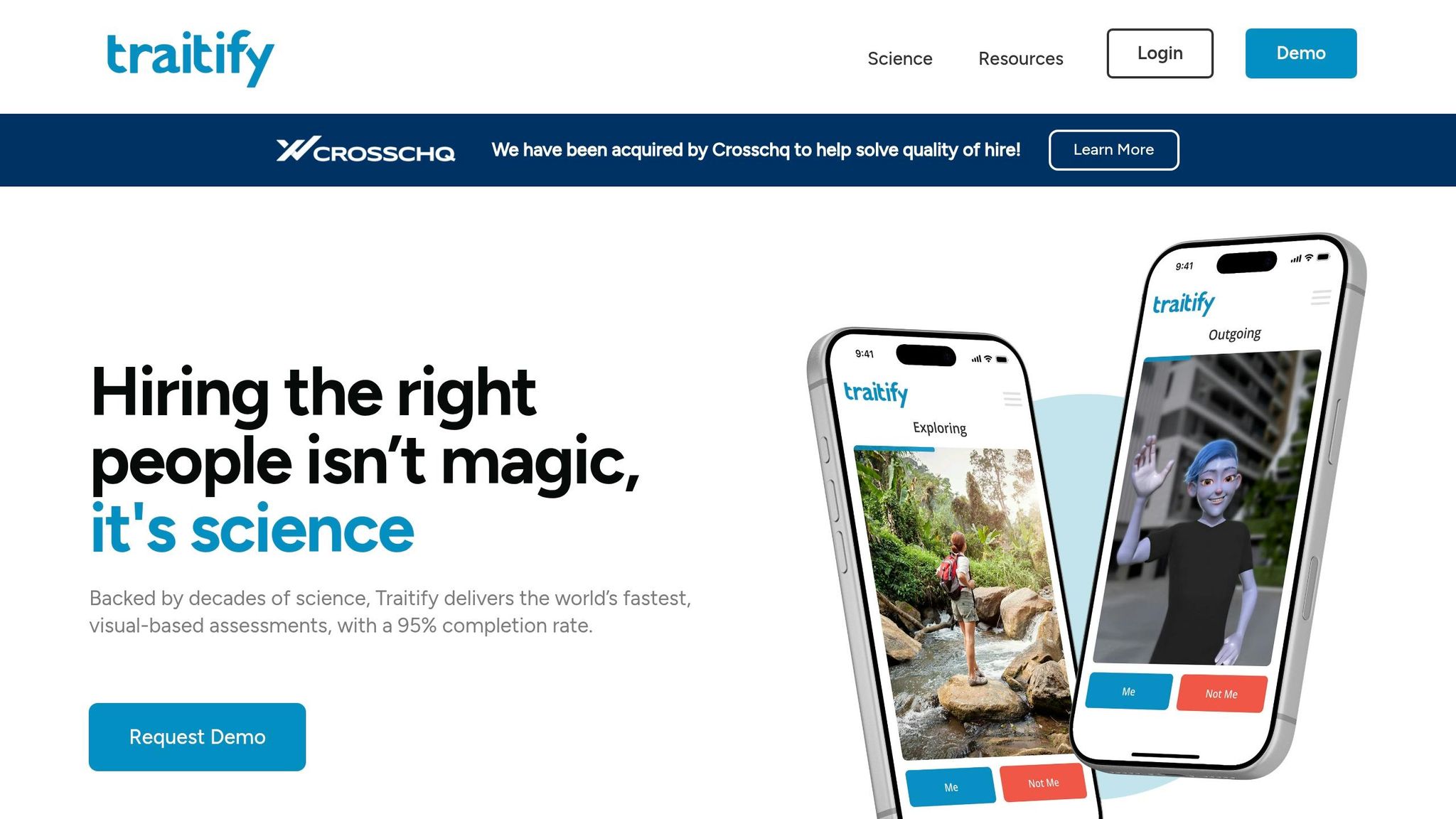
After faster intake-style tools, Traitify moves even more toward individual assessment than relationship-based guidance. It’s a lightweight tool built for single-user evaluation, not a relationship-first platform for building trust over time. In practice, that makes it a better match for HR and recruiting than for helping work.
Report Scope and Helping-Context Fit
Traitify offers basic individual profiles, but it does not include peer reports, group reports, or coaching tied to a specific relationship. That gap matters for social workers, counselors, coaches, case managers, and nonprofit staff. These roles often need help across clients, coworkers, and teams, not just a one-time intake snapshot.
Unlike personality reports built for helping relationships, Traitify doesn’t keep the relational context that supports trust over time.
Trust Guidance
Traitify’s assessments are static, so they become less useful when needs shift. And in helping work, needs do shift. Communication styles change. Stress levels change. Team dynamics change.
That makes Traitify a better fit for one-time screening than for trust work across clients, peers, or teams.
5. NAVRYN
NAVRYN is tougher to assess because the public information is thin. The sources available here simply don't give enough verified detail to compare NAVRYN on its model, report scope, or trust guidance.
Psychology Model
The sources do not document NAVRYN's underlying psychology model. Because of that, its transparency and evidence base are unclear. And without a documented model, there isn't a clear line of reasoning to assess.
Report Scope
The sources do not confirm whether NAVRYN offers one-to-one, peer, or group reports. That gap matters. It means there is no verified guidance on the individual, peer, or group dynamics that sit at the center of helping work.
Trust Guidance
Because there is no documented model or explanation layer in the sources, NAVRYN's trust guidance cannot be assessed.
Helping-Context Fit
The sources do not show a helping-professional use case. This contrasts with platforms that provide specific personality insights for social workers and other frontline roles.
6. IBM Watson Personality Insights
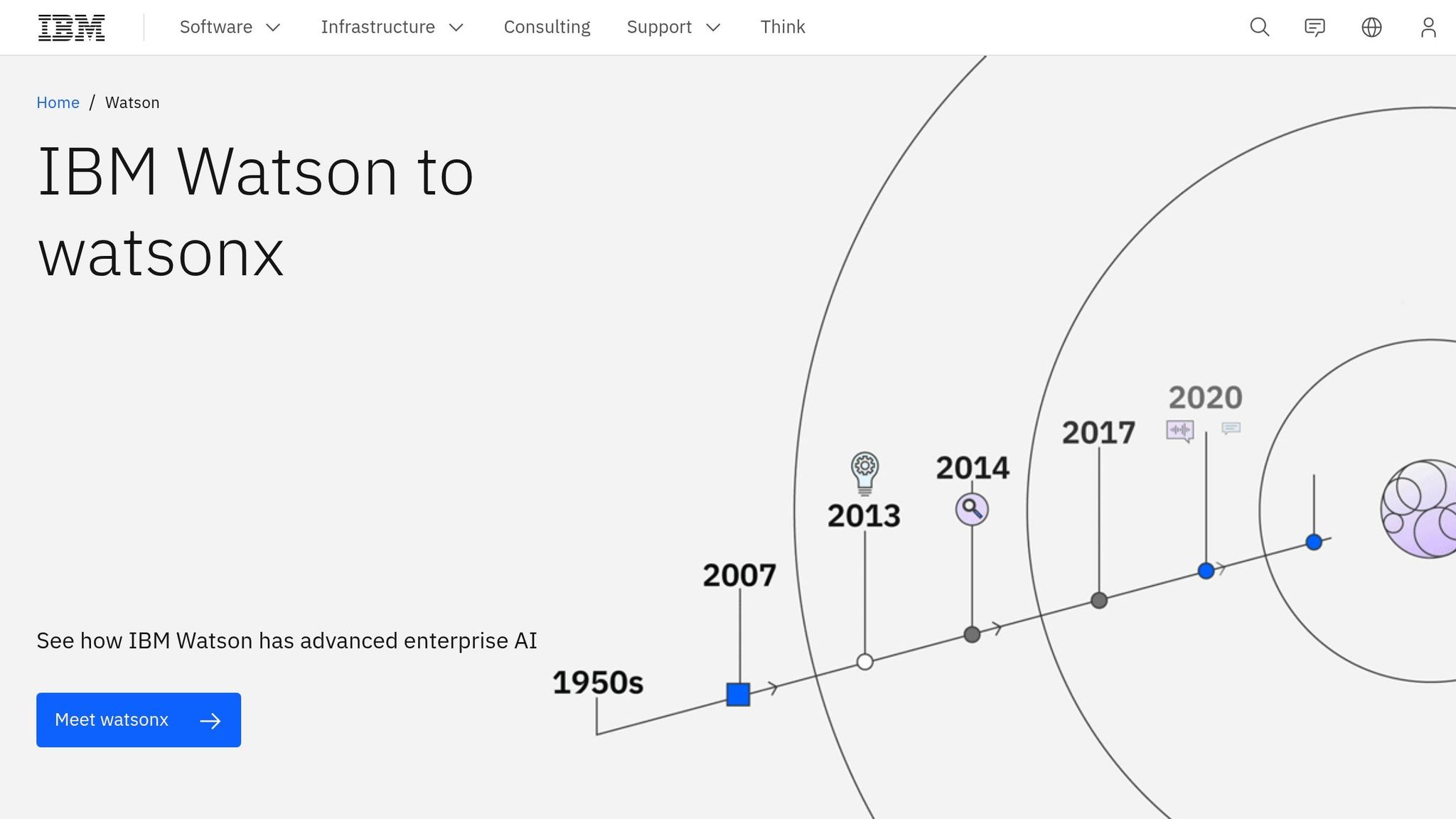
IBM Watson Personality Insights has stronger documentation than NAVRYN. But it still stops at individual, text-based analysis.
Psychology Model
IBM Watson Personality Insights was built on the Five Factor Model (FFM). It reported on three areas: Big Five personality traits, Needs, and Values. The system worked by analyzing written language, not by giving a direct assessment.
Personos takes a different path. It uses a direct 5-minute FFM assessment and scores 30 facets on an 80-point scale [2].
Report Scope
Watson generated individual personality profiles from text. That made it more useful for analysis than for trust-building in ongoing helping relationships, where the relationship itself shapes what works and what doesn't.
Trust Guidance
Watson could surface personality patterns, but it was not built to turn those findings into situation-specific communication guidance or trust-building strategies. For counselors, case managers, coaches, and nonprofit staff, that leaves a pretty big gap: no clear guidance on what to say next.
Helping-Context Fit
IBM Watson Personality Insights was a descriptive analysis tool, not a helping-profession platform. That gap matters most when trust depends on adjusting to one person, a peer relationship, or a group.
You can see that gap more clearly in one-to-one, peer, and group reports.
How One-to-One, Peer, and Group Reports Compare to Generic Advice
Generic advice like "listen actively" or "mirror their tone" can help. But in high-stakes work, it often stays too broad to be useful. You can see that gap most clearly in one-to-one, peer, and group reports.
The main difference is specificity. A one-to-one report built on facet-level personality data can include 10–15 sections shaped to the role, which gives far more detail than generic type-based advice.[2] Peer and relationship reports look at how two people interact, including history and boundaries.[2] Group reports add collective dynamics, team norms, key decisions, and context from @ mentions.[2]
This is where the gap shows up:
| Scope | Generic Advice | Personos |
|---|---|---|
| One-to-one | Broad, static tips | Facet-level personality data; 10–15 sections tailored to the role; ActionBoard integration [2] |
| Peer/relationship | Broad communication tips | Analysis of how two people interact, including history and boundaries [2] |
| Group | Broad teamwork tips | Collective dynamics, team norms, key decisions, and context from @ mentions [2] |
The biggest edge is not just more advice. It is advice matched to the relationship.
That matters most when the work involves actual behavior, not abstract communication tips. In one documented case, a social worker used Personos-guided support to help a client transitioning out of incarceration. The guidance was shaped to that client's specific patterns, not a generic profile, and that drove the outcome.[1]
In helping work, that distinction is a big deal. The point is not to pile on extra suggestions. The point is to give guidance that fits the person, the relationship, and the moment.
Personos is built for relationship-first guidance in nonprofit and helping settings. One thing that stands out is its transparent reasoning: each recommendation shows the traits, context, and principles behind it.[2] Just as important, individual scores are never visible to peers or clients, which helps avoid the labeling problem that can make personality tools feel invasive in sensitive helping contexts.[2]
Pros and Cons by Platform
These differences matter most when people need trust-building help that fits a specific person, peer, or group.
| Platform | Strengths | Limitations | Best-Fit User |
|---|---|---|---|
| Personos | Facet-level FFM insight; individual, relationship, and group reports; ActionBoard; privacy-first design; Scientific Explanation [2] | Requires an initial 5-minute assessment and ongoing context input to stay effective [2] | Social workers, case managers, coaches, counselors, and nonprofit teams |
| General-purpose AI tools | Fast and easy to use; broad communication tips | Often one-size-fits-all and weak on relationship context | People who need quick, general advice |
Personos stands out when trust depends on context, not generic tips.
It was built for helping work, where emotional nuance and relationship history shape trust. That matters a lot in settings where one small shift in tone, timing, or wording can change how a person responds.
The trade-off is pretty simple: Personos works best when users complete the initial assessment and keep the context up to date.
In helping settings, that is the big split. One kind of tool explains trust-building in context. The other mostly gives broad advice.
Conclusion
Generic advice usually stays at the level of broad ideas. Personality-based reports do something different. They turn those ideas into guidance for a specific person, a specific history, and a specific relationship. That gap matters most in helping settings, where trust depends on fit, timing, and context. It also matters because one-to-one, peer, and group dynamics don’t need the same kind of support.
Among the tools reviewed, Personos comes closest to that mark. For social workers, case managers, counselors, coaches, and nonprofit staff working to sustain emotional resilience in high-trust, high-emotion relationships, the main question is simple: does the tool give you guidance you can actually use in the moment, or does it just recycle familiar advice with new wording? Personos stands out here. It uses the Five Factor Model, measures 30 facets on an 80-point scale, and gives one-to-one, peer, and group guidance with transparent reasoning. That makes it practical and precise. At $9 per seat per month, it stays within reach for many nonprofits. If your work depends on high-trust, high-emotion relationships, Personos gives a level of specificity that broad advice just can’t match.
FAQs
How do personality reports improve trust over generic advice?
Generic communication advice often misses the mark because it assumes everyone responds the same way. Personality-based reports, including those from Personos, give guidance shaped to a person’s profile and the situation in front of you. That makes it easier to connect with people who are resistant, stressed, or simply overwhelmed.
They also help build trust by showing the reasoning behind the advice. Instead of asking users to just take the guidance at face value, these reports explain the logic so people can understand it and move forward with more confidence.
What makes one-to-one, peer, and group reports different?
- One-to-one reports focus on your own personality and insights tied to your role.
- Peer reports look at how two people work together and help you handle their day-to-day dynamic.
- Group reports assess the full team, combining individual traits with team context to guide engagement, alignment, and productivity.
How much setup is needed to keep guidance accurate?
Personos needs very little setup: a quick five-minute personality assessment based on the Five Factor Model, plus basic personal details during onboarding.
From there, accuracy comes from a structured system. It uses your goals, professional notes, and internal frameworks, then sharpens its insights through routine interactions, without manual updates or formal testing sessions.