How AI Improves Emotional Intelligence Feedback
Explore how AI enhances emotional intelligence by providing real-time feedback, improving communication and reducing workplace conflicts.
Nick Blasi

How AI Improves Emotional Intelligence Feedback
AI is changing how we improve emotional intelligence by providing instant, precise feedback. Unlike outdated methods that are slow and often biased, AI tools analyze emotions in real time through text, voice, and behavior. This allows for actionable insights that help individuals and teams communicate better, handle stress, and build stronger relationships. For example, AI can detect stress in your voice during meetings or suggest clearer language in emails. Companies using these tools report a 40% drop in employee turnover and a 48-point boost in employee satisfaction. However, challenges like data privacy and AI bias need careful management. When combined with human judgment, AI offers a practical way to improve emotional skills at work and beyond.
What Is Emotional Intelligence and Why Is It Hard to Develop
What Is Emotional Intelligence?
Emotional intelligence is all about understanding and managing not only your own emotions but also the emotions of those around you. Think of it as an emotional GPS that helps you navigate the complexities of human interactions. It equips you with the tools to read the room, control your reactions, and build meaningful connections [2][8].
At its core, emotional intelligence is built on four key components:
- Self-awareness: This is the ability to recognize your emotions as they arise and understand how they influence your thoughts and actions. For example, identifying that you're feeling frustrated and pinpointing the reason behind it.
- Self-regulation: Going beyond self-awareness, this skill helps you manage your emotions constructively. Instead of snapping at a coworker when you're stressed, you might pause, take a breath, and choose a calmer, more productive response.
- Empathy: This involves tuning into the emotions of others and understanding their perspectives. Imagine noticing that a teammate seems withdrawn during a meeting and realizing they might feel overwhelmed or unsure about their role.
- Social skills: These bring everything together, enabling effective communication and relationship management. Whether it’s offering motivating feedback or resolving a tense conversation in a way that strengthens the bond, social skills are the glue that holds emotional intelligence together.
On a personal level, these skills help you handle stress, navigate conflicts, and build stronger relationships [2][9]. Professionally, emotional intelligence is a game-changer for leadership, teamwork, and career growth. Studies even show that individuals with high emotional intelligence perform 3% better in their roles [1].
However, while these components are crucial, they also highlight why giving and receiving feedback on emotional intelligence can be so tricky.
Common Problems with Emotional Intelligence Feedback
Despite its importance, developing emotional intelligence remains a challenging process for most people. Consider this: 89% of people experience workplace conflict, with personality clashes being the leading cause [1]. This points to deep-seated issues in how emotional intelligence is taught and evaluated.
Bias skews feedback in ways we often don’t notice. Feedback is rarely objective - it’s shaped by the giver’s own experiences, preferences, and cultural norms [2][3]. For instance, a manager might label someone’s direct communication style as "aggressive" when it’s simply straightforward, or they might misinterpret a quiet demeanor as disengagement when the person is just taking time to process.
Generic advice doesn’t work because emotional intelligence is highly personal. Telling someone to "be more empathetic" without offering clear, actionable steps leaves them unsure of how to improve [10]. Without tailored feedback, people struggle to connect vague advice to real-life changes [10][5].
Emotions are hard to interpret, both in ourselves and others. Add cultural differences into the mix, and things get even trickier. For example, in American business culture, direct eye contact often signals confidence, but in other contexts, it could be seen as disrespectful [2][9]. These misinterpretations can lead to misunderstandings that harm relationships and professional progress.
Blind spots remain hidden without objective feedback. As executive coach David Kim explains, traditional methods often take months to uncover issues that advanced tools can identify much faster:
"It surfaces blind spots I would have taken months to uncover." [1]
Timing is critical. Feedback that arrives weeks or months after an event is often too late to be useful. By the time someone hears about their communication style during a past project, they’ve likely moved on to new challenges, making it hard to connect the feedback to specific behaviors.
Honest feedback is rare when it comes to emotional or interpersonal issues. Many people hesitate to give candid input, especially on sensitive topics, creating a vacuum where problematic behaviors go unaddressed. Over time, these gaps in awareness can grow even larger.
These challenges highlight why traditional methods of feedback often fall short and why there’s a growing need for real-time, precise solutions powered by advanced tools. Emotional intelligence is a skill worth mastering, but it demands a fresh approach to development and feedback.
Adding Emotional Intelligence to AI will Transform Sales, Support, and Training
How AI Makes Emotional Intelligence Feedback Better
AI is reshaping the way emotional intelligence feedback is delivered, offering faster, more personalized insights compared to traditional methods. Instead of relying on delayed and often subjective feedback, AI provides immediate, tailored guidance.
AI-Driven Emotional Analysis
AI has the ability to analyze emotions across multiple channels at once, painting a more nuanced picture than what human observation might offer. For instance, sentiment analysis examines emotional tones in both written and spoken language, while natural language processing (NLP) dives deeper into context, intent, and subtle cues to uncover hidden layers of meaning [2] [3] [5].
The real game-changer lies in how AI combines inputs from text, voice, and facial expressions. By analyzing voice patterns (tone, pitch, and pace), facial cues, and written communication together, AI can accurately gauge emotional states [2] [3] [5]. Take Marcus, a project manager at a tech company, as an example. He used an AI tool to evaluate his email habits over a week. The analysis revealed that his emails became short and directive as deadlines loomed - a stress-driven pattern Marcus hadn’t noticed. Armed with this insight, he began pausing before replying during high-pressure moments, which significantly improved his team’s trust and communication [7].
AI platforms can also uncover patterns - like dismissive language, frequent interruptions under stress, or shifts in tone - that might take human observers months to recognize [7]. By removing bias and subjectivity, these tools deliver precise feedback that aligns with each individual’s unique communication style.
Personalized Feedback for Growth
General advice like "be more empathetic" often falls flat because emotional intelligence is deeply personal. AI tackles this by analyzing individual behavior, history, and patterns to offer tailored suggestions that fit each person’s specific context [2] [4] [5].
For example, Personos takes a highly customized approach, generating reports based on 30 personality traits, personal background, situational context, and other factors. These reports can focus on personal relationships, group dynamics, or even specific teams, making the feedback actionable and relevant to the user’s unique situation.
This tailored feedback doesn’t stop at the individual level. AI systems consider broader dynamics, offering role-specific recommendations that turn research-based insights into practical steps for improving emotional intelligence. They’re even designed to adapt to diverse cultural norms, ensuring feedback respects differences and avoids stereotypes [2] [3]. This level of personalization extends into real-time interactions, providing users with context-aware guidance as situations evolve.
Real-Time Emotional Insights
One of AI’s standout advantages is its ability to deliver real-time emotional intelligence feedback. Unlike traditional feedback, which might arrive weeks or months after the fact, AI can analyze live conversations - monitoring tone, word choice, and facial expressions - to offer immediate, actionable insights [2] [5] [6].
During conversations, AI tools can suggest better phrasing, flag potential misunderstandings, or recommend language to ease tensions. This instant support helps individuals adjust their communication style on the spot, reducing conflicts and strengthening relationships [2] [5] [6].
Personos, for instance, includes features like "Personos Chat & Specialized Chats" and "Personos Prompts", which provide real-time interaction tips based on AI analysis. The system can even predict emotional shifts - like recognizing when a client is close to disengaging - so users can adapt their approach before the situation worsens.
This ability to offer immediate feedback transforms emotional intelligence development from a slow, reflective process into an ongoing, real-time improvement journey. Users gain access to objective, practical insights exactly when they need them, empowering them to build stronger, more effective relationships.
sbb-itb-f8fc6bf
Real-World Uses of AI-Powered Emotional Intelligence Feedback
AI's ability to provide real-time insights is transforming how people understand and manage emotions, both personally and professionally. From individual coaching to team collaboration, these tools are reshaping self-awareness, communication, and growth.
Building Self-Awareness and Emotional Control
AI tools are remarkably effective at helping individuals identify emotional patterns and improve self-regulation. By analyzing vocal tone, pitch, pace, and language, these systems can detect signs of stress or emotional shifts that often go unnoticed [2][3].
For instance, if frustration is detected, the AI might suggest taking a break or using de-escalation techniques [2]. This immediate feedback creates a learning cycle where users become more aware of their triggers and practice managing emotions with guided support.
Personos takes this concept further by offering personalized reports based on 30 personality traits, background details, and specific situations. These reports not only provide insights into emotional tendencies but also include actionable recommendations for personal growth. The platform even anticipates emotional states, like sensing when someone is close to "shutting down", and offers timely advice to maintain connection and self-regulation.
Carla Mendoza, LCSW, an addiction recovery counselor, highlights its impact:
"In recovery, timing is everything. Personos helps me anticipate when a client is on the edge of shutting down and adjust my approach so we stay connected. That kind of in-the-moment support is priceless."
This ability to improve emotional control naturally enhances communication and teamwork.
Better Communication and Team Dynamics
AI-powered emotional intelligence tools are particularly useful in workplace communication, especially in situations where tone and intent can easily be misinterpreted. For example, when writing sensitive emails, these tools can flag harsh language and suggest more empathetic alternatives, helping users navigate difficult conversations while fostering emotional intelligence [2].
These tools also analyze team interactions to identify potential miscommunications caused by differing communication styles or cultural norms [2]. By examining work habits, AI can recommend optimal collaboration times and highlight areas of potential friction before they escalate.
Emotionally intelligent AI assistants go a step further by modeling empathetic interactions. They provide feedback on emotional cues and suggest ways to approach colleagues - whether it’s offering supportive phrases or gestures during tough times. Leaders trained with these tools become more adept at managing team dynamics and creating inclusive, supportive environments.
The benefits extend beyond internal communication. A study in Harvard Business Review revealed that emotionally intelligent AI can boost customer satisfaction by 25% and cut complaints by 30% [4]. Companies like Nordstrom and Macy's use AI-driven sentiment analysis to enhance customer experiences, strengthening emotional connections with their brands and reducing churn.
These improvements in communication also play a key role in personalized coaching.
Coaching and Development with Personos
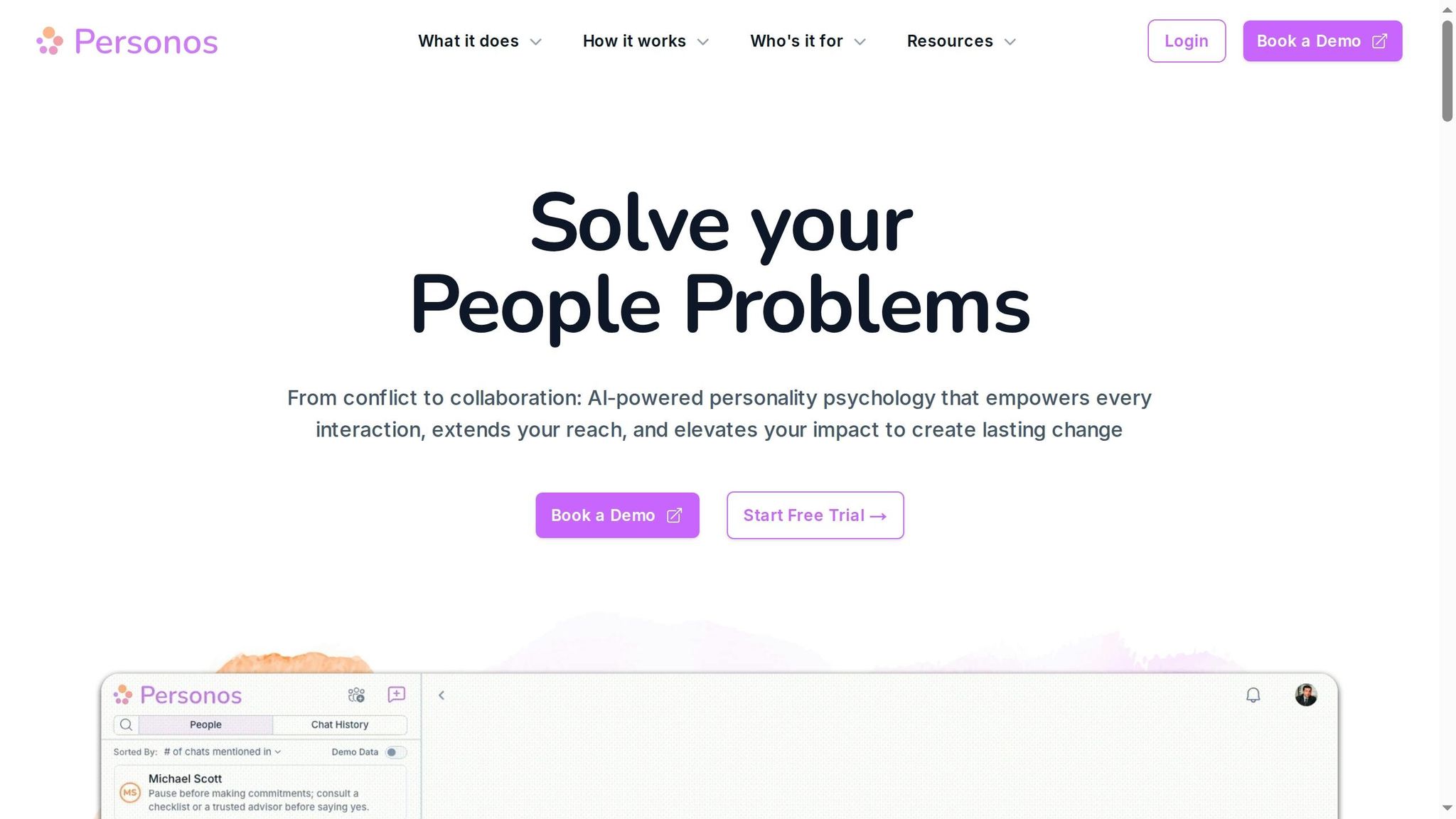
Combining AI with personality psychology, Personos offers a comprehensive approach to coaching and professional development. The platform generates dynamic personality reports that help users understand their emotional tendencies and interpersonal behaviors, providing a foundation for targeted growth.
Real-time communication prompts guide users during interactions, helping them apply emotional intelligence strategies immediately. These prompts encourage self-reflection and deepen understanding of emotional responses. Steve Huff, PhD, a social work veteran, describes the shift:
"With Personos, I no longer feel the burden of solving my client's problems. Instead, I walk beside them as they discover their own solutions."
The platform also provides detailed relationship and group analysis reports, helping leaders and coaches develop strategies for improved collaboration. Progress-tracking features ensure accountability, allowing users to measure their growth in communication and interpersonal skills over time.
For professionals in high-stress roles, Personos offers vital support. Lisa Chen, MSW, a domestic violence advocate, shares her experience:
"Personos has helped me protect my own well-being while staying fully present for the people I serve. That balance keeps me in this work."
The platform's AI-driven wellness programs are tailored to enhance employee engagement, offering timely mental health resources. AI can even analyze work habits to suggest optimal times for breaks, helping individuals avoid burnout and maintain a healthier work-life balance [2].
A 2024 survey by Six Seconds found that employees receiving AI-driven emotional intelligence feedback reported a 23% improvement in communication effectiveness over six months [8]. This underscores the measurable impact these tools have on professional growth and workplace relationships.
Problems and Ethics in AI-Driven Feedback
AI-powered emotional intelligence tools bring plenty of potential, but they also come with challenges that organizations need to tackle. These hurdles, both ethical and practical, demand thoughtful solutions and collaborative strategies.
Bias and Accuracy in Emotional Analysis
One big issue with AI systems is bias, especially when they’re trained on limited datasets. For instance, research shows that systems trained on narrow data can be up to 30% less accurate when interpreting emotions from underrepresented groups [3]. If the AI learns primarily from one demographic, it might miss or misread emotional cues from others, particularly those that are subtle or culturally specific. Natural Language Processing tools are especially prone to this, as they can inadvertently carry over biases embedded in their training data [2].
Another challenge is nuance. AI often struggles to understand sarcasm, idiomatic expressions, or context-heavy language [2]. To address these gaps, organizations need to prioritize diverse datasets and involve experts who understand emotional subtleties. Regular audits and updates to training data are key. Take Personos, for example - they tackle bias by generating dynamic personality reports that consider 30 personality traits, background details, and situational context. Their transparent reasoning process helps users see how conclusions are reached, making it easier to spot and correct potential biases [1].
Privacy and Data Security
Emotional data collection raises serious privacy concerns. Monitoring employee communications - whether through emails, chat logs, or voice patterns - can lead to risks like unauthorized access, profiling, or even data breaches [5]. Surveys reveal that many users of emotion-aware AI tools are uneasy about privacy [5].
To combat these risks, organizations need to adopt strong security measures. Think end-to-end encryption, regular security audits, and anonymizing emotional data whenever feasible. Transparency is equally important: companies must clearly explain how they collect, store, and use data, offer clear consent options, comply with privacy laws like HIPAA or GDPR, and limit data retention to only what’s necessary. These steps not only protect privacy but also highlight the importance of pairing AI insights with human oversight.
Combining AI and Human Judgment
AI has its strengths - it’s great at processing data and spotting patterns - but it falls short when it comes to understanding the full complexity of human emotions [2]. Context and empathy are areas where humans excel. That’s why a human-in-the-loop approach is so critical. For example, an AI might flag emotionally sensitive messages, but it’s up to a trained manager or coach to review and interpret that feedback in context.
Conclusion: Using AI to Improve Emotional Intelligence
AI-driven emotional feedback is changing the way we approach personal and professional growth. By delivering real-time, tailored insights, this technology reshapes how we understand and refine our emotional skills. It builds on earlier methods of real-time data analysis and personalization to offer a more interactive and impactful experience.
Research highlights the benefits: emotionally intelligent AI can increase customer satisfaction by 25% and reduce complaints by 30% [4]. Similarly, AI-powered wellness programs have been shown to lower stress levels and boost employee engagement [2].
Take Personos, for example - it showcases how AI can address workplace challenges. With 89% of employees experiencing conflicts at work and personality differences being the top cause [1], Personos provides clear reasoning and role-specific action steps. These solutions turn research into practical tools for improving emotional intelligence.
However, balance is key. While AI excels at analyzing emotional data and spotting patterns, human judgment is crucial for interpreting context and applying insights effectively. This collaboration allows professionals to better anticipate emotional responses, adapt their communication in the moment, and build stronger, more empathetic connections.
For organizations, selecting platforms that emphasize transparency, privacy, and inclusivity is essential. Traditional methods often fall short due to delays, biases, and generic advice. AI offers precise, immediate feedback that drives meaningful change.
With AI enhancing human empathy, the future of emotional intelligence development is already here. When used responsibly, these tools can help create more emotionally aware workplaces, improve relationships, and strengthen communication - paving the way for personal and professional success.
FAQs
How does AI reduce bias and subjectivity in emotional intelligence feedback?
AI reduces bias and subjectivity in emotional intelligence feedback by focusing on data-driven analysis instead of personal opinions. It assesses interactions and behaviors using objective metrics, ensuring the feedback remains consistent and impartial.
Take Personos, for instance. This platform uses AI to evaluate personality traits and communication styles in real-time. By doing so, it delivers tailored, actionable insights aimed at supporting both personal and professional development. The emphasis stays on facts and observable patterns, steering clear of subjective judgments.
How can organizations protect data privacy and security when using AI to provide emotional intelligence feedback?
To ensure data privacy and security when using AI for emotional intelligence feedback, organizations need to take a few critical steps. Start by using strong encryption protocols to protect sensitive data both during storage and while it’s being transmitted. It’s also essential to set up strict access controls so that only authorized personnel can handle or view the data. Regular audits of AI systems are another key measure to spot and address any vulnerabilities before they become bigger issues.
On top of these technical measures, organizations should comply with relevant privacy laws like GDPR or CCPA, depending on their location. Transparency with users is equally important - clearly explain how their data is collected, stored, and used. By focusing on these practices, organizations can build trust while keeping sensitive information secure.
How can AI tools enhance emotional intelligence to strengthen workplace communication and relationships?
AI-driven tools like Personos can play a big role in enhancing emotional intelligence by providing real-time, tailored insights that align with both individual and team dynamics. These tools analyze personality traits and interpersonal behaviors to spot potential conflicts, offer strategies to improve communication, and strengthen relationships.
With features like dynamic personality assessments, communication suggestions, and group analysis capabilities, Personos equips professionals to handle complex interactions more effectively. By combining AI insights with human judgment, it encourages thoughtful decision-making and fosters a more collaborative workplace, supporting growth on both personal and professional levels.