Trust in Relationships: Lessons from Psychology
Explore how trust forms, how attachment styles shape it, why vulnerability strengthens bonds, and practical steps to build or rebuild trust.
Rachel Johnson

Trust in Relationships: Lessons from Psychology
Trust is the foundation of meaningful relationships. It helps us connect, collaborate, and feel secure. Without trust, relationships can become strained, leading to emotional distance and constant doubt. Psychology shows that trust is not just about personality but is shaped by actions, behaviors, and interactions over time.
Key takeaways:
- Trust is built through consistent actions: Reliability, care, and integrity are critical.
- Attachment styles influence trust: Secure, anxious, avoidant, and disorganized styles shape how we connect.
- Vulnerability strengthens trust: Taking risks and being open fosters deeper bonds.
- Repairing broken trust requires accountability: Honest apologies and consistent behavior rebuild trust.
Whether in personal or professional settings, trust grows from small, steady efforts rather than grand gestures. By understanding psychological insights, you can create stronger, healthier connections.
How to build (and rebuild) trust | Frances Frei
The Psychology of Trust: Core Theories and Concepts
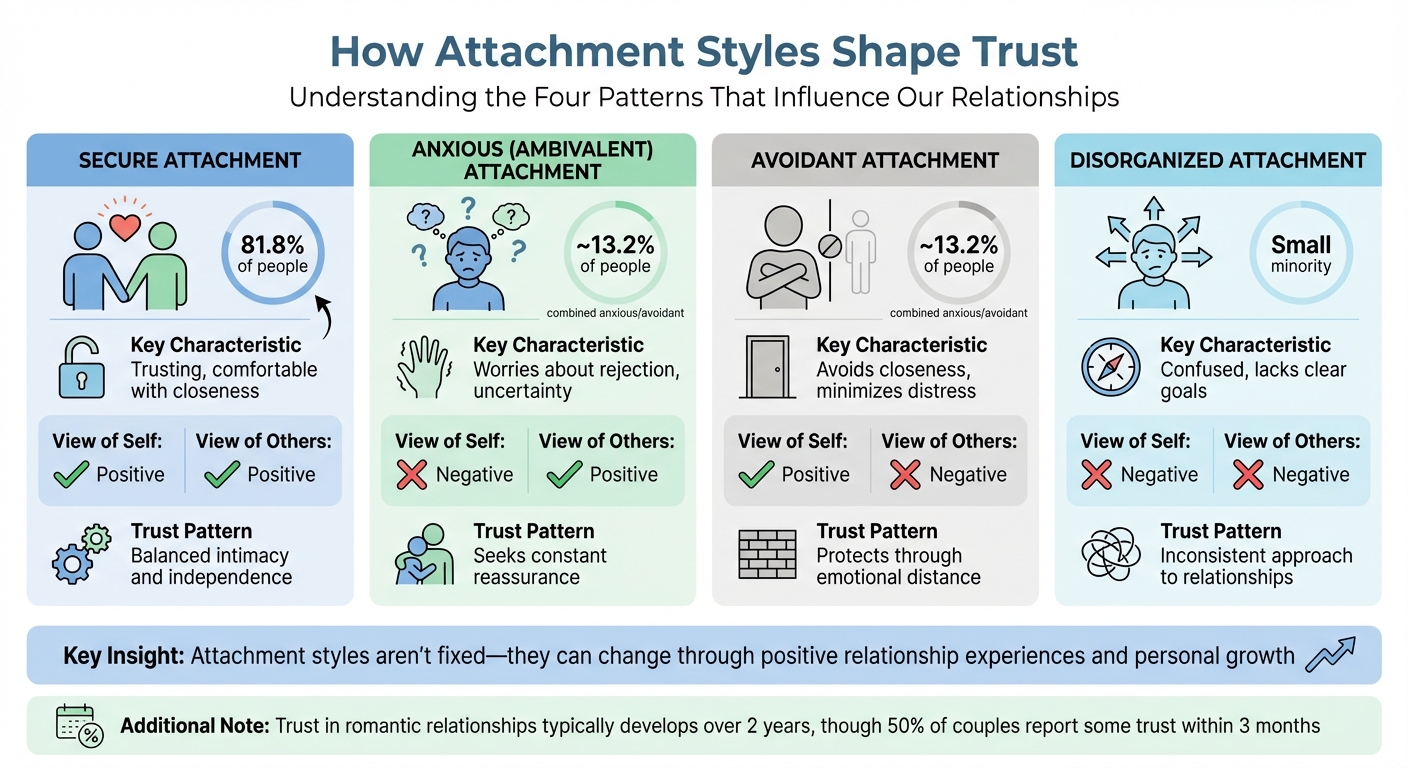
Four Attachment Styles and Their Impact on Trust in Relationships
Attachment Theory and How Trust Forms
The way we learn to trust begins early in life. Psychologist John Bowlby's Attachment Theory explains how our first relationships with caregivers shape what are called Internal Working Models. These models influence how we see ourselves - whether we feel deserving of love - and how we perceive others - whether we believe they will be reliable and supportive [5][7].
"Attachment can be defined as a deep and enduring emotional bond between two people in which each seeks closeness and feels more secure when in the presence of the attachment figure." - Simply Psychology [5]
Studies show that 81.8% of people develop a secure attachment style. This means they are comfortable with both intimacy and independence. Meanwhile, around 13.2% display anxious or avoidant patterns. Anxious individuals often worry about whether their affection will be returned, while avoidant individuals tend to shy away from emotional closeness to protect themselves [5][8].
Attachment patterns don’t remain fixed - they can change based on life experiences and the quality of relationships we form over time [5]. A significant part of this change comes from what Bowlby described as a "secure base." When someone consistently provides a safe space during tough times while encouraging independence, trust tends to grow naturally [5][6]. In romantic relationships, this process often takes about two years, although some levels of trust can develop in as little as three months for half of all couples [6].
| Attachment Style | Key Characteristic | View of Self | View of Others |
|---|---|---|---|
| Secure | Trusting, comfortable with closeness | Positive | Positive |
| Anxious (Ambivalent) | Worries about rejection, uncertainty | Negative | Positive |
| Avoidant | Avoids closeness, minimizes distress | Positive | Negative |
| Disorganized | Confused, lacks clear goals | Negative | Negative |
These early attachment styles provide the foundation for understanding the two key components of trust, which will be explored next.
The Thinking and Feeling Sides of Trust
Trust grows through a combination of rational thinking and emotional connection. It operates on two levels: one that involves logical evaluation and another that relies on gut feelings [1]. The logical side assesses factors like ability, benevolence, and integrity, while the emotional side provides a sense of safety and connection [1].
"Trust represents the affective-cognitive states of those involved in these respective relationships. Trust is therefore an integral facet of conscious experience for both the trustor (the person that trusts) and the trustee (the one who is to be trusted)." - P. A. Hancock, Department of Psychology, University of Central Florida [1]
A meta-analysis of over 2,000 studies found that two factors - reputation and closeness - are the strongest predictors of trustworthiness. These findings highlight the importance of the cognitive side of trust [1]. Interestingly, when researchers controlled for social background in long-term studies, they found that attachment security during infancy explained only 5% of the variability in social competence by age 19, suggesting that other factors also play a role [7].
Why Vulnerability Builds Trust
True trust isn’t possible without vulnerability. It involves taking risks and being open to the possibility of harm. Trust is often described as a "calculated exposure to the risk of harm" based on another person’s actions [1]. Without taking these risks, trust simply doesn’t have the chance to develop.
Research shows that trust is strongest in situations where helping someone comes at a personal cost. When a partner makes a sacrifice during these moments, it demonstrates genuine care and strengthens trust [2]. At the same time, our natural instinct to protect ourselves can lead to emotional distance when we feel insecure [2].
Building trust also relies on what researchers call "interactional synchrony." This is the process of matching behaviors and emotions in a coordinated way, like a well-timed dance between two people. It’s through these moments of connection that trust deepens [5].
How to Build and Maintain Trust
What Creates Trust
Trust doesn’t happen overnight - it’s built through consistent actions and behaviors. Psychologists often refer to the Triad of Trustworthiness, which includes ability, benevolence, and integrity [1][4].
- Ability is about having the skills to follow through on commitments.
- Benevolence reflects genuine care for someone’s well-being.
- Integrity means adhering to shared principles, even when it’s inconvenient.
As Laura Copley, Ph.D., LPC, puts it:
"Trust is not built through grand gestures. It is slowly nurtured through small, consistent actions demonstrating ability, integrity, and benevolence." [4]
Trust grows through repeated, reliable actions, not one-time efforts. It’s these consistent behaviors that build both a strong reputation and deeper connections over time [1].
To keep trust alive, the concept of "minding" highlights five key behaviors:
- Sharing openly and honestly.
- Listening with full attention.
- Giving the benefit of the doubt when things go wrong.
- Accepting others’ truths without judgment.
- Continually investing in the relationship [4].
Behaviors That Damage Trust
Just as trust is built through steady, positive actions, it can crumble through repeated negative ones. Surprisingly, it’s not the dramatic betrayals that do the most damage - it’s the small, repeated lapses in reliability. Chronic lateness, missed commitments, or even minor lies can slowly erode trust [9].
For example, gossiping about others doesn’t just damage your reputation - it makes people wonder what you might say behind their back. Similarly, when someone’s words and actions don’t align, it creates confusion and doubt about whether they can be counted on.
Violations of integrity strike even deeper. Breaking a confidence or lying about money, for instance, isn’t just about failing at a task - it calls a person’s core values into question [10]. While skills can be learned, rebuilding trust in someone’s character is much harder.
Power imbalances also play a role. When one person holds significantly more authority, resources, or emotional control, the other may feel unsafe being vulnerable [3]. Trust thrives in relationships where there’s mutual respect and a sense of fairness. Recognizing these dynamics is key to avoiding pitfalls and creating a stronger foundation.
Practical Ways to Strengthen Trust
Building trust isn’t about grand gestures; it’s about small, thoughtful actions over time. Here are a few ways to strengthen trust:
- Gradual vulnerability: Start small. Share a minor concern or ask for help with something manageable. As the other person responds reliably, you can slowly increase openness and deepen the connection [4].
- Create connection rituals: Whether it’s a weekly check-in, a shared gratitude practice, or a regular coffee date, consistent routines signal that the relationship matters. In professional settings, this might look like regular one-on-one meetings or team retrospectives [4].
- Accept influence: When someone shares concerns or needs, listen actively and show you’re willing to adapt. This demonstrates that their perspective is valued and strengthens the bond [4].
Mistakes are inevitable, but how you handle them matters. Own up to errors quickly and without excuses. Accountability shows sincerity, and over time, consistent actions will rebuild any lost trust. Tools like Personos can even offer personality-based insights to help guide the repair process [4].
Trust, at its core, is about showing up for others - and doing so consistently. It’s not about perfection, but about proving, over time, that you can be counted on.
sbb-itb-f8fc6bf
Rebuilding Trust After It's Broken
How Betrayal Affects People and Relationships
When trust is broken, the fallout often goes beyond just hurt feelings. Research shows that betrayal activates the same areas of the brain as physical pain, sparking fear, emotional hurt, and heightened alertness [11]. As Cynthia Vejar, Ph.D., puts it:
"The brain treats betrayal like physical pain - triggering fear, hurt, and hypervigilance" [11].
This reaction can lead to emotional dissonance, where the betrayed person struggles to reconcile conflicting feelings: "I care about you" versus "You’ve hurt me" [11]. When the betrayal comes from someone deeply trusted - like a partner, parent, or colleague - it can feel like an existential threat rather than just a relational issue. The nervous system shifts into a constant state of alertness, scanning for signs of danger. Even minor disagreements can feel overwhelming, as though they signal a bigger crisis [11][12].
Betrayal also shakes a person’s sense of self. It can lead to doubts about one’s judgment, fears about trusting others, and questions about the safety of the world around them [12].
Recognizing the deep emotional impact of betrayal is essential for taking meaningful steps toward rebuilding trust.
Steps to Repair Trust
Rebuilding trust is a long process that requires consistent effort, often taking about a year to see meaningful progress [12]. While there’s no quick fix, there is a clear path forward.
The person who caused the harm must take full responsibility, without excuses or downplaying their actions [11][4]. A sincere apology involves acknowledging the harm done, expressing genuine regret, and showing a commitment to making amends [13]. But actions speak louder than words - only consistent, trustworthy behavior over time can rebuild trust [11][4].
For the person who was hurt, healing means allowing space for the pain rather than rushing to move on. It also involves setting clear boundaries and defining what safety and trust need to look like moving forward [11][9].
Creating rituals of connection can also help repair the relationship. For example, couples might limit discussions about the betrayal to 15–20 minutes a day, preventing the issue from dominating their time together [12].
These steps provide a foundation for recovery, but professional guidance can often accelerate the process.
Using Tools and Coaching to Rebuild Trust
Professional support can be a game-changer. Studies show that nearly 70% of couples in therapy see meaningful improvements, and Emotionally Focused Therapy helps 70–75% of distressed couples move toward recovery [14]. A neutral therapist can prevent conversations from escalating into arguments or avoidance. Techniques from Cognitive Behavioral Therapy (CBT) can also challenge destructive thoughts, such as “Everyone will betray me,” and replace them with more balanced perspectives [4][14].
Personality-based tools like Personos offer additional support by tailoring insights to individual traits like conscientiousness and agreeableness, which play a role in forgiveness and rebuilding trust [13]. With AI-driven guidance, Personos helps navigate tough conversations and identifies whether hypervigilance stems from the current situation or unresolved past experiences. This personalized approach can make the repair process more effective.
It’s important to remember that the trust rebuilt after betrayal may not look exactly like it did before - but that doesn’t mean it’s any less strong [10].
Conclusion: Using Psychology to Build Better Relationships
How Trust Improves Personal and Professional Growth
Understanding the psychology of trust can reshape how we connect with others. As Lewicki and Bunker put it, trust acts as "the glue that holds most cooperative relationships together" [10]. It not only enhances teamwork but also deepens personal bonds. Trust is built on three key pillars: ability, benevolence, and integrity, and it requires consistent, intentional effort to grow [10].
Interestingly, research shows that general trust levels contribute only about 16% to the trust in a specific relationship [3]. This means that our everyday actions carry far more weight than inherent personality traits. Simple practices like showing vulnerability in manageable ways, listening attentively, and interpreting negative events as situational rather than personal can create an environment where trust thrives [4]. These principles apply universally - whether you're nurturing a romantic relationship, leading a team, or expanding your professional network.
By applying these insights, we can develop practical strategies to strengthen trust in our relationships.
Tools That Support Better Relationships
Building trust doesn’t have to be a solo effort. Tools and resources can help turn psychological insights into actionable habits. For instance, platforms like Personos offer AI-driven guidance tailored to individual personalities and relationship dynamics. By providing real-time communication tips and personalized insights during challenging situations, tools like this can help you navigate conflicts and reinforce trust through consistent, positive behaviors.
As P. A. Hancock and colleagues explain, "Trust is an individual's calculated exposure to the risk of harm from the actions of an influential other" [1]. With the right knowledge and support, you can take these calculated risks confidently, fostering both personal satisfaction and professional growth. Whether through coaching, structured exercises, or personality-based tools, these resources can help you build trust that lasts.
FAQs
How do attachment styles shape trust in relationships?
Attachment styles significantly shape how trust forms and operates within relationships. People with a secure attachment style generally find it easier to trust. They feel assured in their partner’s dependability and emotional availability. On the other hand, insecure attachment styles, such as anxious or avoidant, often create hurdles when it comes to trust. For instance, someone with an anxious attachment style might wrestle with fears of abandonment or doubt their partner’s commitment. In contrast, individuals with an avoidant attachment style may shy away from emotional closeness, making it harder to trust and build deeper connections.
Studies highlight that early interactions with caregivers play a critical role in developing these attachment patterns. These early experiences continue to influence how trust is perceived and maintained in adulthood. Secure attachment tends to promote positive memories and healthier coping mechanisms, resulting in stronger and more stable relationships. Conversely, insecure attachment often triggers defensive behaviors and challenges in sustaining trust, which can negatively affect relationship satisfaction.
How can trust be rebuilt after a betrayal in a relationship?
Rebuilding trust after a betrayal is no easy task - it takes honesty, patience, and consistent effort from both sides. It begins with open communication. The person who was betrayed needs a chance to express their feelings openly, while the one who broke the trust must take full responsibility for their actions and show sincere remorse. Acknowledging the emotional damage caused by the betrayal is an essential step toward healing.
Consistency plays a huge role in regaining trust. Words alone won’t cut it; actions matter. The person working to rebuild trust must follow through on promises, remain transparent, and show a genuine commitment to making lasting changes. Both individuals should also collaborate to establish clear boundaries, practice empathy, and create an emotional environment where both feel safe.
Sometimes, professional help like therapy or coaching can be incredibly beneficial. A counselor can offer tools and guidance to navigate this difficult process. With mutual effort and accountability, repairing and strengthening the relationship becomes possible.
Why does being vulnerable help build trust in relationships?
Being vulnerable plays a key role in building trust. It’s about opening up - sharing your thoughts, feelings, and even fears. This kind of honesty shows you're genuine and willing to connect on a deeper level. And when you take that step, it often encourages others to do the same, creating a stronger bond.
Research in psychology highlights that trust thrives when people feel safe to be their true selves. Vulnerability fosters this sense of emotional safety, allowing for more authentic and lasting relationships to develop. It’s this openness that lays the groundwork for trust to grow.