Top 5 Tools to Increase EQ (Emotional Intelligence)
Five research-backed and free EQ tools to boost self-awareness, emotion management, and leadership skills for professionals.
Rachel Johnson

Top 5 Tools to Increase EQ (Emotional Intelligence)
Emotional intelligence (EQ) is critical for career success, often more impactful than IQ. The good news? You can improve it with the right tools. Whether you're aiming to enhance self-awareness, manage emotions, or build stronger relationships, these five tools can help:
- Emotional Capital Report (ECR): A research-backed assessment focusing on 10 EQ competencies, ideal for leadership development.
- EQ-i 2.0: A scientifically validated tool offering detailed insights into emotional skills, perfect for executive coaching.
- Personos AI Platform: An AI-driven tool providing real-time, personality-based guidance for workplace challenges.
- MSCEIT: A performance-based test measuring emotional problem-solving abilities, great for recruitment and leadership evaluation.
- Free Self-Assessments: Accessible tools like the Schutte Self-Report or LEADx EQ provide quick, actionable feedback for beginners.
Each tool offers unique benefits, from in-depth reports to quick self-assessments. Choose the one that aligns with your goals and start building your emotional intelligence today.
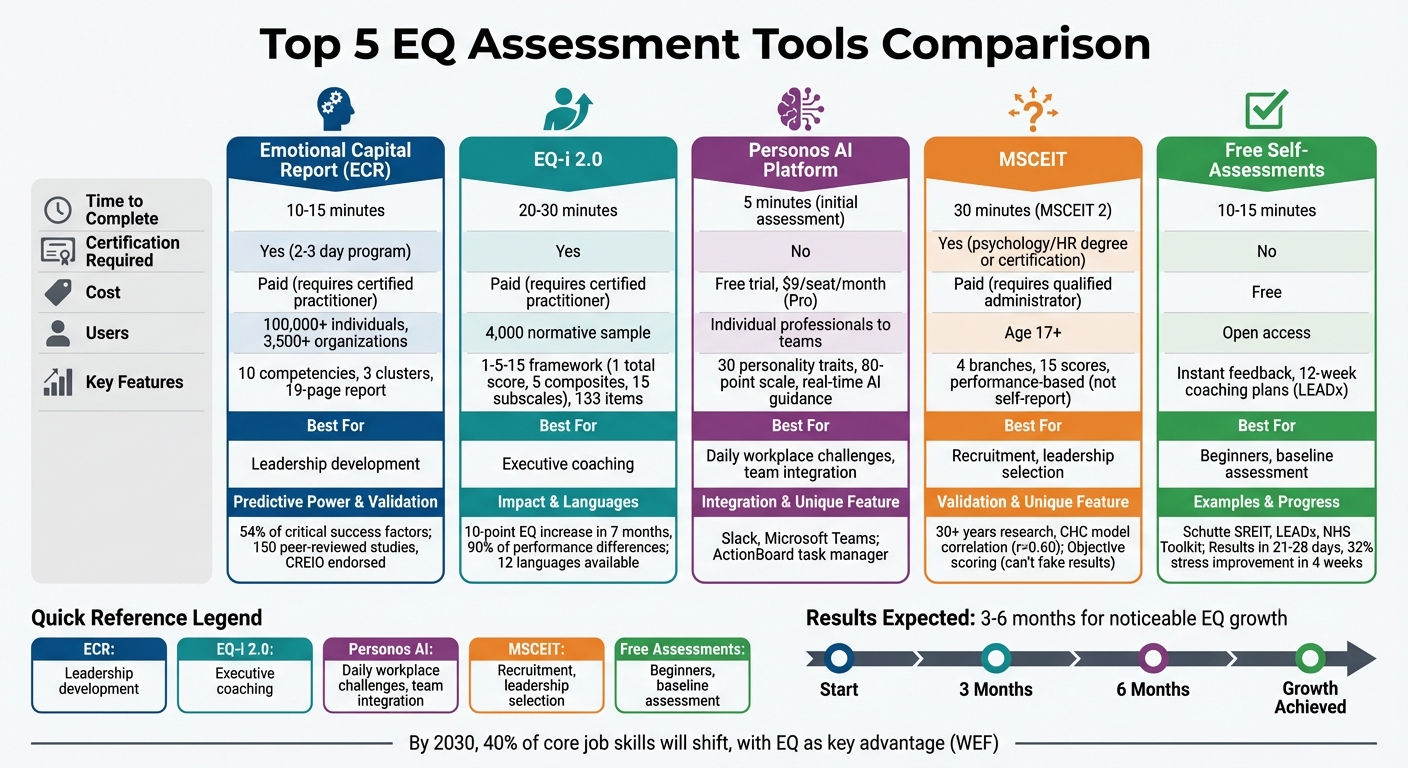
Comparison of Top 5 Emotional Intelligence Assessment Tools
Tools Available for Development and Growth in Emotional Intelligence
1. The Emotional Capital Report (ECR)
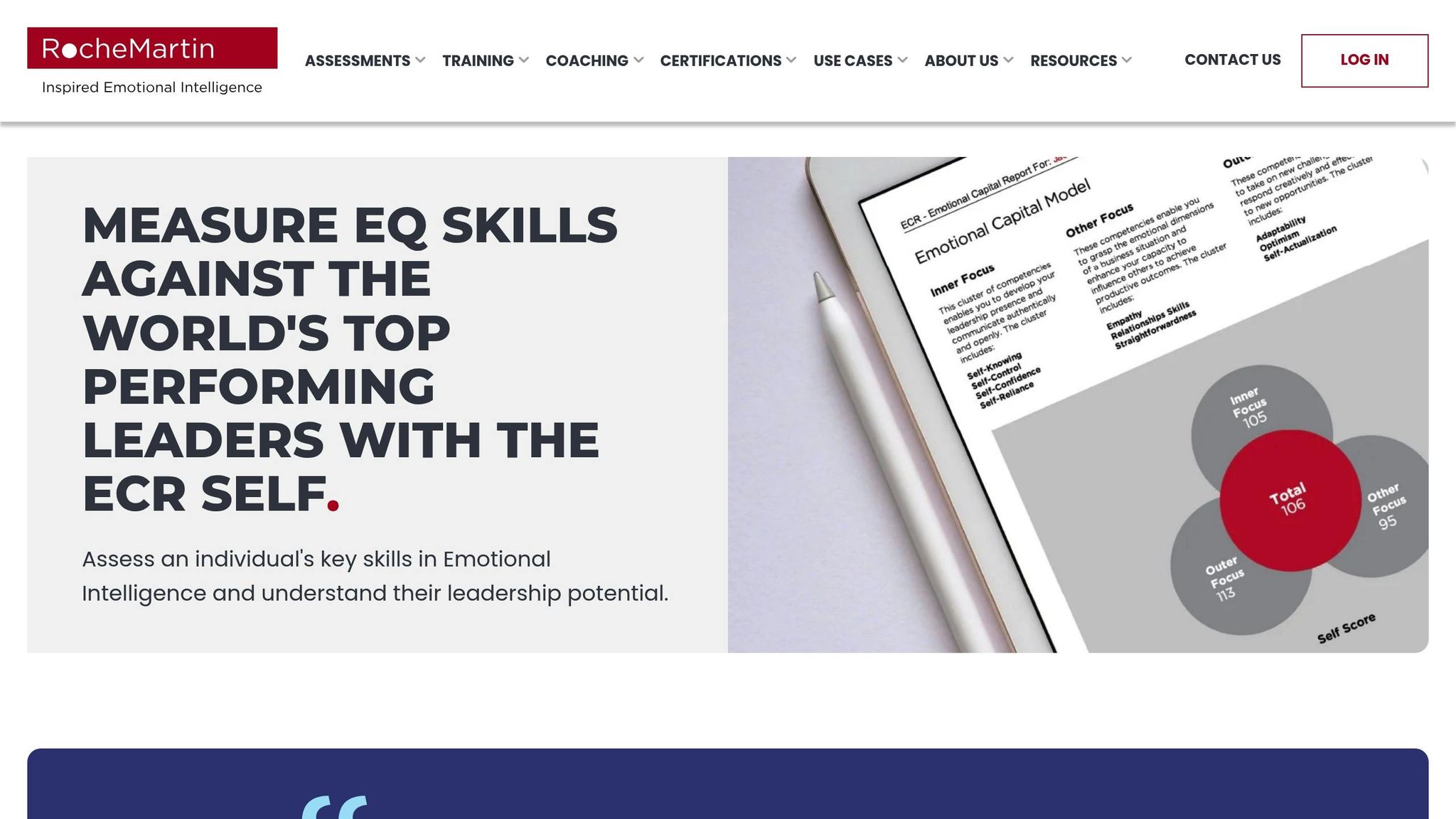
The Emotional Capital Report (ECR) is a research-backed EQ assessment created by RocheMartin after reviewing nearly 150 peer-reviewed studies. It evaluates 10 key competencies grouped into three clusters: Inner Focus (self-knowing, self-control, self-confidence, self-reliance), Other Focus (empathy, relationship skills, straightforwardness), and Outer Focus (adaptability, optimism, self-actualization). This structure is designed to target specific areas for improvement, enhancing workplace performance. Unlike generic EQ tests, the ECR is standardized against a global sample of 3,240 high-performing leaders, ensuring its relevance and reliability[7].
Scientific Validation and Research Foundation
The ECR's foundation is built on rigorous research. It is endorsed by the Consortium for Research on Emotional Intelligence in Organizations (CREIO), a group that only recognizes tools supported by at least five published journal articles or book chapters. Peer-reviewed publications, such as those in The Australasian Journal of Organisational Psychology, confirm its validity and effectiveness[5]. Impressively, ECR scores can predict over 54% of critical success factors like decision-making and influence[8]. To ensure accuracy, it includes a "Positive Impact Scale", which identifies response biases[5].
Practical Application in Professional Contexts
The ECR has proven its value in various professional settings. For instance, at Optus, Engineering Director Karim Nejaim used the tool to increase leadership scores by 16% and improve employee engagement and customer focus by 6%[7]. Similarly, Oracle's Senior Vice President Daniel Van den Broeck credited the platform with transforming his sales team's approach to building buyer relationships:
"The RocheMartin Emotional Intelligence platform has completely transformed our business development culture. Our sales team is more confident in its approach and this has led to exceptional commercial results"[7].
Boeing Defence Australia also utilized the ECR to address executive burnout. By breaking EQ into manageable components, the engineering team saw improvements in openness, adaptability, and empathy while significantly reducing workplace stress[7].
Comprehensive Feedback and Actionable Insights
The ECR delivers a detailed 19-page report (or 21 pages in its 360-degree version) that translates your scores into actionable leadership strategies. Along with personalized feedback, the report includes coaching tips and a step-by-step plan to develop each competency. Jeremy Darroch, Group CEO of Sky, highlighted its practicality:
"One of the great things about the Emotional Capital Report is that it translates these concepts into business language"[6].
The 360-degree version provides additional value by comparing your self-assessment with feedback from colleagues, uncovering blind spots that might otherwise remain hidden[5].
Accessibility and Ease of Use
The ECR is both quick and user-friendly, taking only 10 to 15 minutes to complete. Over 100,000 individuals across more than 3,500 organizations have already benefited from this tool[6]. However, the assessment must be administered by certified practitioners. RocheMartin offers two- and three-day certification programs to ensure professionals can effectively interpret results and help clients create actionable development plans. For those looking to benchmark their EQ against proven leadership standards, the ECR combines scientific rigor with practical application, setting a high bar as we explore other EQ tools.
2. EQ-i 2.0
The EQ-i 2.0, like the ECR, is designed to help you strengthen your emotional intelligence (EQ) with clear, actionable insights. Developed over three decades, it stands as the first scientifically validated EQ assessment. Its structure follows a 1-5-15 framework: one overall Emotional Intelligence (EI) score, five composite scales (Self-Perception, Self-Expression, Interpersonal, Decision Making, and Stress Management), and 15 detailed subscales[9]. The updated design ensures that each subscale measures a single, distinct factor, and its strong research foundation further supports its reliability.
Scientific Validation and Research Foundation
The EQ-i 2.0’s credibility is built on a normative sample of 4,000 respondents[13]. Studies show that EQ accounts for 90% of performance differences, with senior managers who excel in emotional intelligence exceeding annual earnings goals by 20%[15]. Additionally, programs using the EQ-i 2.0 have reported an average 10-point increase in total EQ scores within seven months, showcasing measurable behavioral improvements[14]. This solid research base highlights its effectiveness in professional settings.
Practical Application in Professional Contexts
The EQ-i 2.0 takes its validated framework and translates it into workplace-ready insights. Reports generated from the assessment offer clear strategies tailored to each subscale, helping users understand their impact at work[13]. A standout feature is the "Balancing Your EI" section, which identifies how overusing strengths can become weaknesses. For example, being highly Assertive without enough Empathy might lead to communication that feels too harsh[12]. The tool also includes action plan templates and development commitments to support ongoing coaching and growth[11].
Accessibility and Ease of Use
This 133-item online assessment takes just 20–30 minutes to complete[11]. Written at a 4th-grade reading level, it ensures clarity and is available in 12 languages, including Arabic, Simplified Chinese, French, German, and Spanish[10]. To ensure global relevance, the 2.0 version removes North American idioms and clinical terminology[13]. Practitioners administering the EQ-i 2.0 must complete certification training to guarantee accurate interpretation and feedback[10]. Now, let’s explore another tool designed to elevate emotional intelligence.
3. Personos AI-Powered Personality Psychology Platform
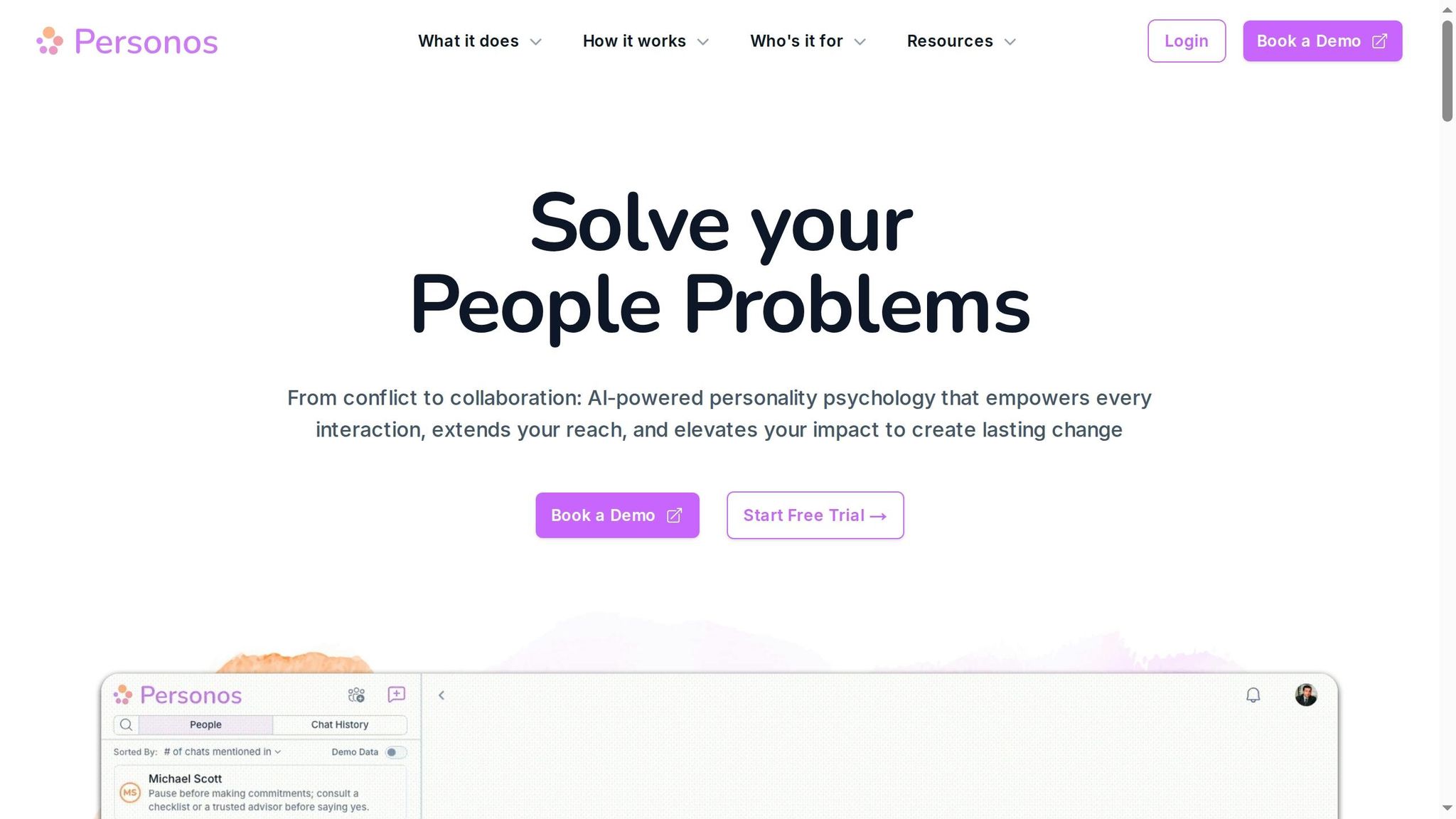
Personos takes emotional intelligence (EQ) to the next level with its AI-guided platform based on the Five Factor Model (FFM), often referred to as the "gold standard in personality psychology" [17]. Unlike traditional static reports, this platform offers dynamic, real-time support tailored to specific workplace scenarios. By measuring 30 unique personality traits on an 80-point scale [16], it provides precise, actionable insights that align perfectly with the goal of delivering research-backed EQ tools.
Scientific Validation and Research Foundation
Rooted in nearly a century of FFM research, Personos stands on a strong scientific foundation [18]. One of its standout features is the "Scientific Explanation" tool, which breaks down the psychological principles and traits behind its advice. This added layer of transparency allows users to understand and verify the reasoning behind recommendations. Completing the initial assessment is quick, taking just about five minutes [18].
Practical Application in Professional Contexts
Personos is designed to fit seamlessly into the modern workplace. It integrates with popular tools like Slack and Microsoft Teams [16], making it easy to use in daily workflows. The conversational AI allows you to input specific challenges, such as managing a difficult client meeting, and receive tailored, personality-based advice [18]. Additionally, by tagging colleagues or clients using the "@" symbol, the platform refines its guidance to suit specific relationships [16]. Privacy is a priority, as raw personality scores remain confidential. Instead, colleagues receive actionable suggestions, such as "considering their high level of creativity, involve them in the brainstorming session" [16].
Comprehensiveness of Feedback and Actionability
To ensure insights lead to action, Personos includes an ActionBoard - a Kanban-style task manager that transforms AI-generated suggestions into trackable tasks with a single click [18]. The platform also offers configurable prompts, called Personos Prompts, which provide regular EQ tips on a daily, weekly, or monthly basis to encourage consistent growth [18]. For coaches and managers, features like Coaching Reports and a shared ActionBoard make it easier to monitor progress and provide targeted support. As Personos emphasizes:
"The science is sound... but all of that only matters if it turns into measurable outcomes" [18].
Accessibility and Ease of Use
Personos offers a free trial for individual users, with a Pro plan available for $9 per seat per month. The "Discuss in Chat" feature allows users to click on any report section or prompt to ask follow-up questions or get step-by-step guidance [18]. By prioritizing straightforward, actionable language over clinical jargon, Personos makes advanced psychological insights accessible to professionals like social workers and coaches [17]. This thoughtful integration positions it as a leading tool for advancing EQ in professional settings.
4. The Mayer-Salovey-Caruso Emotional Intelligence Test (MSCEIT)
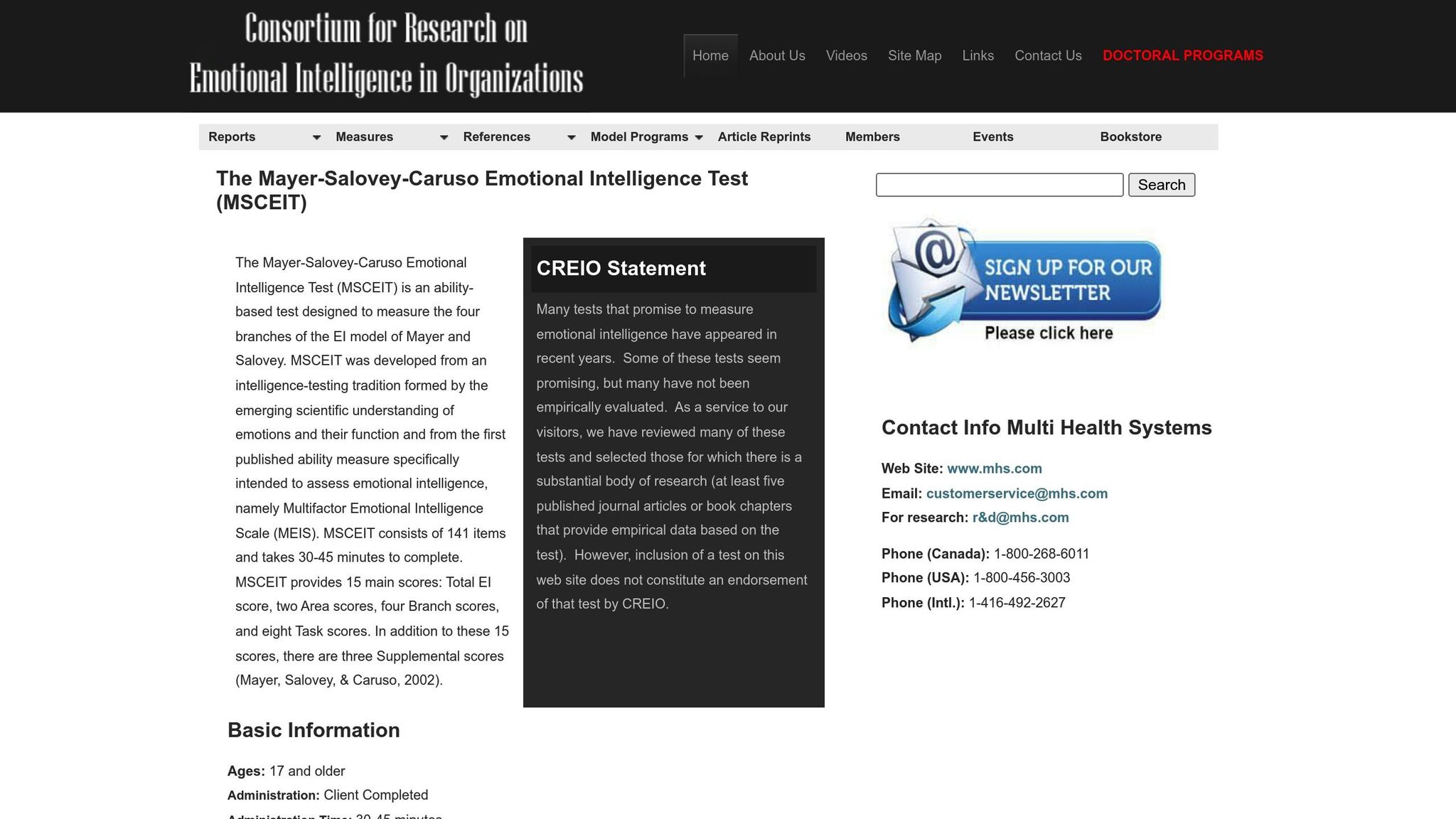
The MSCEIT takes a different approach from self-assessment tools by focusing on performance tasks to evaluate emotional intelligence. Instead of relying on self-reported answers, it measures your ability to solve problems related to emotions, where responses are objectively scored as right or wrong. This design makes it extremely difficult to "fake" results, making it a preferred choice for organizations in high-stakes scenarios like leadership selection or recruitment. Its objectivity sets it apart from many other emotional intelligence assessments.
Scientific Validation and Research Foundation
The MSCEIT is built on the Four-Branch Model of emotional intelligence, developed by psychologists John D. Mayer, Peter Salovey, and David Caruso. This framework evaluates four core emotional skills:
- Perceiving Emotions: Recognizing non-verbal emotional cues.
- Connecting Emotions: Using emotions to enhance problem-solving.
- Understanding Emotions: Predicting how emotions may evolve in different situations.
- Managing Emotions: Balancing emotions with rational thought.
Recent research supports the integration of the CHC model, showing strong correlations (r = 0.60) between emotional intelligence and other forms of intelligence[20].
The updated MSCEIT 2, launched in January 2025, reflects over three decades of theoretical advancements. It is more efficient, reducing the original 141-item test by 33%, and can now be completed in about 30 minutes instead of 30–45 minutes[20]. Scoring is based on "veridical scoring", where answers are evaluated by emotion research experts[20]. As John D. Mayer, a leading figure in emotional intelligence research, explains:
"The MSCEIT 2 used updated theory to guide its construction and development. Its test scores fit the CHC model, and correlate with the original MSCEIT." [19]
Practical Application in Professional Contexts
The MSCEIT provides a comprehensive breakdown of emotional intelligence through 15 different scores, including a Total EI score, two Area scores, four Branch scores, and eight Task scores[21]. These detailed results help users identify specific areas of strength and areas needing improvement. For instance, a manager might excel in Perceiving Emotions (e.g., reading a client’s mood) but struggle with Managing Emotions (e.g., handling conflict effectively). This level of detail makes the feedback actionable and immediately useful.
The test offers two types of reports: a "Client" version with easy-to-understand developmental strategies and a "Coach" version with detailed validity indicators for administrators[22]. Because it measures actual ability rather than self-perception, the MSCEIT is particularly valuable in roles requiring strong interpersonal skills. Talent development expert Robert Ramkhalawansingh highlights its importance:
"The MSCEIT 2 stands as a valuable asset for organizations aiming to cultivate a more emotionally intelligent and high-performing workforce." [22]
Accessibility and Ease of Use
Accessing the MSCEIT requires specific qualifications, such as a degree in psychology or HR, or certification in administering the test[21]. It is designed for individuals aged 17 and older and now offers flexible certification options, including self-paced eLearning and instructor-led training. While this qualification requirement limits its availability to individual professionals compared to free tools, it ensures the test maintains its reliability and accuracy. This rigor has made the MSCEIT a trusted tool in recruitment, leadership development, and coaching.
5. Free Self-Assessment Tools
You don’t need to spend a fortune to kick off your emotional intelligence (EQ) journey. There are plenty of free self-assessment tools that use scientifically backed frameworks to help you get started. These tools typically take just 10 to 15 minutes to complete and provide instant feedback, making them perfect for busy professionals looking to improve their EQ [23][27].
Scientific Validation and Research Foundation
One standout option is the Schutte Self-Report Emotional Intelligence Test (SREIT). This 33-item assessment has been featured in over 3,000 studies, cementing its reputation as a reliable, research-supported tool [27]. Another excellent choice is the LEADx EQ Self-Assessment, which is based on Daniel Goleman’s popular four-domain model of emotional intelligence. Dr. Travis Bradberry, a leading voice in EQ development, endorses it, saying:
"LEADx EQ Habits™ is the ONLY emotional intelligence program I recommend." [23]
For those in healthcare or leadership roles, the NHS Leadership Toolkit EQ Questionnaire offers a 50-item assessment tailored for workplace scenarios [27]. These tools not only bring scientific credibility but also provide actionable insights for professional growth.
Practical Application in Professional Contexts
What makes these tools even more useful is their ability to translate your scores into actionable steps. For instance, the LEADx assessment generates a personalized 12-week coaching plan, complete with microlearning videos and specific strategies to improve behavior [23]. The NHS toolkit uses a clear scoring system:
- 35–50: Indicates strengths
- 18–34: Highlights areas to improve
- 10–17: Flags urgent development needs [27]
Meanwhile, the HelpGuide Emotional Intelligence Toolkit takes a hands-on approach by offering a structured program. One standout feature is the "Ride the Wild Horse" meditation, designed to help you manage stress and emotions in real-time [25].
Comprehensiveness of Feedback and Actionability
While free assessments might not dive into the 15-plus subscales that paid versions cover, they make up for it with practical strategies. Research suggests that forming a new emotional habit takes 21 to 28 days of consistent practice [25]. The LEADx platform supports this process by allowing unlimited retests, enabling you to track your progress over 3 to 6 months [23][2]. Tools like this often include simple yet effective techniques such as "The Pause", "Label Your Feelings", and "Fogging" to help you build better emotional habits [2][4][26].
Accessibility and Ease of Use
For quick and actionable insights, the IHHP Free EQ Quiz is a great option. It offers situational feedback tailored to your daily interactions [24]. These tools are all available online and don’t require certifications or special qualifications to access. While AI-powered platforms like Personos provide more detailed and integrated solutions, these free tools are an excellent starting point. If you're looking for a deeper dive into how your emotional patterns connect to broader behavioral trends, Personos might be worth exploring, but for immediate EQ improvements, these free tools are more than enough.
Conclusion
Building emotional intelligence takes commitment and daily practice. The five tools we've discussed each bring something unique to the table, depending on what you're looking for. For example, the Emotional Capital Report is ideal for developing leadership skills in organizations, while EQ-i 2.0 offers deep, clinical-level insights perfect for executive coaching. Personos stands out with its AI-driven, real-time guidance for navigating personal and professional relationships, and MSCEIT is a great choice for ability-based assessments in research settings. If you're just starting out, free self-assessments provide an easy and accessible way to establish a baseline.
What matters most is choosing the tool that aligns with your goals and professional context. For executives seeking in-depth personal insights, a detailed assessment with expert feedback may be the right choice. On the other hand, if you're new to emotional intelligence, a free tool can help you identify areas for improvement and get started.
Consistency is key to seeing results. Research indicates that noticeable growth in emotional intelligence can occur within 3 to 6 months of regular effort [3]. In fact, professionals who engaged in brief daily EQ exercises reported a 32% improvement in managing stress after just four weeks [29]. Dr. Travis Bradberry highlights the importance of EQ in the workplace:
"Most companies talk about soft skills. But emotional intelligence is a hard skill - with hard data to support it" [1].
To begin, pick the tool that suits your current needs, complete the assessment, and focus on one area of improvement at a time. Start with small, actionable habits - like pausing before reacting to a stressful situation or using Personos Chat for guidance during tough conversations. Over time, these small changes will enhance your relationships and improve outcomes in the workplace.
Looking ahead, emotional intelligence is set to play an even bigger role in professional success. The World Economic Forum estimates that by 2030, 40% of core job skills will shift, with EQ becoming a key competitive advantage [28]. Strengthening your ability to manage emotions - both your own and others' - will position you for success in the evolving workplace. The next step is yours to take.
FAQs
Which EQ tool should I choose for my goals?
When choosing the best emotional intelligence (EQ) tool, it really depends on what you're aiming to achieve. If you're looking to measure EQ, assessments like the Six Seconds Model or Daniel Goleman’s tests provide structured insights and feedback. For those focused on improving their EQ over time, interactive exercises or coaching strategies - such as those featured by Harvard Business Review - can be highly effective. Want an all-in-one solution? Tools like Personos combine assessments, hands-on exercises, and coaching into a single, integrated plan to help drive meaningful personal growth.
Do I need a certified coach to use these assessments?
No, you don’t need a certified coach. Tools like the EQ-i and other validated assessments are specifically designed for self-assessment or use within organizations without requiring certification. These tools are straightforward and easy to use, making them ideal for individuals or teams aiming to improve emotional intelligence on their own.
How can I turn my EQ results into daily habits?
To turn your EQ results into daily habits, focus on simple, consistent actions. Start with a 60-second emotion check-in every morning. Take a moment to identify and label your feelings - this helps boost self-awareness. When emotions run high, try the pause-and-breathe method to regain control and improve emotional regulation. Practicing these exercises regularly helps reinforce skills like empathy and self-awareness until they become part of your routine.