5 Personality Traits That Impact Team Conflicts
Big Five personality differences drive many team conflicts; understanding them helps leaders tailor communication and resolve issues.
Rachel Johnson

5 Personality Traits That Impact Team Conflicts
Team conflicts often arise from differences in personality, not personal disagreements. The Big Five personality traits - Openness, Conscientiousness, Extraversion, Agreeableness, and Neuroticism - play a key role in shaping how individuals approach and handle conflicts. Here's a quick breakdown:
- Openness: Creative thinkers who may clash with those preferring routine.
- Conscientiousness: Detail-oriented planners who value structure but may struggle with flexibility.
- Extraversion: Outspoken individuals who can dominate discussions, potentially silencing others.
- Agreeableness: Harmony-seekers who might avoid confrontation, risking unresolved issues.
- Neuroticism: Emotionally sensitive individuals who may perceive more conflict and struggle with stress.
Understanding these traits helps teams solving team conflicts with personality insights by tailoring communication and resolution strategies to individual needs. For example, using clear timelines for conscientious members or creating safe spaces for agreeable team members to voice concerns can improve team dynamics.
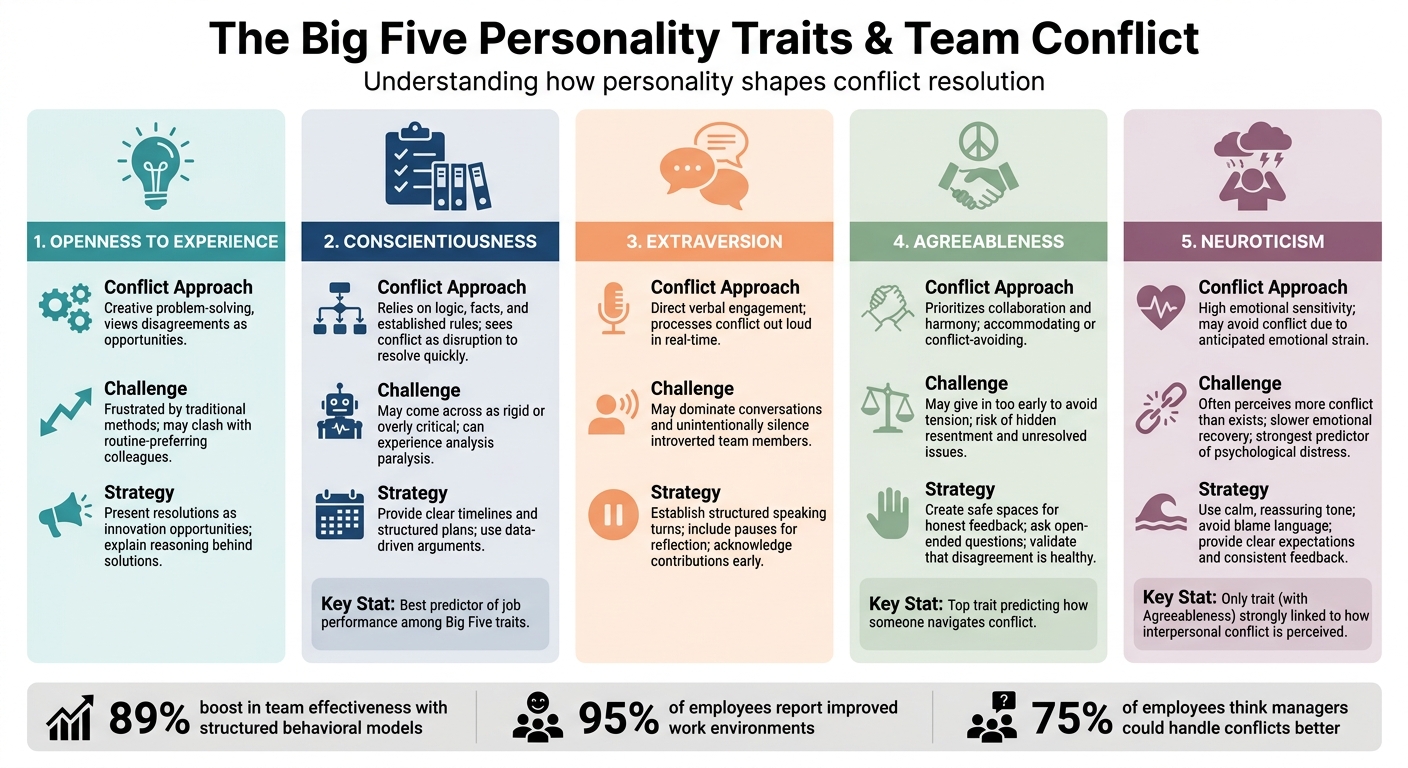
How Big Five Personality Traits Impact Team Conflict Resolution
Masterclass: Strategies for Handling Personality Differences at Work
1. Openness to Experience
People with high levels of Openness to Experience often approach conflict with a creative mindset. They tend to look for innovative solutions, viewing disagreements as opportunities to rethink and refine approaches. Instead of relying on standard fixes, they dig deeper to explore the underlying "why" behind a problem, which influences both their conflict-handling methods and the strategies they employ to resolve issues [4].
Conflict Resolution Styles Associated with the Trait
Those high in Openness lean toward creative problem-solving rather than sticking to established norms. They frequently suggest out-of-the-box ideas that challenge traditional approaches [4]. Interestingly, research indicates that Openness is not strongly linked to how frequently someone perceives interpersonal conflict. Traits like Agreeableness and Neuroticism play a bigger role in that regard [5]. This means that high-Openness individuals may not always notice tensions brewing within a team.
Potential Challenges or Downsides in Conflict Scenarios
One of the main challenges arises when high-Openness individuals work alongside colleagues who prefer routine and stability. As Alaric Grant from Big5personalitytest.com points out:
Individuals high in Openness to Experience value new ideas and creative problem-solving. In a conflict, they often become frustrated by traditional methods [4].
For example, someone with high Openness might see a coworker’s preference for established procedures as a "lack of vision" [4]. Meanwhile, their more routine-oriented peers may view unconventional ideas with skepticism. This mismatch can create friction between those who favor innovation and those who prioritize predictability.
Strategies for Leveraging or Managing the Trait in a Team Setting
A practical way to address this tension is to present resolutions as opportunities for innovation, rather than as a return to standard practices [4]. When collaborating with high-Openness team members, explain the reasoning behind a solution and highlight its potential for future growth, rather than simply citing rules. For colleagues who value routine, focus on how the solution ensures stability and minimizes risk. As Grant suggests:
If your colleague prefers routine, emphasize how the resolution will maintain stability and lower risk. Clear, step-by-step changes work best here [4].
2. Conscientiousness
Conscientious team members thrive on structure and order, standing in contrast to more flexible, open-ended approaches. Within the Big Five personality framework, conscientiousness plays a key role in managing conflicts. These individuals see conflict as a disruption to be resolved quickly, relying on logic, facts, and established rules to restore balance. When deadlines are missed or quality standards slip, they feel the tension most strongly and instinctively work to create a clear, actionable plan to get things back on track.
Conflict Resolution Styles Associated with the Trait
Conscientious individuals tackle conflict with meticulous planning and a focus on long-term goals. They rely on data-driven arguments, timelines, documented procedures, and detailed action plans to resolve issues effectively [4][7]. Interestingly, research highlights that conscientiousness is the best predictor of job performance among all Big Five traits [1]. This explains why these individuals are so determined to maintain structure and order, especially during challenging situations.
Potential Challenges or Downsides in Conflict Scenarios
While their reliability is a strength, it can sometimes lead to tension. Alaric Grant observes:
Conscientious individuals, organized and detail-oriented, react strongly to missed deadlines or quality drops. They may come across as rigid or overly critical during a disagreement [4].
Their preference for structure can conflict with more spontaneous or abstract thinkers [2][4]. Additionally, conscientious team members may critique ideas too early in the creative process, which could discourage colleagues who lean toward openness [8]. When combined with low extraversion, conscientiousness can even lead to "analysis paralysis", where overthinking hinders timely decision-making [8].
Strategies for Leveraging or Managing the Trait in a Team Setting
To support conscientious team members, offer clear timelines and structured plans to reestablish order [4]. Use facts and logical arguments rather than emotional appeals when resolving conflicts. When managing differences between conscientious and spontaneous colleagues, consider separating brainstorming from critique phases. This prevents early evaluation from stifling creativity [8]. For team members who are less conscientious, avoid emphasizing rules. Instead, focus on the immediate consequences of their actions and help them set small, achievable goals [4]. These approaches ensure that diverse working styles can coexist and contribute meaningfully to team success.
3. Extraversion
Extraverted team members bring a dynamic energy to group interactions by addressing issues face-to-face and thinking out loud in real time, rather than preparing responses in advance [6]. Unlike introverts, who often need time to reflect, extraverts prefer to dive into conversations and resolve disagreements as they arise, often benefiting from AI-powered coaching for conflict resolution.
Conflict Resolution Styles Associated with the Trait
Extraverts tend to handle conflict through direct and immediate verbal engagement. As JobCannon puts it:
Extraverts process conflict out loud - they think through the disagreement in real-time conversation [6].
This approach can be effective in team environments, as it encourages open communication. However, their verbal style can sometimes come across as more assertive - or even confrontational - than they might intend.
Potential Challenges or Downsides in Conflict Scenarios
While extraverts excel at initiating dialogue, their tendency to dominate conversations can unintentionally silence quieter team members. Alaric Grant explains:
High extraverts often process their thoughts out loud. During a conflict, they may dominate the conversation. This often leaves their introverted counterparts feeling silenced [4].
Studies back this up, showing that people often perceive extraverts as less effective listeners compared to individuals with lower levels of extraversion [1]. Their preference for immediate verbal responses can overwhelm introverted colleagues, who might need more time to organize their thoughts [1][4]. JobCannon refers to this as "the extravert conflict failure mode", where extraverts dominate discussions, leaving little room for introverts to share their perspectives [6].
To address these dynamics, teams can adopt strategies that allow extraverts to contribute while ensuring a balanced and inclusive environment.
Strategies for Leveraging or Managing the Trait in a Team Setting
To make the most of an extravert's enthusiasm without overshadowing others, establish clear guidelines for speaking during conflict resolution. Structured turns can help ensure everyone has a chance to participate [4]. Mirroring an extravert's energy level - matching their engagement style to some degree - can also foster productive discussions [4]. Including pauses or written components in the process provides introverted team members with the time they need to reflect and prepare their input [4][6].
Finally, acknowledging the extravert's contributions early on can help prevent them from escalating their intensity in an effort to be heard. This simple step can create a more harmonious and balanced flow of communication [4].
4. Agreeableness
Agreeable team members are often the glue that holds groups together. They naturally prioritize collaboration, empathy, and maintaining harmony, which strengthens team cohesion and fosters a positive work environment [1]. Interestingly, research highlights that agreeableness is the top trait predicting how someone navigates conflict [6]. These individuals tend to approach disagreements with a "team-first" mindset, often putting the group's needs above their own.
Conflict Resolution Styles Associated with the Trait
In conflict situations, agreeable individuals typically lean toward accommodating others or avoiding confrontation altogether [6]. Their trusting and altruistic nature makes them excellent collaborators, often contributing to strong team performance [1]. However, this cooperative approach isn't without its challenges. As Alaric Grant points out:
Agreeable individuals are the 'peacemakers' of the office. While this is usually a strength, it can be a liability in conflict resolution. They may 'give in' too early to avoid tension, leading to hidden resentment or unresolved issues [4].
Potential Challenges or Downsides in Conflict Scenarios
The tendency to prioritize harmony can sometimes work against agreeable team members. By suppressing their own concerns to avoid conflict, they risk leaving underlying issues unresolved [4]. Michigan State University Online cautions that "your agreeable team member will almost always think with a team-first mentality, but it's important to make sure their cooperation and empathy isn't used by those high in assertive, opinionated traits" [2]. Assertive colleagues may take advantage of their accommodating nature, leaving agreeable individuals feeling undervalued or overpowered. Outside of work, excessive agreeableness can lead to people-pleasing habits, difficulty setting boundaries, and even heightened stress levels. The ongoing effort to maintain harmony can lead to frustration or burnout over time [1][4]. Professionals can use AI tools for helping professionals to better manage these dynamics and reduce burnout.
Strategies for Leveraging or Managing the Trait in a Team Setting
To help agreeable team members thrive, leaders should focus on fostering a safe space where differing opinions are welcomed and valued [4]. Asking open-ended questions like, "What do you really think about this approach?" can encourage them to share honest feedback instead of defaulting to agreement [4]. It's also crucial to validate their feelings and emphasize that healthy disagreement can lead to better outcomes. By keeping an eye on team dynamics, leaders can ensure that agreeable individuals aren't overshadowed by more assertive personalities. Understanding how agreeableness impacts conflict resolution provides a foundation for exploring the role of other traits, such as Neuroticism, in team interactions.
5. Neuroticism
Neuroticism plays a unique role in how team conflicts are emotionally experienced. This personality trait measures sensitivity to negative emotions like anxiety, stress, and mood swings [1][3]. While other Big Five traits influence how someone approaches conflict, neuroticism determines the emotional toll of disagreements and how long those effects linger [6]. A study of 867 participants found that neuroticism and agreeableness are the only two Big Five traits strongly linked to how interpersonal conflict is perceived in the workplace [5]. Those with high neuroticism often see more conflict than actually exists, interpreting routine situations as threatening and small frustrations as insurmountable challenges [3][5].
Conflict Resolution Styles Associated with the Trait
Individuals high in neuroticism often avoid conflict because they fear the emotional strain it might bring [6]. As JobCannon explains:
High-N individuals may avoid conflict because the anticipated emotional experience is aversive enough to override rational calculation [6].
When stress levels rise, even minor issues can provoke an outsized reaction [6]. During conflicts, these individuals may become defensive, anxious, or stuck in overthinking [4].
Impact on Team Dynamics and Morale
The emotional intensity that neurotic individuals bring to conflicts can create delicate team dynamics. Their strong reactions and slower recovery times may make others feel like they need to tread lightly [6]. This sensitivity can delay resolutions and leave tension hanging long after the conflict itself is resolved. Neuroticism is also the strongest predictor of psychological distress among the Big Five traits, making it linked to greater risks of job dissatisfaction, burnout, and weaker job commitment [1]. Addressing these emotional challenges requires common conflict triggers and emotional intelligence solutions to ease tensions.
Strategies for Leveraging or Managing the Trait in a Team Setting
Managing conflict with high-neuroticism team members requires careful attention to tone. Alaric Grant suggests:
The goal here is de-escalation. Keep your tone calm and reassuring. Avoid using 'blame' language. Focus on the problem, not the person [4].
Providing clear expectations and consistent feedback can help reduce anxiety [4]. To counter avoidance tendencies, encourage these individuals to commit to specific deadlines for addressing conflicts - for example, "I will handle this by Thursday" - before their anxiety builds [6]. Help them separate emotional discomfort from the practical need to resolve issues, framing conflict resolution as a way to achieve stability and security [4][6]. These strategies align with the broader personality-based approaches discussed earlier, ensuring a cohesive way to navigate diverse team dynamics. This includes mastering how to read personality types in meetings to prevent friction before it starts.
Using Personality Awareness to Resolve Team Conflicts
Recognizing personality differences can transform how workplace conflicts are handled. Instead of dismissing a colleague as "difficult", this approach encourages you to view their behavior as a natural extension of their personality traits [4]. This shift - from frustration to understanding - can completely change how resolutions are approached. As Alaric Grant puts it, "Using the Big 5 framework provides actionable insights that help you understand yourself and others better" [4]. By fostering this deeper understanding, you can create more effective and tailored conflict resolution strategies.
But there’s still a long way to go. Three out of four employees think their managers could handle conflicts better [10], and 60% of HR professionals attribute workplace issues to poor management [10]. The problem isn’t a lack of knowledge - it’s how that knowledge is applied. Generic advice often misses the mark because different personalities require different approaches. For instance, a high-Conscientiousness team member thrives on clear timelines and data, while someone with high-Openness needs to understand the broader purpose behind decisions [4]. This is where real-time, personality-aware strategies make all the difference.
Enter Personos, a platform designed to tackle these challenges using AI tools based on the Five Factor Model. By analyzing 30 personality traits on an 80-point scale, Personos delivers highly specific guidance for managing team dynamics. Features like Personos Chat provide instant, tailored advice during conflicts - whether it’s helping a high-Neuroticism team member manage stress or encouraging a high-Agreeableness individual to express their true concerns. Meanwhile, Dynamic Reports identify potential personality-based triggers early, such as when a detail-focused manager clashes with a creative team member who values flexibility [4].
One standout feature is Transparent Reasoning, which explains how personality traits and psychological principles inform each recommendation. This not only resolves conflicts but also empowers managers with deeper insights. Teams using structured behavioral models like the Five Factor Model report an 89% boost in effectiveness, with 95% of employees noting improved work environments [9][10].
Conclusion
Personality traits play a key role in team conflicts. Whether it’s a conscientious manager butting heads with a flexible creative or a team member prone to stress struggling during tense discussions, these dynamics often stem from core personality differences. The Five Factor Model offers a framework to turn these clashes into opportunities for understanding rather than frustration.
By applying this model, teams can adopt practical communication strategies. Instead of labeling colleagues as "difficult", they can view behaviors as natural extensions of individual personality traits. Alaric Grant puts it perfectly:
Effective communication is not about treating everyone the same. It is about treating everyone the way they need to be treated [4].
This might mean using logical, data-backed explanations with conscientious individuals, validating emotions before problem-solving with neurotic team members, or creating a safe space for agreeable colleagues to share honest feedback.
Teams that embrace structured behavioral models report an 89% improvement in effectiveness [9]. Tools like Personos make this process easier by providing real-time, personality-based guidance during conflicts, ensuring every interaction is grounded in psychological principles that foster better communication and collaboration.
FAQs
How can I tell whether a team conflict is personality-based or performance-based?
Personality-based conflicts often stem from individual traits such as agreeableness, neuroticism, or extraversion. These traits shape how people perceive situations and respond emotionally, which can lead to recurring misunderstandings or emotional disagreements.
On the other hand, performance-based conflicts are more task-focused. They usually revolve around issues like unclear responsibilities, inconsistent work quality, or missed deadlines.
Understanding whether a conflict arises from personal characteristics or work-related factors is key to addressing it effectively. Tools like personality assessments based on the Five Factor Model can help shed light on these dynamics, offering a deeper understanding of the underlying causes.
What’s the best way to handle conflict conversations so introverts and extraverts both feel heard?
To make sure both introverts and extroverts feel comfortable during conflict discussions, it’s important to adjust to their communication preferences. For introverts, create a quiet, private setting where they have time to think or even share their thoughts in writing. For extroverts, encourage lively group conversations where they can express themselves verbally. A good middle ground could involve starting with individual reflection time and then moving into a group discussion, giving everyone a chance to contribute in a way that suits them best.
Can the Big Five be used without formal personality tests or tools like Personos?
Yes, the Big Five personality traits can be explored without relying on formal tests or tools like Personos. Through self-reflection or observing behaviors informally, you can gain a basic understanding of these traits. However, formal tools like Personos provide deeper accuracy and detailed insights. They’re especially useful for professionals navigating complex situations, offering precise guidance tailored to practical needs.