How Personality Dynamics Impact Team Success
How Big Five traits shape communication, roles, and performance, with AI tools delivering real‑time team insights and conflict strategies.
Rachel Johnson

How Personality Dynamics Impact Team Success
In teams, personality dynamics heavily influence success. Research shows that diverse personality traits improve communication, problem-solving, and decision-making. Teams with mixed traits are 66% more likely to exceed goals, while psychological safety boosts performance by 10x. Traits like Conscientiousness predict task success, while Neuroticism often hinders it. Tools like Personos use AI to analyze team dynamics in real-time, helping leaders assign roles, resolve conflicts and strengthen teams, and improve collaboration. For $9/month, it offers continuous insights compared to pricier, static tools like DISC or Hogan. Understanding and leveraging personality traits can transform team performance.
Research on Personality and Team Performance
What the Research Shows
Studies consistently show that personality traits play a key role in team success. A review of 81 studies published between 2010 and 2023 highlighted how traits like Extraversion, Conscientiousness, Agreeableness, Openness to Experience, and Emotional Stability contribute to better task performance, adaptability, and teamwork [6]. Interestingly, more than 70% of this research has emerged since 2014, reflecting a growing interest in the connection between personality and workplace performance [6].
One study involving 51 work teams and 652 employees found that teams with higher averages in General Mental Ability, Conscientiousness, Agreeableness, Extraversion, and Emotional Stability received notably better performance ratings from supervisors [5]. It also uncovered a key insight: Extraversion and Emotional Stability are particularly important for team viability, helping teams maintain strong social bonds and work cohesively over time [5]. This cohesion is often tested during friction, making it vital to resolve team conflicts through these psychological insights.
"Personality is cited... as the most accurate predictor of job performance... because the way people solve problems, how well people perform in the workplace, and complete tasks will contribute to the organization's achievement." - Ozer and Benet [6]
Among all traits, Conscientiousness consistently emerges as the strongest predictor of task performance across various settings. On the other hand, Neuroticism shows a clear negative relationship with performance outcomes [6]. For roles requiring creativity or innovation, individuals with high Openness to Experience often thrive, enhancing team productivity in diverse environments [6].
The next section delves into the framework used to interpret these findings: the Five Factor Model.
The Five Factor Model Explained
The Five Factor Model (FFM) is the go-to framework for understanding personality in team settings. It categorizes personality into five key traits:
- Openness: Reflects creativity and curiosity.
- Conscientiousness: Indicates reliability and diligence.
- Extraversion: Relates to sociability and energy.
- Agreeableness: Involves cooperation and trust.
- Neuroticism: Measures emotional instability, often assessed as its opposite, Emotional Stability.
This model provides a universal way to analyze individual differences and their effects on team dynamics. Teams can be evaluated through their average trait levels, the range of trait scores within the group, or the impact of extreme scores [5][7]. For example, in collaborative settings, the lowest trait score within the team can sometimes predict performance better than the overall average [7].
How Personality Traits Shape Team Dynamics
Trait Combinations That Work Well
Certain personality pairings can significantly enhance team performance. For instance, combining a visionary (someone with high Openness to Experience) with a detail-oriented planner (high in Conscientiousness) creates a strong balance between creativity and execution. The visionary focuses on long-term strategy and tackling abstract challenges, while the planner ensures that those ideas are executed with precision and organization [4].
Emotional intelligence also plays a critical role in team success. Traits like high Agreeableness and low Neuroticism are linked to a 20% boost in productivity and have been highlighted by Google as essential for effective teamwork [1][2].
Take ButterflyMX, for example - a company specializing in access control systems with over 200 employees. Its founder used personality-based role alignment to build stronger teams. Extroverts were placed in client-facing roles, while detail-oriented individuals took on quality assurance tasks. This approach led to measurable improvements in productivity, collaboration, and innovation [4].
However, while some combinations thrive, others can create friction.
Trait Mismatches and Challenges
Not all personality pairings work seamlessly. Neuroticism, for example, is consistently linked to poor performance across various organizational settings [6]. When traits clash, teams may experience absenteeism, low morale, and even health issues [6].
Conflicts often arise from differences in communication and problem-solving styles. For instance, a team member who prefers detailed, data-driven approaches might struggle to collaborate with someone who relies on instinct or focuses on the bigger picture [4]. Leaders face the challenge of avoiding rigid personality-based labels, which can limit employees' growth and discourage them from stepping out of their comfort zones [4].
Creating an environment of psychological safety can help bridge these gaps. Teams that foster trust and encourage risk-taking are 10 times more likely to perform well [1]. Even with the perfect mix of traits, people need to feel secure to contribute their best ideas and take chances.
The Hidden Pattern Behind High-Performing Teams
Understanding these dynamics is easier when using AI to analyze personality for team success, providing data-driven insights into how individuals interact.
AI-Powered Tools for Team Leadership
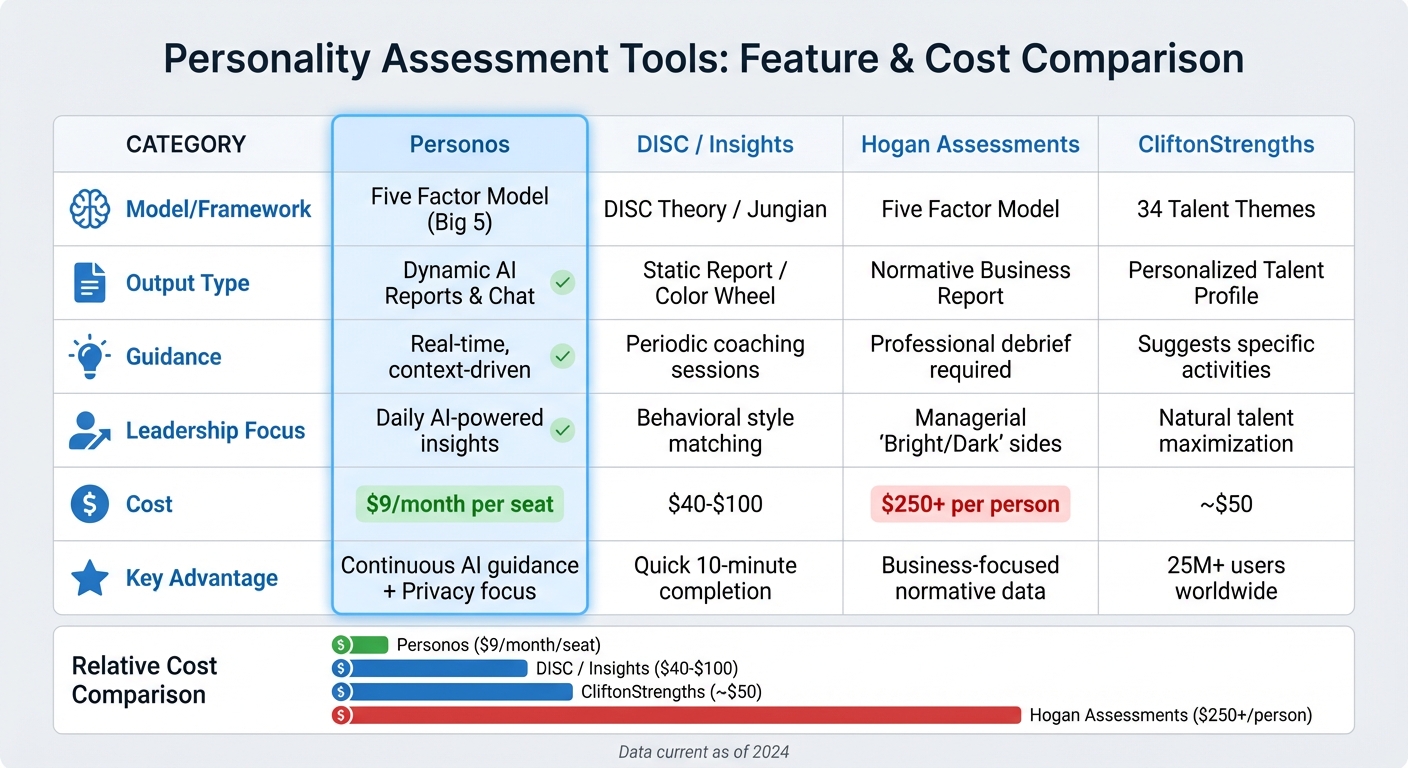
Personality Assessment Tools Comparison: Features, Costs, and Capabilities
Leading a team effectively today requires more than just traditional methods - it calls for AI-driven tools that can adapt and provide ongoing insights into team dynamics.
Personos Platform Features
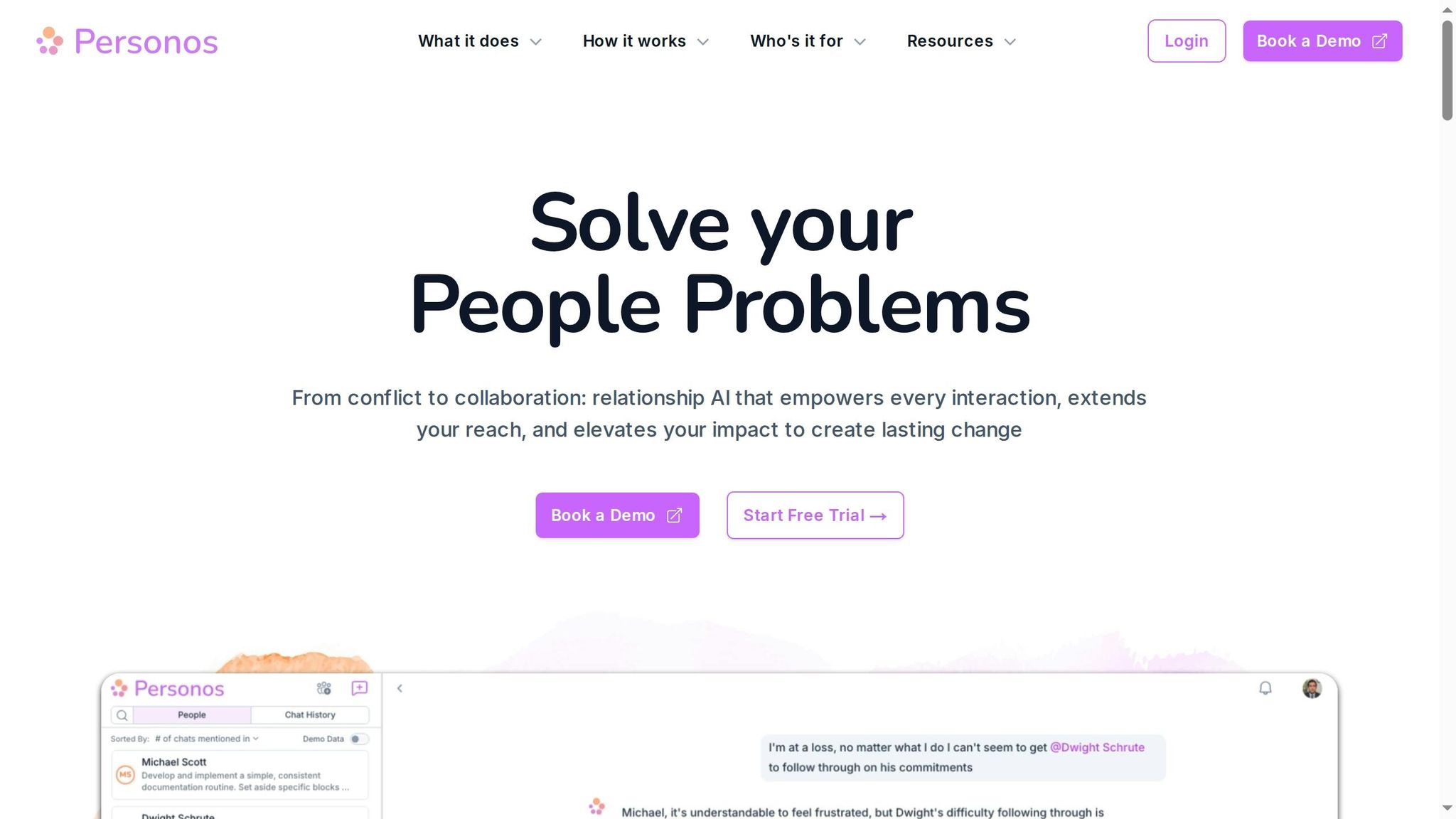
Gone are the days of relying solely on static, one-time personality assessments. Personos is an AI-powered platform rooted in the Five Factor Model, which evaluates 30 personality traits on an 80-point scale. What sets it apart is its ability to provide real-time, continuously updated guidance tailored to team dynamics.
One standout feature is its Dynamic Reports, offering insights into individual, pair, and group relationships. These reports adjust in real time to reflect current projects, conflicts, and goals. For example, if two team members are struggling to collaborate, leaders can use a relationship report to pinpoint the friction and receive specific communication strategies based on their personalities.
Another highlight is the platform's conversational AI chat, which acts as a virtual coach. Leaders can describe a team challenge, and the platform delivers actionable, personality-based guidance that considers everyone’s profiles. Additionally, Prompts - short, actionable tips - are delivered on a daily or weekly basis, keeping personality insights front and center without requiring constant logins. Each recommendation includes an explanation of the personality traits involved, helping leaders deepen their understanding over time.
This dynamic and proactive approach positions Personos as a modern alternative to traditional personality tools.
How Personos Compares to Other Assessment Tools
Most traditional personality assessments fall into one of two categories: ipsative tools like DISC, which focus on self-perception, or normative tools like Hogan, which explore how others perceive you [9]. While these tools often require professional interpretation or coaching to implement their findings, Personos stands out by offering continuous, AI-driven guidance instead of static, one-time reports.
Here’s a quick comparison of Personos with other popular tools:
| Feature | Personos | DISC / Insights | Hogan Assessments | CliftonStrengths |
|---|---|---|---|---|
| Model | Five Factor Model (Big 5) | DISC Theory / Jungian | Five Factor Model | 34 Talent Themes |
| Output Type | Dynamic AI Reports & Chat | Static Report / Color Wheel | Normative Business Report | Personalized Talent Profile |
| Guidance | Real-time, context-driven | Periodic coaching sessions | Professional debrief required | Suggests specific activities |
| Leadership Focus | Daily AI-powered insights | Behavioral style matching | Managerial "Bright/Dark" sides | Natural talent maximization |
| Cost | $9/month per seat | $40-$100 | $250+ per person | ~$50 |
The cost advantage of Personos is clear. While tools like Hogan charge upwards of $250 per person [9] and require certified professionals to interpret results, Personos offers unlimited, AI-powered insights for just $9 per month. DISC assessments are quick to complete (about 10 minutes) but only provide static, color-coded summaries without ongoing support. CliftonStrengths, which has been used by over 25 million people [9], focuses on identifying and maximizing natural talents but doesn’t offer real-time coaching for everyday team challenges.
Another important feature of Personos is its focus on privacy. Unlike traditional tools, where personality scores are often shared openly, Personos ensures that individual results remain private unless the user chooses to share them. This prevents the common issue of labeling team members, which can stifle growth and collaboration.
Practical Steps for Leaders
Understanding personality dynamics is just the beginning; putting that understanding into practice is where real progress happens. The steps below offer practical ways to turn personality insights into meaningful changes for your team.
Assess Team Personality Composition
Start with the Big Five framework (OCEAN) to evaluate your team [3]. Tools like Personos analyze 30 personality traits on an 80-point scale, giving you a detailed picture of individual strengths and potential areas of friction.
Once you've gathered the data, initiate a team discussion to connect these insights with daily work styles [4]. This not only builds empathy but also helps reduce misunderstandings. Use the information to assign roles strategically: extroverts might thrive in client-facing or brainstorming roles, while detail-oriented team members can shine in project management or quality control [4].
"Personality assessments are starting points, not rigid definitions. They're not about shutting people into boxes but about opening doors." - Entrepreneur [4]
With these assessments in hand, technology can help you apply the insights effectively.
Use AI Tools for Real-Time Support
Case studies show that timely interventions can significantly boost team cohesion. When issues like miscommunication or conflict arise, tools like Personos' conversational AI can offer immediate, personality-based strategies for conflict resolution. This is especially helpful considering that employees spend an average of 57% of their time communicating through meetings, emails, and chats [10]. For example, AI-driven solutions have been shown to speed up decision-making by over 180% and reduce conflict rates substantially [12].
"The AI helps us find middle ground instead of amplifying our differences. Our new product line exceeded targets by 240%." - James Chen, CTO, TechCorp [12]
To get started, test the AI in a focused area, such as weekly status meetings or project planning sessions, before expanding its use [11]. Customize the AI settings to fit your team's specific needs rather than sticking to generic configurations. These tools ensure that personality insights are continuously applied to improve team performance.
Track Team Dynamics Over Time
Teams change as members come and go or take on new roles. What worked six months ago might not work today. Conduct regular reassessments using your chosen framework to keep up with evolving team dynamics and shifting organizational goals [4]. Pay attention to group trends, such as the average levels of Extraversion and Openness, as these are key indicators of teamwork performance [8].
"Reassess periodically. Teams evolve, and your strategies should, too." - Entrepreneur [4]
In addition to personality traits, track behavioral skills and communication patterns. Research highlights that team performance often hinges on emotional intelligence and how frequently team members interact [2]. Use this data to identify opportunities for team members to step out of their comfort zones and develop new skills. Regular discussions about updated assessment results can help maintain mutual understanding and ensure leadership strategies adapt alongside the team. This ongoing process reinforces the idea that personality insights are essential for long-term team success.
Conclusion
Personality insights take leadership from guesswork to informed decision-making. By understanding how team members naturally think, communicate, and solve problems, leaders can align roles with individual strengths, reduce friction, and create a workplace where everyone feels valued. Google's study of over 100 teams found that high-performing groups share two key traits: strong emotional intelligence and frequent communication [2].
Research also shows that personality is a strong predictor of job performance [6]. But the real hurdle lies in using these insights effectively on a daily basis, especially when managing diverse teams with unique needs. This is where AI-powered tools like Personos prove invaluable. Instead of static reports that often go unused, real-time guidance empowers leaders to resolve conflicts, adapt their communication, and make personality-aware decisions as situations arise. Turning validated insights into actionable steps makes tackling everyday challenges much more manageable.
Ultimately, personality is at the heart of successful teamwork. Tools based on the Five Factor Model provide the depth needed to go beyond surface-level impressions. Personos offers this capability with tailored, real-time advice at just $9 per seat per month, making it a practical solution for teams of any size looking to bring personality research into their daily operations.
FAQs
How do I figure out my team’s Big Five mix?
To figure out your team’s mix of Big Five personality traits, consider using reliable psychometric tests. These tests measure five key traits: openness, conscientiousness, extraversion, agreeableness, and neuroticism. The results offer detailed insights into each team member’s personality. By reviewing these profiles, leaders can gain a clearer understanding of team dynamics, enhance communication, and develop strategies that align with the unique blend of personalities. This approach can help boost collaboration and overall performance.
What can leaders do when personality clashes show up?
When personality clashes occur, leaders can encourage open communication and create a safe environment where team members feel comfortable voicing their concerns. Organizing facilitated discussions or hosting team retreats can help uncover the root causes of tension and build better understanding among colleagues. Tools like Personos, which uses the Big Five personality traits, can offer personalized strategies to manage conflicts, improve collaboration, and transform challenges into opportunities to strengthen team dynamics.
How can AI improve team dynamics daily?
AI plays a key role in improving how teams function by providing real-time insights, boosting communication, and simplifying collaboration. With its ability to predict potential challenges, AI helps teams adjust their strategies ahead of time, making them more effective and adaptable. It also promotes creativity by removing barriers like language differences or geographical distance, enabling smoother teamwork.
By handling routine tasks, AI frees up time for team members to focus on problem-solving and innovative thinking, which can lead to stronger results. Additionally, its data-driven approach supports smarter decision-making, helping teams work together more cohesively and efficiently.