Essential Tools for People-Facing Roles
AI tools for social workers, counselors, and nonprofit leaders that use personality insights to save time, offer real-time crisis guidance, and protect client privacy.
Nick Blasi

Essential Tools for People-Facing Roles
In high-stress roles like social work, counseling, and nonprofit leadership, managing heavy caseloads, handling crises, and maintaining emotional well-being can be overwhelming. AI tools are now offering practical solutions to these challenges by providing personality insights, real-time guidance, and privacy-focused features. Here's a quick summary:
-
Key Challenges:
- Heavy administrative workloads reduce time with clients.
- Building trust in virtual settings is more difficult.
- Burnout is rising due to emotionally demanding tasks and crisis management.
-
AI Solutions:
- Personos: Uses the Five Factor Model (FFM) to provide detailed personality insights, real-time crisis guidance, and privacy safeguards for $9/month per seat.
- Crystal Knows: Focused on workplace communication using the DISC model, less suited for trauma-informed care, priced at $20/month.
- Other tools like Humantic AI and IBM Watson cater to sales or enterprise needs but lack features tailored for people-facing roles.
-
Why Personos Stands Out:
- Tailored for social workers, counselors, and nonprofit leaders.
- Offers actionable personality insights, task management, and trauma-informed features.
- Helps reduce burnout and improve outcomes without adding to workloads.
Bottom Line: AI tools like Personos can save time, improve communication, and support mental health professionals in high-pressure environments. At an affordable price point, it’s a valuable resource for those managing complex client needs.
AI Diagnosis Simulator For Social Workers, Therapists, Counselors in Training
AI-Powered Tools for Better Communication and Insights
AI tools grounded in psychological research are transforming how professionals navigate difficult conversations and high-pressure scenarios. In environments where every second matters, these tools help strike a balance between being efficient and empathetic. They enhance professional expertise by identifying patterns that might otherwise go unnoticed during intense workloads. These personality insights are the backbone of advanced crisis management and ethical support capabilities.
Using AI for Personality Insights
The most effective AI tools draw on the Five Factor Model (FFM) to deliver detailed personality insights, enabling the creation of tailored personality profiles. These profiles go beyond generic advice, offering actionable guidance. For instance, Personos uses these traits to help you not only understand a client’s personality but also refine how you communicate with them, factoring in your own personality and the dynamics of your relationship. A pilot study conducted in 2024–2025 with MSW students and clinical social workers using AI simulation tools like Empathy Helper reported improvements in self-efficacy, observable skills, and user satisfaction [5].
In recovery, timing is everything. Personos helps me anticipate when a client is on the edge of shutting down and adjust my approach so we stay connected. That kind of in-the-moment support is priceless.
- Carla Mendoza, LCSW, addiction recovery counselor [3]
This level of understanding becomes particularly valuable during crisis situations.
Real-Time Guidance for Crisis Situations
When dealing with crises such as threats of self-harm or escalating conflicts, having immediate, personalized guidance is crucial. Personos Chat offers a conversational AI interface that provides context-aware advice, leveraging individual personality profiles and your relationship history. Using simple features like "@ mentions", you can instantly pull up relevant profiles and past notes, ensuring advice is tailored to the moment. This dynamic system adjusts its recommendations as interactions unfold in real time.
When you work with survivors, you're constantly balancing empathy with boundaries. Personos has helped me protect my own well-being while staying fully present for the people I serve.
- Lisa Chen, MSW, domestic violence advocate [3]
The platform also includes Transparent Reasoning, which explains the traits behind each recommendation, giving you the ability to understand and verify the logic before taking action. While providing this real-time, context-specific guidance, the tools also emphasize ethical data handling.
Privacy-First and Ethical AI Design
In fields like social work and behavioral health, safeguarding client confidentiality is non-negotiable. Personos ensures that raw personality data remains protected by offering contextual insights - such as suggesting collaborative brainstorming - without exposing underlying scores that could be misinterpreted. All personality data is encrypted, and the platform uses separate authorization systems to bolster security. Ethical considerations also extend to addressing bias, as the AI is trained on diverse datasets and includes safeguards to prevent misuse. If malicious activity is detected, the system halts generation, and repeated offenses lead to user removal.
With Personos, I no longer feel the burden of solving my client's problems. Instead, I walk beside them as they discover their own solutions.
- Steve Huff, PhD, social worker [3]
Comparing Top Tools for People-Facing Roles
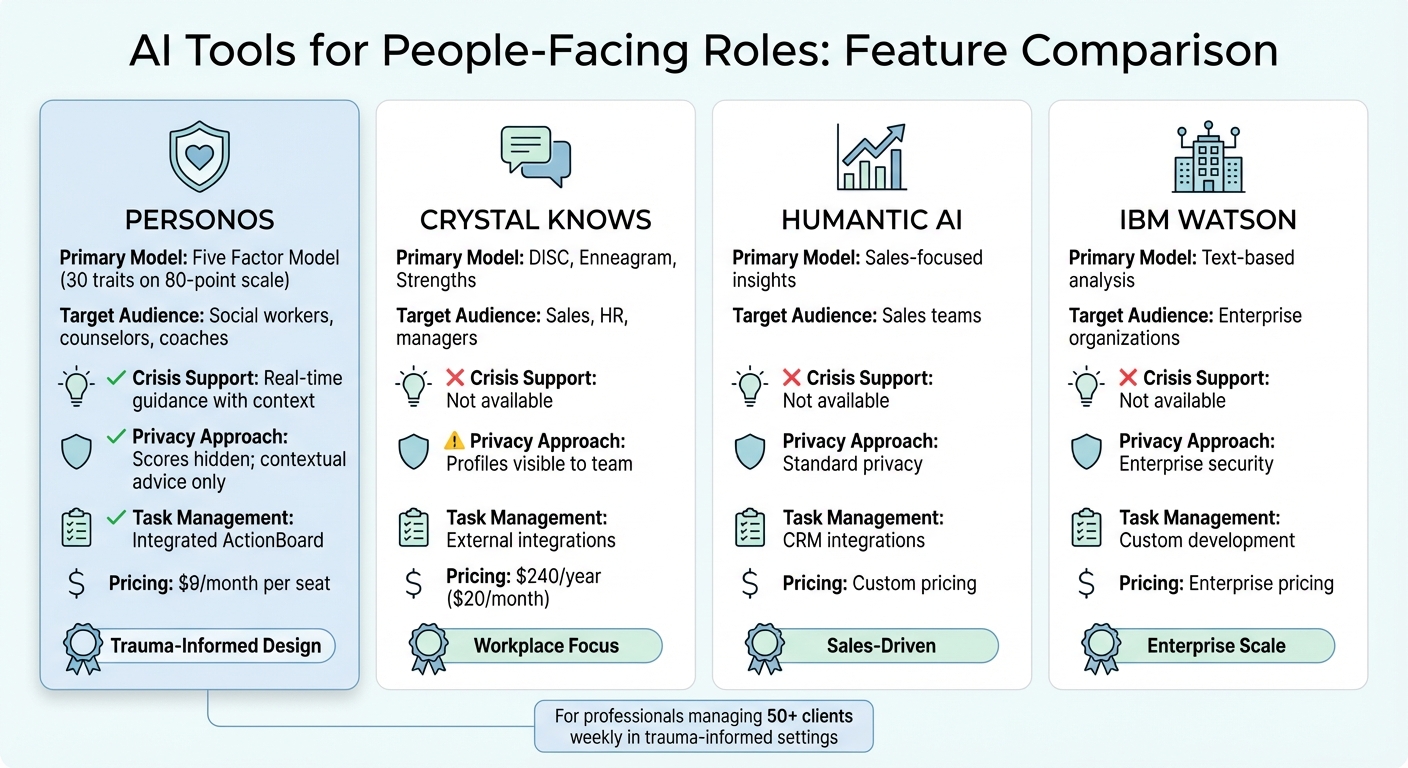
AI Tools Comparison for Social Workers and Counselors
Choosing the right AI tool for your role depends on your specific needs, the depth of insights required, and how well it integrates into your workflow. While many platforms offer personality-based guidance, they vary widely in their psychological frameworks, target audience focus, and practical features. Here’s a breakdown of how the leading tools cater to professionals in social work, behavioral health, and nonprofit leadership.
Personos: In-Depth Personality Insights for Helping Professionals
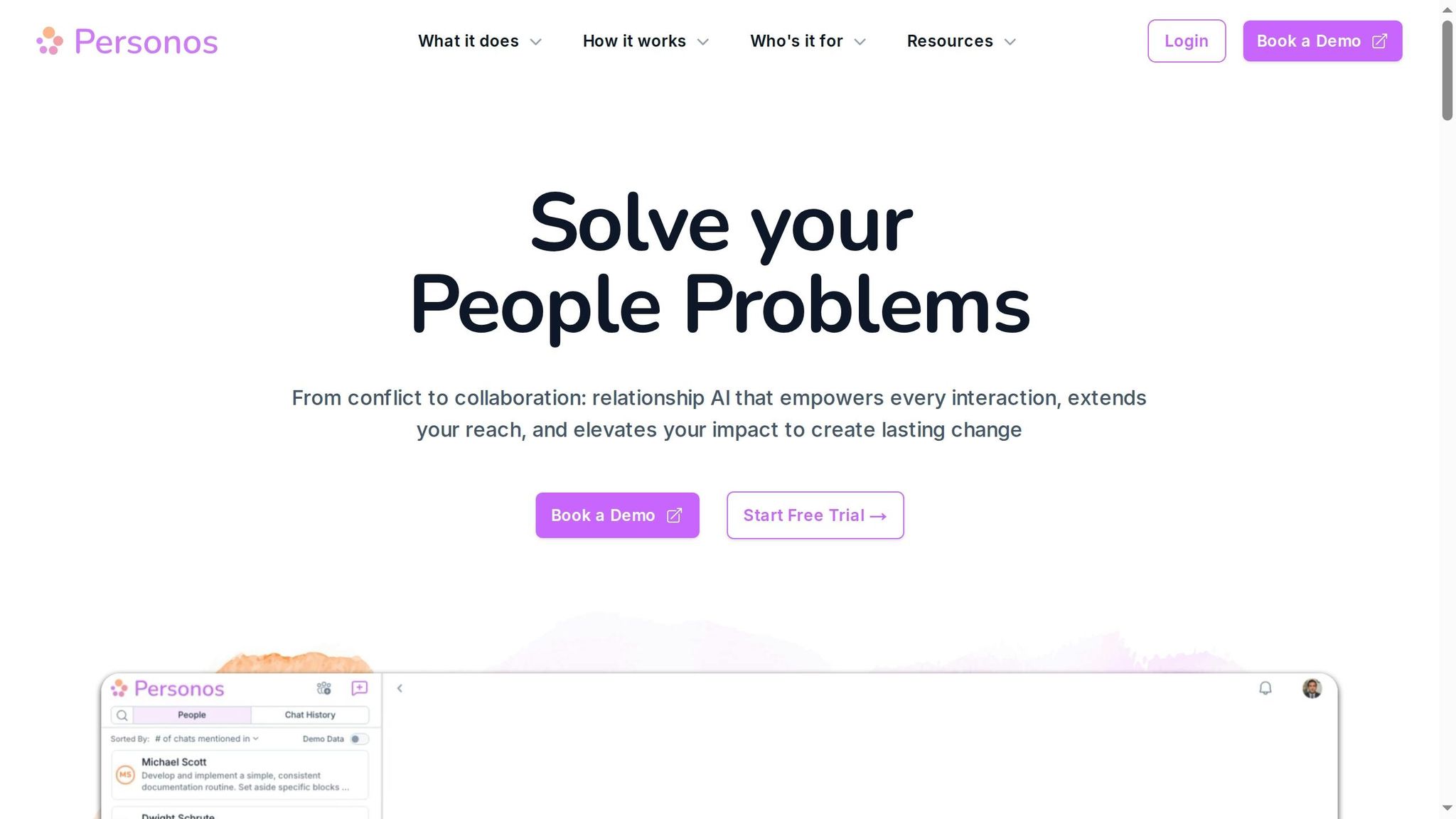
Personos is tailored for professionals in high-stress, people-focused environments. Its foundation is the Five Factor Model, which goes beyond surface-level categories by analyzing 30 personality traits on an 80-point scale. This granular detail is invaluable when working through crisis situations, building trust with resistant clients, or addressing trauma-related behaviors.
The platform’s Personos Chat is a conversational AI tool that leverages full personality profiles and contextual data to provide real-time, situation-specific guidance. With the "@" command, users can instantly access relevant profiles and past case notes, ensuring advice is grounded in the individual’s history and goals.
Another standout feature is the ActionBoard, which turns AI-generated suggestions into actionable, trackable tasks with just one click. This has proven effective in real-world settings - Sarah Mitchell, MBA, VP of Operations, reported that by using Personos, her organization cut team turnover by 45% in six months by identifying and addressing team dynamics and conflicts [3].
Personos also offers Dynamic Reports, which generate fully customized insights for individuals, relationships, and groups. Unlike static assessments, these reports update as new information is added, making them especially useful for social workers and counselors. Specialized sections include trauma responses, coping mechanisms, and resource planning - features rarely found in general-purpose tools.
The platform’s Personos Prompts provide bite-sized, actionable insights on a configurable schedule, whether daily, weekly, or monthly. Additionally, the Transparent Reasoning feature explains the psychological principles behind each recommendation, empowering users to make informed decisions. All of this is available for just $9/month per seat, with a 7-day free trial that doesn’t require a credit card [3].
Crystal Knows: Quick Behavioral Insights for Workplace Communication
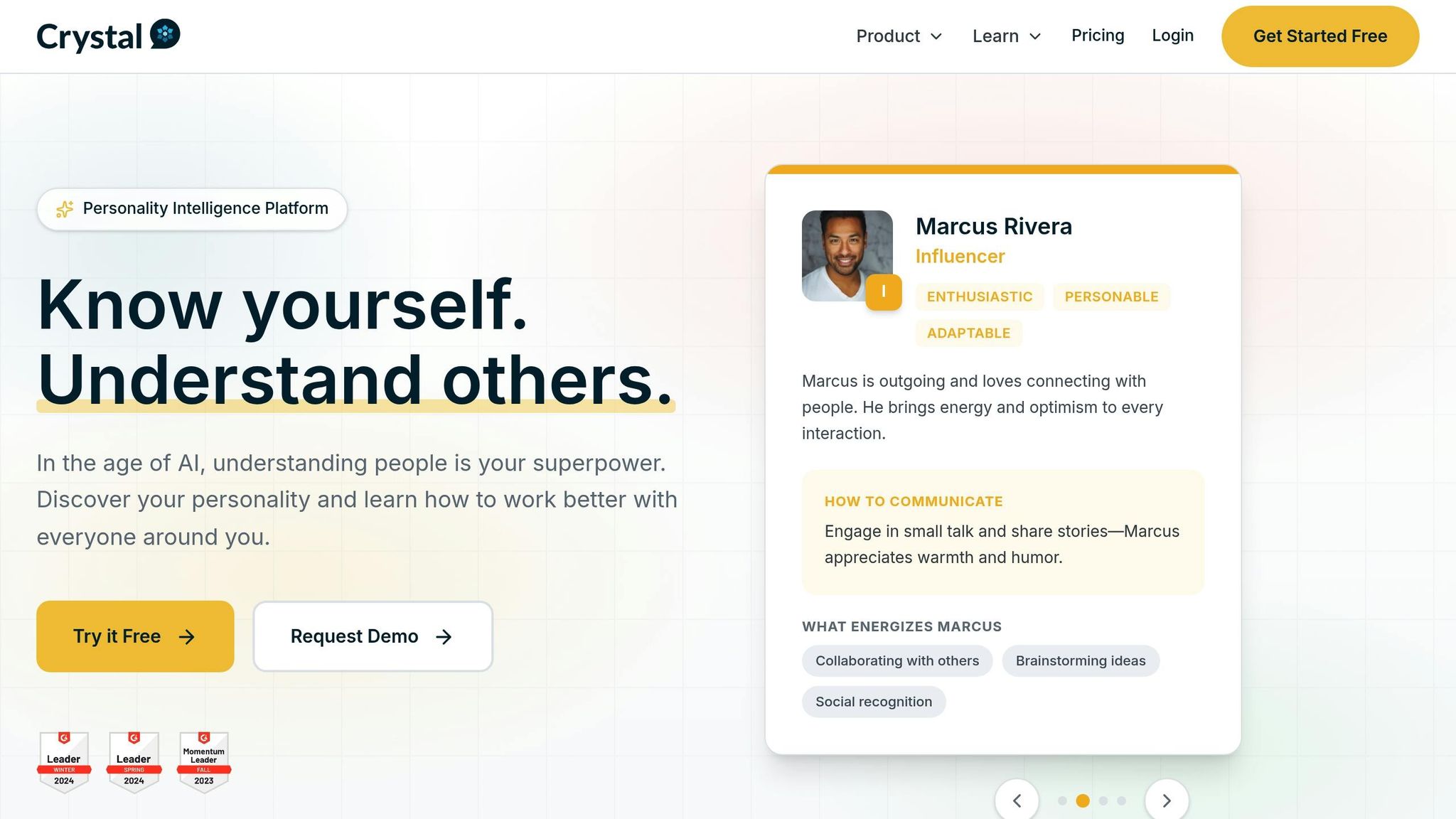
Crystal Knows employs the DISC model (Dominance, Influence, Steadiness, Conscientiousness) to deliver quick behavioral insights, often in the form of 30-second "cheat sheets." While this is useful for workplace communication, it lacks the depth needed for trauma-informed care or crisis management.
Crystal Knows shines in corporate environments, particularly for sales teams and HR leaders. Its Chrome extension integrates with tools like LinkedIn, Salesforce, HubSpot, Zoom, and Google Meet, enabling users to quickly understand colleagues and prospects. Team directories allow members to browse coworker profiles, which can enhance collaboration but may pose privacy concerns in sensitive fields like social work [6] [7].
In contrast to Personos, Crystal Knows doesn’t provide trauma-informed guidance, contextual AI for crisis situations, or privacy safeguards tailored to helping professionals. While it integrates with external AI tools like ChatGPT, its lack of native conversational AI limits its utility for those working with vulnerable populations.
Crystal Knows is priced at $240 per year ($20/month) for the Premium plan, with higher-tier plans requiring a demo request. Although it offers a free trial and assessment, it’s notably more expensive than Personos for individual practitioners.
Other Tools: Humantic AI, Mindreader, and IBM Watson
Other AI tools cater to different niches but fall short for people-centric roles:
- Humantic AI focuses on sales-driven personality insights, helping sales teams close deals by analyzing prospect behavior. While useful for revenue generation, it’s not designed for trauma-informed care or client-focused work.
- Mindreader specializes in analyzing communication patterns to improve interpersonal dynamics. However, it lacks a comprehensive personality framework and the specialized guidance needed for crisis situations or heavy caseloads.
- IBM Watson uses text-based analysis to derive personality traits from written communication. While scientifically grounded, it offers general insights without the tailored reports, trauma-informed features, or task management tools found in Personos. Its enterprise focus also makes it less accessible for small teams or individual practitioners.
These tools are better suited for corporate workflows and lack the privacy-first design critical for behavioral health settings, where raw personality scores shouldn’t be visible without explicit consent.
Feature Comparison Table
| Feature | Personos | Crystal Knows | Humantic AI | IBM Watson |
|---|---|---|---|---|
| Primary Model | Five Factor Model (30 traits) [2] | DISC, Enneagram, Strengths [7] | Sales-focused insights | Text-based analysis |
| Target Audience | Social workers, counselors, coaches [4] | Sales, HR, managers [6] | Sales teams | Enterprise organizations |
| Crisis Support | Real-time guidance with context | Not available | Not available | Not available |
| Privacy Approach | Scores hidden; contextual advice only [2] | Profiles visible to team [6] | Standard privacy | Enterprise security |
| Task Management | Integrated ActionBoard [1] | External integrations | CRM integrations | Custom development |
| Pricing | $9/month per seat [3] | $240/year ($20/month) [7] | Custom pricing | Enterprise pricing |
For professionals in social work, behavioral health, or nonprofit leadership, Personos offers the specialized features, trauma-informed design, and actionable insights that general workplace tools simply can’t provide.
How to Implement These Tools in Your Work
Start with Self-Assessments
The first step in using AI-powered personality insights is understanding yourself. Self-assessment helps you align your strengths with your clients' needs. Platforms like Personos make this easy. In just five minutes, you can complete a personality assessment based on the Five Factor Model, analyzing 30 traits. These tools offer up to 82% accuracy, providing an objective view of your strengths and areas that may need attention.
For example, if your results show a tendency toward introversion, you might need to adjust your communication style when working with extroverted clients who thrive on verbal interaction. Studies in behavioral science suggest that this kind of self-awareness can improve outcomes by 20-30%. To stay on top of your development, consider retaking the assessment every few months. This allows you to track changes in your stress responses and communication patterns over time, helping you refine your approach as you manage larger caseloads.
Adapt Tools to High-Caseload Environments
When you're juggling 50 or more clients each week, efficiency becomes non-negotiable. Tools like ActionBoards can transform personality insights into actionable tasks. For instance, you can identify clients who may be resistant - perhaps due to low motivation - and create SMART goals tailored to their needs, such as "Use analytical prompts for clients who prefer data-driven discussions." Instead of daily scrambling, batch your client reviews weekly, saving about 40% of the time you'd normally spend on manual tracking.
"I went in thinking I didn't have bandwidth for another tool. What I didn't expect was that it would make me so much more effective that I actually ended up with more bandwidth." - Robert Fields, Community Outreach Coordinator
You can also set reminders at different intervals: daily for high-need clients, weekly for team updates, and monthly for self-care check-ins. This "nudge-based" system offers timely, bite-sized suggestions without overwhelming you. Features like quick-scan personality insights (which take just five minutes to review) and automated alerts for high-risk interactions help you focus your energy where it matters most. Case studies even suggest this approach can reduce burnout by 30% in roles that require intensive client interaction. Once you've streamlined your workflow, you can shift your focus to building trust through trauma-informed strategies.
Build Trust with Trauma-Informed Practices
Trauma-informed care is all about meeting clients where they are, rather than where you think they should be. AI tools can help by offering relationship reports with prompts tailored to specific behavioral traits. For example, if a client scores high on neuroticism, the system might suggest starting with emotional validation. For resistant clients, it might recommend using supportive rather than directive language. In therapy-like environments, these strategies have been shown to boost engagement by 35%.
"With Personos, I no longer feel the burden of solving my client's problems. Instead, I walk beside them as they discover their own solutions." - Steve Huff, PhD, Social Worker
AI tools also provide transparent reasoning for their suggestions, explaining the personality traits or psychological principles behind each prompt. This not only enhances your clinical judgment but ensures that the recommendations respect your professional boundaries. For clients dealing with trauma, this might mean starting with empathy-driven phrases before transitioning to actionable steps - a sequence that has been shown to resolve 70% of initial resistance in nonprofit settings. The key is to use AI as a supportive tool, complementing your expertise rather than replacing it.
Conclusion
The right tools can make a huge difference in your work. Whether you're juggling heavy caseloads, handling crisis situations, or supporting trauma survivors, AI-powered personality insights can help you save time, communicate more effectively, avoid burnout, and achieve better results. By offering tailored guidance, these tools ensure clients stay engaged and supported.
Personos stands out by blending scientific precision with practical usability. It leverages 30 Five Factor Model traits on an 80-point scale to provide detailed, actionable personality insights. Plus, its privacy-first design and transparent reasoning make every recommendation clear and easy to trust, helping you build expertise along the way.
At just $9/month per seat and with a 7-day free trial, Personos is designed to be accessible for frontline professionals. Whether you're a social worker managing over 50 clients, a case manager working with resistant individuals, or a nonprofit leader aiming to reduce team turnover, Personos offers real-time guidance that enhances your effectiveness - without adding to your workload.
The impact is real and measurable. For example, one organization using Personos reduced team turnover by 45% in just six months. Career advisors have also reported cutting assessment times by 76% [3]. From handling crises to managing day-to-day responsibilities, these insights help you work more efficiently and with greater empathy. Begin with a self-assessment and experience how it can transform your daily interactions. The people you serve - and your own well-being - deserve tools that make your efforts count.
FAQs
How can I use AI without compromising client confidentiality?
When using AI tools, protecting client confidentiality should always come first. Opt for privacy-focused tools that include end-to-end encryption and secure data storage to keep sensitive information safe.
Make sure to obtain informed consent by clearly explaining how client data will be used. Additionally, ensure that any vendors you work with comply with HIPAA standards or other relevant privacy regulations.
For even greater control, consider running AI systems locally on your own hardware. This approach keeps sensitive data entirely under your supervision, reducing risks tied to external servers.
The bottom line? Always choose tools and practices specifically designed to safeguard client information.
Can AI recommendations be wrong or biased?
Yes, AI recommendations can occasionally miss the mark or reflect bias. This might stem from flawed data, outdated inputs, or biases built into the algorithms themselves. Such problems can lead to incorrect or misleading advice, making it crucial to carefully assess AI-generated insights before putting them into action.
How do I add this to my workflow without extra admin work?
Personos fits right into your workflow, cutting down on those time-consuming admin tasks with its AI-powered tools. With dynamic personality reports, you gain real-time insights and tailored guidance for specific roles - no need for manual assessments anymore.
On top of that, Personos Chat offers instant support for tricky interactions. It integrates insights directly into your conversations, all through simple commands. These tools work together to make your processes smoother, requiring minimal setup while delivering maximum results - all without extra administrative hassle.