Emotional Intelligence in Nonprofit Leadership: Guide
How nonprofit leaders can use self-awareness, empathy, and social skills plus tools and metrics to reduce burnout and boost impact.
Christian Thomas

Emotional Intelligence in Nonprofit Leadership: Guide
Emotional intelligence (EI) is a must-have skill for nonprofit leaders. It involves recognizing, managing, and understanding emotions - both your own and others'. Why does it matter? Nonprofit leaders face tough challenges like limited resources, high-pressure environments, and emotionally intense situations. Without EI, teams risk burnout, turnover, and reduced impact.
Key Takeaways:
-
Core Elements of EI:
- Self-awareness: Understand emotional triggers to avoid reactive decisions.
- Empathy: Build trust and recognize burnout early.
- Social skills: Manage relationships, resolve conflicts, and communicate effectively.
-
Practical Applications:
- Spot burnout early and celebrate small wins to keep morale high.
- Tailor communication to individual needs for stronger team dynamics.
- Use tools like Personos for real-time personality insights and conflict resolution tips.
-
Measuring EI Impact:
- Track metrics like retention rates, engagement scores, and reduced conflicts.
- Link EI improvements to measurable outcomes for funders and stakeholders.
Building EI takes effort but pays off in better leadership, stronger teams, and greater mission success. Tools and training can help leaders grow these skills and make a lasting difference.
Navigating Your Nonprofit’s Challenges Through Emotional Intelligence with Stephanie Cory
The 3 Core Elements of Emotional Intelligence for Nonprofit Leaders
Emotional intelligence (EI) is built on three main pillars: self-awareness, empathy, and social skills. These elements equip nonprofit leaders to navigate team dynamics, make thoughtful decisions, and sustain their mission in environments often constrained by limited resources. Together, they form the foundation for applying EI in practical leadership scenarios.
Self-Awareness: Recognizing Your Emotional Triggers
Self-awareness means understanding your own strengths, weaknesses, and emotional triggers. This is especially important for nonprofit leaders who face challenges like tight budgets, complex social issues, and unresponsive stakeholders [1][2][3]. Recognizing emotions early can help prevent reactive decisions that might compromise the leader's integrity.
"Understanding your own emotions and how they influence your interactions is the cornerstone of emotional intelligence."
- Jules Wilhelm, Creator, Founder, and President, Capacity Leader Center [3]
To build self-awareness, try daily reflection to evaluate your emotional responses and seek feedback from trusted colleagues to uncover blind spots. Techniques like "name it to tame it" - where you identify and verbalize your emotions (e.g., "I feel anxious because this meeting is important") - can help diffuse stress [2][3][4]. Incorporating mindfulness practices, such as meditation or deep breathing, can also enhance your emotional awareness. Tools like emotion-tracking apps or feeling charts can expand your emotional vocabulary, laying the groundwork for motivating your team effectively [2][3].
Empathy: Building Trust with Diverse Teams
Empathy allows leaders to connect with their teams' passions and serves as a critical tool for identifying burnout early [2][4]. It fosters trust and helps leaders communicate in ways that resonate across diverse groups. In nonprofit settings, where stress levels can run high, empathy is essential for maintaining morale.
Active listening is key to empathy. By paying attention to both words and emotions, leaders can build deeper connections. Using open-ended questions like "Tell me more" encourages team members to share their motivations and experiences [3]. Regular perspective-taking and efforts to understand different cultural backgrounds can further enhance empathy [2]. When leaders demonstrate empathetic behavior, it often inspires similar attitudes across the organization, creating a more supportive and cohesive team environment.
Social Skills: Leading Through Collaboration and Conflict Resolution
Strong social skills help nonprofit leaders manage relationships with a wide range of stakeholders, including board members, staff, volunteers, donors, and clients [2]. Clear and effective communication fosters an atmosphere where team members feel confident sharing ideas, even under challenging circumstances.
"A leader attuned to stakeholders' needs, concerns, and emotions can create stronger, more authentic connections, which in turn helps foster trust and loyalty."
Conflict resolution is another critical aspect of social skills. Effective leaders ensure that every voice is heard during disagreements and consistently acknowledge individual contributions. This approach not only resolves conflicts but also reinforces a sense of shared purpose and mission-driven engagement [2]. By focusing on appreciation and clear communication, nonprofit leaders can strengthen relationships and build a collaborative environment that supports their goals.
How to Apply Emotional Intelligence in Nonprofit Leadership
Understanding emotional intelligence (EI) is one thing; putting it into practice is where the challenge lies. Nonprofit leaders often face unique pressures - balancing limited resources, engaging with diverse stakeholders, and keeping teams motivated amid high-stress environments. The true power of EI shines when it’s applied to these real-world challenges.
Motivating Teams in High-Stress Environments
Nonprofit work is no walk in the park. Teams frequently deal with heavy workloads, tight budgets, and the emotional toll of tackling issues like poverty and inequality. Leaders with strong EI can recognize early signs of burnout - like withdrawal, exhaustion, or a drop in productivity - and take action before it worsens [2].
One effective way to keep morale high is by offering specific recognition. Instead of a generic "good job", point out exactly what someone did and why it made a difference. This not only strengthens relationships but also reminds staff of the impact their work has [2]. Celebrating small victories - whether it’s securing a grant, reaching a client milestone, or simply surviving a tough week - can also help keep spirits up when the bigger mission feels overwhelming [4].
Tailoring communication to individual needs is another critical skill. Some team members thrive on clear instructions and direct guidance, while others respond better to a more empathetic, supportive approach [4]. By adjusting your leadership style by reading personality types, you build trust and show that you value them as individuals, not just employees. Transparent communication becomes particularly important during tough decisions about workloads or priorities. Being upfront helps manage expectations and preserves trust, even in resource-strapped situations [4][5].
The benefits of emotionally intelligent leadership extend far beyond the immediate team. When leaders model empathy, active listening, and clear communication, their staff are more likely to mirror these behaviors in their interactions with clients and the community. This ripple effect can lead to better service delivery overall [2].
Tools for Personality-Aware Leadership
In addition to interpersonal strategies, technology can play a key role in enhancing EI. Personality-aware tools give leaders deeper insights into how team members process information, handle stress, and respond to feedback - essential knowledge when managing diverse teams under challenging conditions.
One standout tool is Personos (https://personos.ai), an AI-powered platform designed for leaders navigating complex human dynamics, including those in nonprofits. Unlike traditional personality tests that assign static labels, Personos uses the Five Factor Model to assess 30 personality traits on an 80-point scale. This approach provides a detailed understanding of how each individual thinks and behaves, offering actionable insights to improve team management.
Here’s what Personos brings to the table:
- Dynamic Reports: These reports provide tailored insights into personal growth, team dynamics, and potential blind spots. For nonprofit leaders, this means a clearer picture of each team member’s strengths and challenges, allowing for more effective interactions.
- Personos Chat: This feature offers real-time advice for tough situations, like resolving conflicts or supporting a stressed team member. By factoring in personality profiles and context, the AI delivers practical, situation-specific guidance.
- ActionBoard: This tool turns recommendations into measurable tasks, helping leaders track progress and document improvements for stakeholders and funders.
At just $9 per seat per month, Personos provides nonprofit leaders with an affordable way to address staff burnout, improve communication, and maintain quality outcomes - all while managing the emotional demands of their mission. In a field where every resource counts, tools like this can make a meaningful difference.
How to Develop Emotional Intelligence as a Nonprofit Leader
Emotional intelligence (EI) isn’t something you’re simply born with - it’s a skill that grows with practice and intention. For nonprofit leaders, who often face high-pressure situations, building EI takes consistent effort and the right tools. Over time, these efforts can lead to noticeable improvements in leadership and team performance.
Training and Coaching Programs
One of the most effective ways to grow your emotional intelligence is through executive coaching. As executive coach Joel Elliot explains, "Here is where an executive coach plays a critical role... in helping the leader find that EQ magic" [5]. A skilled coach can help you uncover emotional blind spots - those behaviors or patterns you might not recognize but that influence how others see you.
In addition to coaching, peer support networks can be equally impactful. Joining executive circles or professional groups gives you a platform to share experiences with fellow nonprofit leaders navigating similar challenges [5]. These groups provide honest feedback in a supportive environment, helping you learn how your emotional reactions compare to others in stressful situations.
For leaders working with diverse populations, cultural competency training is particularly valuable. These programs help you better understand and empathize with people from different backgrounds - a crucial skill when serving vulnerable communities [2]. Recognizing differences in emotional expression can prevent misunderstandings and foster stronger connections with both your team and the communities you serve.
Daily habits like reflection and active listening also play a big role in sharpening your EI. Taking time to reflect on your emotional triggers and practicing thoughtful responses can boost self-awareness. This self-awareness, in turn, improves team dynamics and morale, especially in the high-stakes world of nonprofit work [2].
While traditional methods lay the groundwork, technology now offers additional tools to support your EI development.
Using Technology to Improve Emotional Intelligence
Technology provides innovative ways to enhance emotional intelligence, complementing traditional training methods. Digital platforms make it easier to integrate EI growth into your daily routine with personalized, real-time guidance.
Take Personos (https://personos.ai), for example. This platform delivers tailored insights to help nonprofit leaders navigate complex interpersonal situations. Its Personos Prompts feature offers bite-sized advice on a schedule that works for you - whether that’s daily, weekly, or monthly. For instance, if you struggle with conflict resolution, a prompt might highlight how your preference for structure could come across as inflexibility, while suggesting ways to adjust your communication style to bridge that gap.
Another standout feature is the ActionBoard, which transforms these insights into actionable steps. When you receive guidance or uncover valuable insights through tools like Personos Chat or Dynamic Reports, you can turn them into measurable goals with just one click. This creates accountability and provides tangible evidence of your EI progress - something that can be especially useful when reporting leadership growth to your board or funders.
What sets platforms like Personos apart is their emphasis on transparency. They explain the personality traits behind each recommendation, helping you understand the reasoning and patterns behind your growth. This ensures you’re not just following automated advice but genuinely learning how to strengthen your emotional intelligence.
Measuring the Impact of Emotional Intelligence
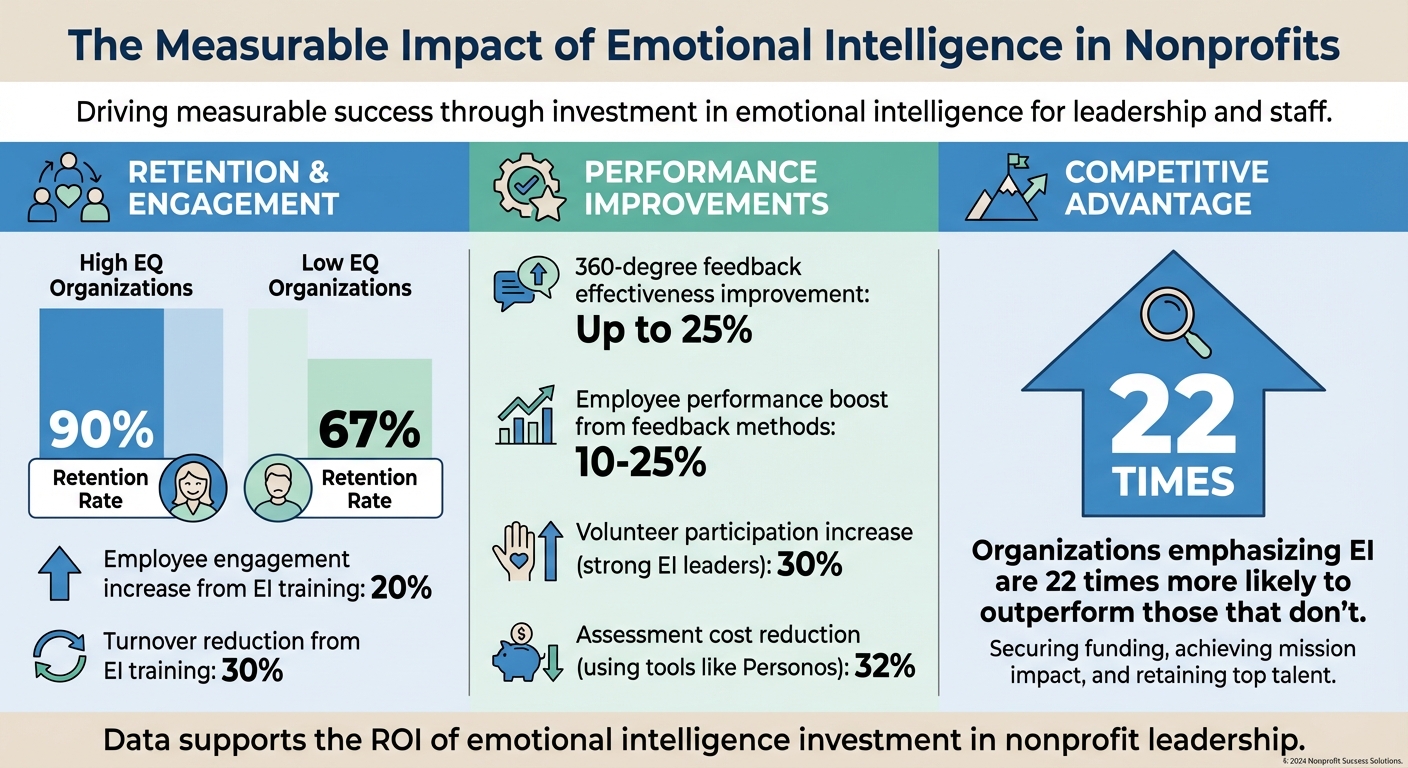
Emotional Intelligence Impact on Nonprofit Performance: Key Statistics
Measuring the effects of emotional intelligence (EI) is critical. Studies reveal that high EI can lead to better job performance, higher productivity, and increased profitability [6][8].
Key Metrics for Assessing EI Impact
Once EI strategies are in place, leaders need to track progress using specific metrics. Start by establishing baselines with tools like the EQ-i or MSCEIT, and then monitor areas such as employee retention, volunteer satisfaction, and donor retention [7]. For instance, organizations with high EQ scores enjoy a 90% retention rate, compared to just 67% for those with lower scores [6]. Additionally, EI training often boosts employee engagement scores by about 20% [8]. Other useful metrics include the frequency of workplace conflicts and the efficiency of project delivery.
Teach For America offers a great example of how effective measurement can drive results. By implementing 360-degree feedback, they improved organizational effectiveness by up to 25%. Research shows that such feedback methods can enhance employee performance by 10–25% [7].
Showing ROI to Funders and Stakeholders
To secure funding and demonstrate value, it’s essential to connect EI improvements to measurable outcomes. Funders are looking for hard data, not just anecdotes. For example, EI training has been tied to a 30% reduction in turnover [8], and leaders with strong EI have increased volunteer participation by 30% [7]. By linking EI metrics to tangible results, organizations can make a stronger case for their impact.
Tools like Personos (https://personos.ai) simplify this process. Its ActionBoard feature translates insights into actionable goals, allowing leaders to track progress and create dynamic reports that highlight behavioral changes over time. Personos' Dynamic Reports also capture improvements in team relationships or interactions with clients. For nonprofits working with tight budgets, Personos can cut assessment costs by 32% [9]. Furthermore, organizations that emphasize emotional intelligence are 22 times more likely to outperform those that don’t [8]. Demonstrating these outcomes with solid data not only helps secure funding but also shows how investing in EI directly supports an organization’s mission.
Conclusion
Emotional intelligence plays a key role in helping nonprofit leaders navigate challenges and keep their teams motivated, even when resources are tight. Leaders who cultivate self-awareness, empathy, and strong social skills set a tone that positively impacts not just their teams but also the clients and communities they serve. By demonstrating thoughtful emotional responses and open communication, leaders encourage their staff to follow suit, improving teamwork and service delivery across the organization.
Nonprofits that emphasize emotional intelligence often see better staff retention and higher volunteer engagement. Leaders who recognize signs of stress early and promote a culture of resilience and self-care help reduce burnout among social workers and maintain team morale. This approach addresses the emotional toll of nonprofit work, ensuring the organization remains effective and compassionate.
For those managing heavy workloads and complex relationships, tools like Personos provide practical support. Features such as Dynamic Reports and the ActionBoard offer real-time, personality-based insights and track progress, making it easier to integrate emotional intelligence into daily operations.
Prioritizing emotional intelligence isn’t just about managing stress - it’s about creating a foundation for long-term success. Research shows that organizations investing in emotional intelligence and leadership tools often achieve better outcomes. By strengthening your emotional intelligence, you not only support your team’s well-being but also position your organization to achieve its mission more effectively. Emotional intelligence, in this sense, becomes a critical strategy for nonprofit leadership.
FAQs
How can I build emotional intelligence fast?
To strengthen emotional intelligence rapidly, prioritize key abilities such as self-awareness, self-regulation, empathy, and relationship management. Some practical approaches include practicing mindfulness to stay present, reflecting on your emotional responses to situations, and asking trusted colleagues or friends for honest feedback about your interactions.
For nonprofit leaders, tools like Personos can be especially helpful. These tools offer real-time, personalized insights to deepen emotional understanding and improve communication, even in high-pressure situations.
What do I do when staff burnout is already high?
When burnout levels rise among staff, addressing emotions within the team becomes essential to create a healthier work environment. Developing empathy, strengthening social connections, and encouraging resilience can ease stress and build a supportive atmosphere. Tools like Personos, an AI-driven personality psychology platform, offer real-time insights to tackle burnout effectively. By providing tailored guidance, it helps leaders and team members collaborate better and enhance overall well-being.
How can I prove EI is worth the cost to funders?
To highlight the importance of emotional intelligence (EI) to funders, focus on its clear benefits in leadership, team motivation, and building trust - essential factors for achieving program goals and retaining staff. Use evidence, such as data or case studies, to show how EI leads to improved team performance, lower burnout rates, and stronger relationships with stakeholders. Additionally, tools like Personos can showcase measurable progress in staff well-being and client outcomes, aligning perfectly with funders' priorities for delivering effective and lasting services.