Custom AI Wellness Tips for Burnout Prevention
Practical AI strategies to detect early stress, personalize wellness, and reduce burnout in high-demand, people-focused roles.
Christian Thomas

Custom AI Wellness Tips for Burnout Prevention
Burnout is more than just stress - it’s a deep, chronic state of exhaustion that affects your mind, body, and emotions. This is especially common among professionals in demanding, people-focused roles like healthcare, counseling, and social work. Traditional wellness programs often miss the mark by offering generic solutions, but AI tools are stepping in to provide tailored, real-time support.
Here’s what you need to know:
- AI tools can reduce burnout symptoms by identifying stress patterns early.
- They help manage workloads, track well-being, and provide personalized wellness tips.
- Tools like Personos use personality-based insights to offer advice specific to your challenges, costing just $9 per month per user.
- Workplaces using AI wellness tools report a 25% drop in emotional exhaustion and an 18% reduction in depersonalization.
The key is using AI thoughtfully - focus on tools that address your specific needs without overwhelming you.
How AI Helps HR Prevent Burnout and Reclaim Mental Bandwidth
10 AI Wellness Tips for Preventing Burnout
AI tools are becoming indispensable in helping individuals manage their workload and avoid burnout. By combining behavioral insights, physiological data, and automation, these tools can identify early signs of stress and provide actionable solutions.
Track your work intensity
Keep an eye on your overtime hours, meeting schedules, and task completion rates. Research shows that employees working over 50 hours a week are at a higher risk of burnout [4]. Tools like Microsoft Viva Insights and Workday People Analytics can pinpoint patterns such as calendar overload or late-night work habits. For example, in 2026, a remote SaaS team of 25 used MoodTracker AI with Slack and Jira to identify three engineers showing signs of burnout. After adjusting their workload and clarifying expectations, the team reversed the trend within a month [7].
Get personalized break reminders
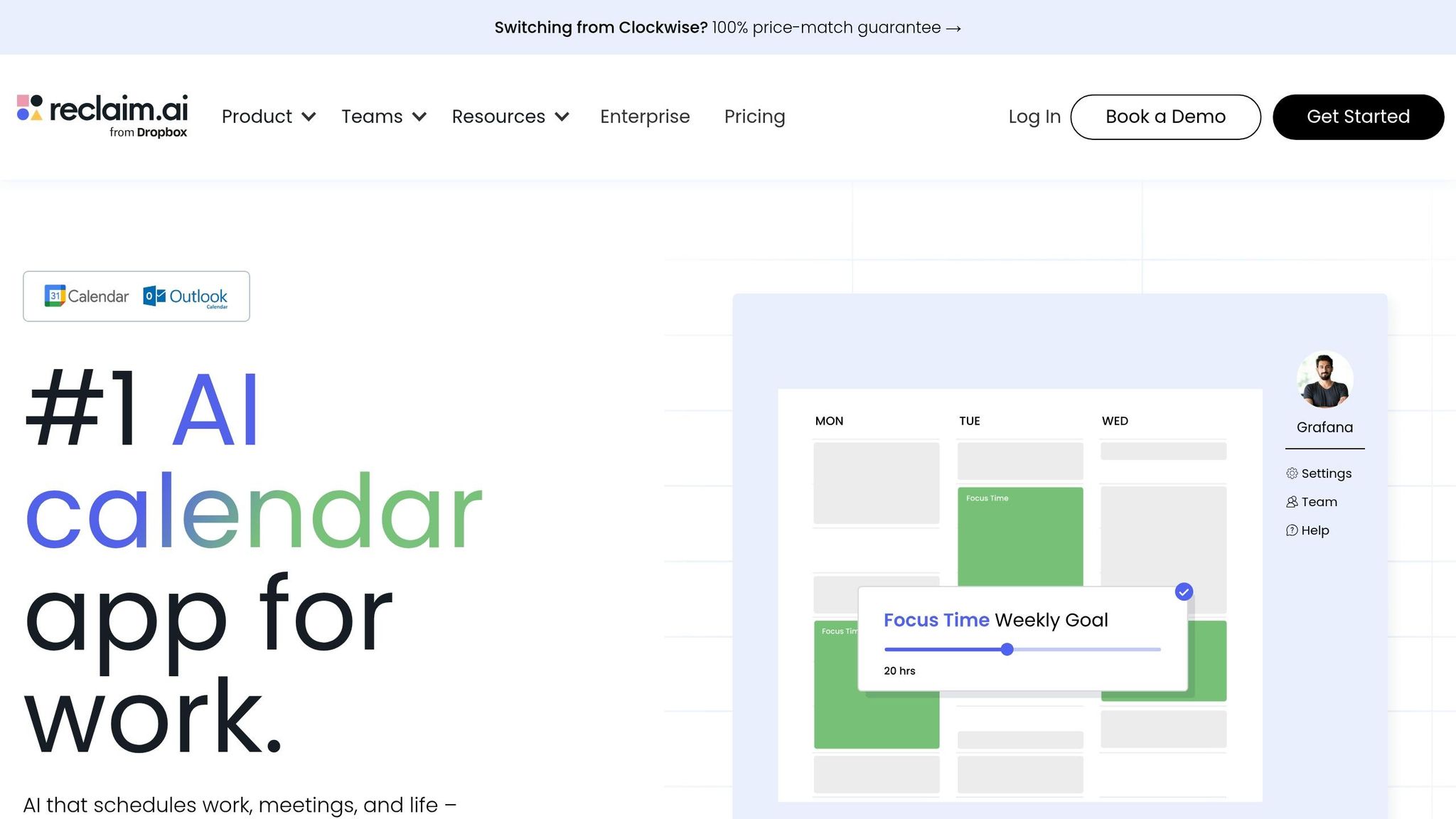
AI-powered apps can analyze your work habits and wearable data, like heart rate variability, to recommend the best times for breaks [4][3]. Employees using these tools increased their daily breaks from 1.8 to 2.5, which correlated with a 25% reduction in emotional exhaustion [4]. Apps like Motion (starting at $19/month) and Reclaim ($8–$18/month) are designed to protect focus time while scheduling recovery periods [3].
Prioritize tasks intelligently
Using AI to organize tasks by urgency and workload capacity can help reduce decision fatigue. This strategy has been linked to a 7.5% improvement in task completion rates, benefiting 73% of knowledge workers in 2026 [4][3].
Analyze communication patterns with AI
AI tools can monitor emails and messages for signs of stress, such as negative tone or withdrawal. For instance, if three negative messages are detected daily over five consecutive days, the system can alert managers to check in or reassign tasks [7]. These insights enable proactive measures to address potential issues.
Access AI virtual wellness coaching
Platforms like Personos offer virtual wellness coaching tailored to your personality and challenges. By using the Five Factor Model, these tools provide stress management techniques that have been shown to lower anxiety by 29% and depression by 34% [8].
Receive wellness nudges
AI tools can send real-time nudges based on data like elevated heart rates or changes in communication patterns. These nudges might suggest mindfulness exercises, physical activity, or setting boundaries for after-hours work. This approach has been linked to a 25% increase in employee satisfaction and a 30% reduction in turnover rates [4].
Balance workload distribution
AI systems dynamically assign tasks based on team capacity and productivity peaks. This ensures workloads are evenly distributed, preventing burnout for some while others remain underutilized [4].
Monitor well-being metrics
Wearable devices connected to AI platforms can track stress and recovery indicators like sleep quality, activity levels, and heart rate variability. These insights, combined with behavioral analytics, save organizations roughly $2.73 for every dollar invested in AI-driven health monitoring [4].
Review dynamic AI reports
Dynamic reports from tools like Personos provide customized insights into stress patterns and team dynamics. These reports track factors like communication sentiment, work hours, and missed deadlines, alerting users when thresholds are crossed [7].
Track habits and progress
AI task boards like Personos ActionBoard turn wellness advice into actionable steps. They even include energy audits, where activities are rated on a 1–10 scale for energy drain versus value, helping users identify and address energy leaks [6].
To avoid over-reliance on AI, stick to the "Three-Tool Rule", which limits active AI tools to three or fewer per session. Using more than five tools daily has been linked to a 34% increase in cortisol levels [3]. Additionally, schedule AI detox sessions by taking 15-minute breaks from AI every two hours and a longer 4–6 hour break weekly. As Rai Ansar, founder of AIToolRanked, explains:
"AI brain fry occurs when cognitive capacity becomes overwhelmed by constant context-switching between AI tools, processing multiple AI outputs, and making decisions about AI-generated content without adequate mental breaks" [3].
Use AI thoughtfully to lighten your workload and protect your mental health from the strain of burnout.
How Personos Outperforms Generic AI Wellness Tools
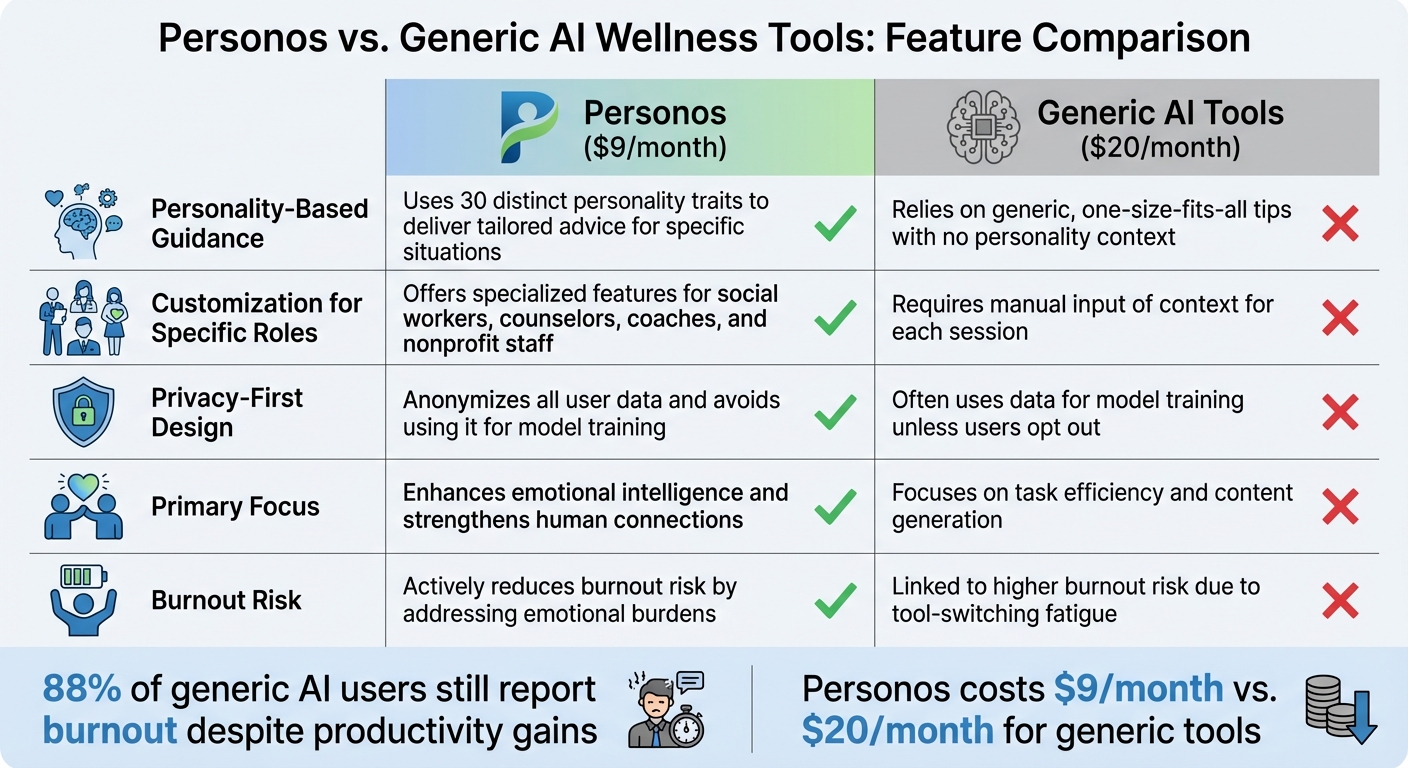
Personos vs Generic AI Wellness Tools Feature Comparison
Unlike generic wellness tools, Personos takes a deeper dive into the emotional complexities behind burnout. Many AI wellness platforms treat burnout as a simple scheduling or productivity problem, offering surface-level advice like reminders to take breaks or block time on your calendar. What they often miss are the emotional and interpersonal factors - critical for professionals in high-stress, people-focused roles. Personos stands apart by addressing these deeper, human elements, particularly the relationship dynamics and personality traits that fuel stress.
Take generic tools like ChatGPT Plus and Claude Pro, priced at around $20/month. Their one-size-fits-all strategies require users to constantly provide context, and their advice tends to ignore individual personality differences and team dynamics. In contrast, Personos, available for just $9 per seat per month, uses insights from 30 distinct personality traits, grounded in the Five Factor Model, to craft tailored guidance for every interaction [9][10]. This personalized approach is why Personos offers more meaningful, impactful support.
Nick Blasi, Co-Founder and COO of Personos, captures this difference perfectly:
"Personos gives people the confidence to communicate with empathy, not just efficiency. It's about using AI to strengthen the skills that make us human." [10]
While nearly 88% of users who see productivity gains from generic AI tools still report burnout [2], Personos is specifically designed to ease emotional strain. Lisa Chen, MSW and Domestic Violence Advocate, shares her perspective:
"When you work with survivors, you're constantly balancing empathy with boundaries. Personos has helped me protect my own well-being while staying fully present for the people I serve." [9]
Feature Comparison: Personos vs. Generic AI Tools
| Feature | Personos | Generic AI Tools |
|---|---|---|
| Personality-Based Guidance | Uses 30 distinct personality traits to deliver tailored advice for specific situations [9] | Relies on generic, one-size-fits-all tips with no personality context [3] |
| Customization for Specific Roles | Offers specialized features for social workers, counselors, coaches, and nonprofit staff [9] | Requires manual input of context for each session [3] |
| Privacy-First Design | Anonymizes all user data and avoids using it for model training [9] | Often uses data for model training unless users opt out [9] |
| Primary Focus | Enhances emotional intelligence and strengthens human connections [10] | Focuses on task efficiency and content generation [3] |
| Burnout Risk | Actively reduces burnout risk by addressing emotional burdens [9] | Linked to higher burnout risk due to tool-switching fatigue [2][3] |
Privacy is a top priority for professionals working with sensitive information. Personos anonymizes user data and ensures it is never used for model training, making it an ideal choice for those in roles requiring strict confidentiality.
Conclusion
Burnout doesn’t happen overnight - it builds up when the energy you expend consistently outweighs the energy you restore [5]. The 10 AI strategies outlined here help identify burnout risks early, offering actionable insights before stress spirals out of control. From tracking work habits and spotting stress signals in communication to delivering personalized wellness tips and monitoring biometrics, these tools make hidden stress visible and manageable.
Personos stands out by going beyond basic scheduling reminders. It uses in-depth personality insights to tackle emotional and interpersonal stress - particularly valuable for professionals in high-pressure, people-oriented roles. This tailored approach helps you maintain empathy while setting healthy boundaries.
The impact of these strategies is measurable. Workplaces using AI-driven wellness tools report a 25% drop in emotional exhaustion and an 18% reduction in feelings of depersonalization [4]. Even more crucially, these tools support your sense of control and effectiveness - psychological factors that research highlights as key to preventing burnout [1].
The trick is using AI thoughtfully. Avoid creating new stress through constant tool-switching or decision fatigue. Strategies like the "Three-Tool Rule" and scheduling regular "oasis moments" can help you use AI to alleviate mental strain rather than add to it [3]. The goal isn’t about working harder or doing more - it’s about protecting your energy and staying present for the work and relationships that matter most. These human connections are what truly give your work purpose.
FAQs
What early burnout signs can AI detect?
AI has the capability to spot early warning signs of burnout. These include symptoms like feeling overloaded, becoming disengaged, noticeable stress patterns, persistent fatigue, trouble making decisions, a drop in productivity, and emotional exhaustion. Catching these indicators early can help address them before they develop into more serious problems.
How do I choose the right AI wellness tools without overload?
When choosing AI wellness tools, it's easy to feel overwhelmed by the options. To simplify the process, look for tools that are clear about how they work, easy to verify, and fit naturally into your existing workflows. Focus on solutions that address specific needs, such as burnout detection or tools that assist with documentation, rather than opting for overly complicated systems. For example, platforms like Personos use personality psychology to deliver tailored, actionable insights, making interventions more efficient and cutting down on unnecessary complexity.
How does Personos personalize burnout prevention for helping professionals?
Personos leverages AI-powered personality psychology to provide real-time, customized guidance tailored to individual traits and behaviors. Rooted in the Five Factor Model, it offers tools such as conversational AI and Dynamic Reports to deliver advice personalized for various scenarios, including client interactions, crisis response, and team collaboration. These capabilities aim to ease emotional strain, manage heavy workloads, and promote long-term burnout prevention for professionals navigating complex human interactions.